Thousands of courses for $10 728x90

الثلاثاء، 29 مايو 2018

Beat the pension scammers

Pension scammers

Pension freedoms were introduced in 2015, allowing over-55s to spend or invest their pension as they want. However, in the first year of the relaxed rules the government says that around £19 million was lost to pension fraud – double the figure for the previous year

Fraudsters typically encourage people to withdraw their savings to invest in high-risk investments that fail. Often victims are urged to complete a pension transfer to another scheme and the money is invested via the new pension, but with the same outcome – the investor loses their cash.

Analysis by pension consultancy firm Xafinity in September 2017 found signs of potential fraudulent activity in one in 12 pension transfer requests. The scams are numerous. Here’s what to look out for.

1 Burial plots

Fraudsters are taking advantage of the UK’s booming population and limited land supply to get people to buy burial plots.

Martin Tilley, director of technical services at pension provider Dentons, says ‘marks’ (potential victims) are provided with information that is factually accurate to build trust.

“The way these people operate is they give people a hook, a fact that is correct,” he says. “For instance, Muslims by their faith are buried and not cremated, so people are offered burial plots in areas where there is a high concentration of Muslims.

“The idea being there is limited supply and high demand, so the land will go up in price.” However, Mr Tilley says that “scammers are controlling the market” and the plots are “vastly overpriced”.

2 Off-plan property

Off-plan hotel rooms are a common racket seen by Mr Tilley. He says investors are offered the chance to buy rooms in hotels that are being constructed in holiday destinations such as Cape Verde, with the promise of high returns. However, the rooms are being sold to UK investors at inflated prices.

“You are buying a hotel room for £50,000 in Cape Verde and being offered a 10% return... but you can buy them directly for less than £15,000,” he says.

“The first £10,000 you pay is funding your 10% a year for the first two years, because the hotel hasn’t been built yet. Then you pay 15% commission to whoever is flogging the rooms and another 15% to the intermediary.”

The development may take years to build, and even if it were successful, there would be no guarantee you could sell when you wanted to access your pension.

3 Bitcoin

Bitcoin is big business and news of its soaring value at the end of 2017 (it has since fallen) has made investors susceptible to fraud.

Michelle Cracknell, chief executive of The Pensions Advisory Service (TPAS), says one pensioner moved their money into a new pension believing they were buying the cryptocurrency, but had actually just bought shares in a bitcoin company that subsequently went into voluntary receivership.

As a shareholder they were at the bottom of the pile for payouts on any money recovered, and “to add insult to injury” were then billed by the administrator of the company, saying they owed admin fees.

“When we checked, the trustees of the pension, the administrator and the director of the bitcoin company all had the same surname,” says Ms Cracknell. “It was a family set-up.”

“Scammers use SSAS to get around the stricter Sipps rules”

4 Self-administered pension schemes

Most investors will have heard of self-invested pension schemes (Sipps), but maybe not small self-administered schemes (SSAS). The latter are typically used by businesses to hold assets in a pension, but fraudsters use them to get around stricter Sipp rules on permitted investments.

An investor will be encouraged to move their money into a SSAS, which are not as carefully regulated. As anyone can legally set up a SSAS and demand a transfer of pension funds into it, the original pension provider moves the money across without question. The fraud occurs when the money is transferred and the pension funds are placed into high-risk investments.

“People are told to move their money so they can invest [through a SSAS] and are told that the returns on these dodgy investments are so good that the HMRC does not want [people] to invest in a tax-exempt environment [like a Sipp], so you have to take all your money out [of the Sipp pension and put it into the SSAS],” warns Mr Tilley.

To protect investors, Dentons does not allow investments in some high-risk areas, including hotel rooms, storage pods and land banking, in its SSAS. However, not all providers are so scrupulous.

5 Offshore bonds

It isn’t just dodgy investments that savers need to be alert to, they must ensure the wrapper they are investing in is legitimate.

Mr Tilley says crooks like to dress unregulated investments up in investment wrappers that are regulated to provide investors with peace of mind.

“Some [of these investments] are packaged up as offshore bonds, which are regulated entities,” he says. “The offshore bond may be regulated, but what they put inside the bond is a load of rubbish... like car parking spaces. Putting them in an offshore bond means the investments are dressed up to look legitimate.”

He says although the bond will promise 8% a year, in reality the scammers “run it for two years, pull all the money out and disappear”.

6 Double advisers

Just as important as the investments you are putting your money into is who is advising you to transfer your money.

John Moret, a pension consultant, says investors should watch out if their pension transfer is managed by one adviser and the investments by another.

“Usually you have an unregulated adviser who is promoting a pension transfer, but not authorised to do it. So they get an independent financial adviser (IFA) who is regulated and then that regulated adviser walks away,” he says.

The regulated IFA gets paid to do the transfer and then absolves responsibility for their client. This leaves the unregulated adviser to invest the transferred pension money and the investor without any protection or ability to claim compensation when the investments go bad.

“It’s easy for fraudsters to target people by using LinkedIn”

7 Payment protection insurance

If you have received a payment protection insurance (PPI) refund via a claims management company, be wary of offers to deal with your pension, warns Ms Cracknell.

She says one woman who called TPAS’s advice line had been approached about a transfer by a company which had previously won her PPI compensation.

“She received £200 back on her PPI and then they called her about pension transfers,” explains Ms Cracknell. “The company had already built up trust with the woman because they had delivered pound notes to her.”

Websites of companies running scam transfers often offer other services such as PPI and road accident compensation, which should be red flags if you are approached.

8 Redundancy risk

Con artists are using personal information online to target individuals.

Ms Cracknell says she has seen cases of people being approached for fake pension reviews after they have been made redundant. After a restructuring at a big-name insurance company, a former employee was contacted by scammers. Ms Cracknell adds that it is easy for the fraudsters to target former staff by using the networking site LinkedIn.

“The scammers told the person the employer had asked them to contact them about transferring their pension,” she says. “The fraudsters had a valid reason for calling because the employer was going through a change and a pension review wasn’t beyond the realm of possibility.”

9 Claims management con artists

If being conned into transferring your pension money into a rogue scheme wasn’t bad enough, those who have lost money are now being targeted by claims management companies.

Ms Cracknell says one man who called TPAS had already lost his pension after he was targeted by a claims company.

“He was contacted by a company which said they could get his pension money back,” she says. “He paid them £500 to do it, but it was a scam. The reality is that once that money has been transferred and put into high-risk investments, it’s gone. If the Pensions Regulator and the police cannot get the money back, what makes you think a claims management company can?”

10 Cold calls

Cold calling is pension scammers’ preferred way of operating. Citizens Advice reckons 10.9 million consumers have received unsolicited contact about their pension since April 2015, when pension freedoms were introduced.

The government has announced that legislation to ban cold calling, texting and emailing will be brought in by this month specifically to try to stem the flow of pension scams.

However, Ms Cracknell warns this does not mean pension savers can take their eye off the ball.

“The size of the prize means the scammers will find an alternative route or take the risk and keep cold calling,” she says. “Just because there is a ban, do not assume that every call is a bona fide call.”

What to do if you’ve been scammed

Michelle Cracknell (pictured above), chief executive of The Pensions Advisory Service, says those who have fallen prey to scammers should report the incident to Action Fraud, the UK’s national fraud reporting centre. Although it’s still unlikely they will get their money back, sharing information will help police crack down on fraud.

Fraud victims will undoubtedly be angry, but Ms Cracknell says they need to take action to rebuild their pension fund.

“We will talk to those affected by fraud about what they need to do to get a full state pension record and matching employer pension contributions, because they will have a hole in their pension,” she says. Also be wary of claims management firms that promise to recover your cash. It will be another scam.

To report a scam and/or get a crime reference number, contact Action Fraud on 0300 123 2040 or at Actionfraud.police.uk.


The telltale signs of being conned

New types of fraudulent schemes are emerging all the time as scammers try to stay one step ahead, but there are some common telltale signs that you’re being taken for a ride.

Martin Tilley, director of technical services at Dentons, says if you are contacted about a pension transfer or a too-good-to-be-true investment, it pays to be suspicious. “If it’s not a regulated investment, then take every fact as a lie before they prove it is not,” he says.

“You have to dig, ask questions about the investment, and if they do not want to give answers, they will stop talking to you. For them, it’s a waste of time and they will move on.”

If you are unsure about an investment, TPAS’s Michelle Cracknell says you can do some basic searches, such as seeing whether the company offering the investment is located in the UK. Although she says an offshore location does not automatically mean it’s a scam, regulation and compensation schemes may differ.

She also recommends using the internet to do background research on the directors to see whether they hold numerous directorships in a variety of companies, which could ring alarm bells.

Investors can also call TPAS and run an investment past the organisation before it is too late. “If you are worried and suspicious, give TPAS a call,” says Ms Cracknell.

Contact TPAS on 0300 123 1047 or visit Pensionsadvisoryservice.org.uk.

Michelle McGagh is a personal finance journalist who has written for The Guardian, Citywire, AOL and Money Observer

Section

Free Tag

Related stories

Twitter


Source Moneywise https://ift.tt/2smpFY2

12 Ways to Save on Boring Bills to Fast Pass Your Savings For Disney World

Roam if You Want To: These 8 Free Apps Open Up the Great Outdoors

الاثنين، 28 مايو 2018

Questions About Retirement, Motivation, Eggs, Time Management, and More!

What’s inside? Here are the questions answered in today’s reader mailbag, boiled down to summaries of five or fewer words. Click on the number to jump straight down to the question.
1. Figuring out retirement investment options
2. “Done” when I retire
3. To do list specifics
4. When should I quit?
5. Real estate questions
6. Staying motivated to save
7. Journals after filling
8. Egg sale question
9. Interesting use for leftovers
10. Blocking off time
11. Walking shoe suggestions
12. Triggering questions

This was one of those weeks where almost everything I wrote generated several good follow-up questions or comments, so this mailbag issue is pretty heavy with questions and issues related to things you may have read in the past week.

On with the questions!

Q1: Figuring out retirement investment options

I am a 36 y/o working in the medical profession. I am newly married with no children. I am slowly working on a financial turnaround, which has been prompted by credit card debt that I allowed to get away from me.

I am embarrassed to say that I am also just now starting to contemplate my future retirement. My employer offers a 3% contribution regardless of my allotment. I wish to match that 3% on my own. I am currently staring at my 401(k) election form from my employer and have no idea what I am doing.

I have followed TSD for some time now and it has been truly educational and motivating for me. I know that you have a history with Vanguard and seem pleased with them. I have a wide variety of Vanguard options; including: the 500 Index Adm, Mid Cap Index Adm, Small Cap Index Adm, Total Intl Stock Index Adm, Total Bond Market Index Adm and Equity-Income Adm. Plus, there are also options for T. Rowe Price target retirement funds, of which the 2050 would likely be the best match – I would be 68 at that time. I have attempted some research on my own, but feel overwhelmed by all of the options. I am eager to find some direction.
– Jane

The answer really depends on how much time you want to spend on your investments – learning about investing, reading articles, and so on. If this sounds… not particularly enjoyable to you, the T. Rowe Price target retirement 2050 fund is a solid choice in which you can simply put all of your retirement savings and be just fine.

Now, if you want to beat that fund’s performance, you probably can, but it will take a fair amount of time getting up to speed on all of your retirement options. What you’d likely be aiming to do is match that target retirement fund or go slightly more aggressive (meaning a higher percentage of stocks) while you’re young. This would mean studying up on a lot of different funds to see what compares to the contents of the target retirement fund and building your own set of funds that somewhat matches what they’re doing with better individual selections.

You may or may not be interested in that extra effort. It likely will earn you a better return on your money, but how much better is really hard to say, and it will take some effort. It’s really your call.

Q2: “Done” when I retire

I am 62 years old and obviously not ready to retire yet. However, I do think about it. I’d like to work till age 70 or even 72 (my health is excellent & I enjoy my job), and after that I would like to be done. I mean, done. I have worked virtually all my life. First taking care of my alcoholic mom & abusive dad and raising my brother and sister; then working my way through college, helping my sister with her college expenses, and raising 2 kids, one of whom has autism. You know the drill. I won’t bore you with it. I feel no real “pull” to volunteer in my later years, or to get yet another job, or anything like that. I feel really guilty about it. Any ideas?
– Nina

What do you mean by “done”? What do you envision your days being like when you’re retired?

Whatever you choose to do, I strongly strongly discourage you from just sitting in a chair and growing old when you retire. Many people who retire fully fall into that trap of just sitting in their chair and growing old with a quick decline. My own great grandfather did exactly this. It’s not an enjoyable decline for anyone.

I strongly encourage you to figure out how exactly you’ll fill your days when you retire, and being sedentary all day long and not doing anything at all is a poor idea. For your own health and quality of life, you should do something. It doesn’t have to be work or volunteering – just figure out some things you actually enjoy doing that aren’t sedentary and do them. (You can do some sedentary things, too, just do them in balance.)

If you have adequate income to live on, the world is your oyster. Do whatever it is you want! Just do something, and you have time to figure out what that something is.

Q3: To do list specifics

What kind of detail do you put into your to do lists? Like do you include things like brushing your teeth? Or is it just big stuff?
– Andy

My rule of thumb is that if something is going to take more than two minutes or if it’s something I can’t conveniently do right this instant, it goes on my to do list. Otherwise, I just do it immediately and don’t worry about it.

The exception to that are things that are more along the line of checklists, like my morning routine. I try really hard to make my morning routine as much of a “routine” as possible so that I’m doing the same things every day and they get me as set up as possible for a successful work day. Those types of “checklists” will have things that take less than two minutes on it.

Some other “checklists” I have include my current exercise routine, my “kids home from school” routine, and my normal evening routine. Each of those has at least one item that takes less than two minutes on it.

So, no, I don’t add things like “brush my teeth” to my to-do list unless I’m sitting at my desk working, run my tongue along my teeth, and realize that I need to brush them and just jot it down to do later or something like that (I don’t t think this has happened, but it could happen).

Q4: When should I quit?

I have been working at a small software firm for two years. While I have learned a lot here and the pay is good, the people running this firm are insane tyrants. They constantly put us on unrealistic dev schedules and go crazy when we don’t meet their stupid deadlines. They yell and scream and throw books and stuff. They tell us that every waking hour we spend not sleeping or eating during crunch time should be spent coding and that we can use this money we’re earning when we’re millionaires later.

It’s absolutely crazy and I am sick half the time because I eat like crap and don’t get enough exercise. I don’t want to work here any more. I am fine financially but I don’t want to burn bridges in the industry. I have asked about this on software sites and the advice is always JUST QUIT AND YOU WILL FIND WORK ELSEWHERE ASAP but I don’t like to jump into the complete unknown like that. Advice?
– David

Right now, go update your resume on every website that you might ever want to have your resume on. Make sure it’s completely correct with your current information and skill set and work history.

If you have any friends in the industry that you trust deeply, contact them discreetly (using non-work email or other private means) and ask if they know of any openings or if they can pass along your info discreetly to any hiring agents. Keep this private and completely separate from your work.

Do not include anyone in your current workplace as a reference. If you’re trying to get out of a workplace in which there’s a climate of fear, you’re likely not getting a good reference anyway. Just note that references are available upon request and if they’re requested, give references that don’t include the angry people at work.

If you do get a job offer (and you negotiate and accept it), tell your current boss immediately, give your two weeks’ notice, and do not even listen to a counteroffer, no matter how great they make it sound. Get out of there.

Q5: Real estate questions

Why do you never talk about investing in real estate? You talk all the time about stock investing but never real estate investing?!
– Daniel

There are a bunch of reasons, but they really boil down to three core ones.

First, it’s pricy. You either have to be willing to leverage yourself into a lot of debt to get started or else invest a lot of your own money. Debt leveraging is a risky proposition because if the real estate market ever burps, you can end up in a huge mess very quickly, so I don’t recommend that route. I generally don’t talk about super high risk investments unless readers in large numbers email me about them. I also don’t talk about investments with a large up front cost.

Second, it’s a lot of work. If you’re involved in the usual entry level method of real estate investment (meaning you’re not leveraging or investing large sums of money), you’re probably serving as a landlord for a house or two or a small apartment building. That ends up being a lot of work – you’re repairing all kinds of things, doing all kinds of maintenance, and so on. Managing even a small handful of properties ends up being at least a part time job. If you hire someone to do the property management for you, you’ve drastically cut into your income and it ends up often being not all that great of an investment (back to the risk issue again).

Third, aside from the risk elements noted above, it still remains a risky proposition for most investors. You have legal risk. You have “all of your eggs in one basket” risk. If you’re taking on a lot of debt, you’re looking at leverage risk, as mentioned above. Those are risks above and beyond most investments.

Added together, real estate investing is great for the small subset of people who don’t mind the risk and relish that type of work, but for everyone else, it’s not a good choice. It’s a type of investment that requires a lot of active involvement even if you hire a management company and involves a lot of risk.

Q6: Staying motivated to save

I’m saving up for a new house, and I need a high-flux Internet connection that is non-satellite for my work-from-home full-time job. This typically means I need cable Internet with about 200 Mbps down and 20 up. I want to live on a large property in a custom-built home in a rural area near a college town, because I may want to resume teaching part-time at the college level. How do I keep motivated to save? I’m debt free, high-net worth, and saving and investing over 50% of my take-home pay. I have approximately 35% of the total amount saved so far for the new home. My neighbors, to add to this conundrum, are a problem, but I’m ignoring them and carrying on with my plan, although it is a constant source of annoyance…trying to remain focused on the goal. It will take about 4 more years to reach that goal. I’ve considered buying an interim house elsewhere, with a loan and large downpayment, to get away from the neighbors. House prices are high so it would be a good time to sell my current place. I guess I need a pep talk! I already do mindfulness practices such as Zen meditation, yoga, and journaling.
– Alice

For me, it’s honestly not motivation to save that brings financial success, believe it or not. Once the initial excitement of turning my financial ship around wore off – the “honeymoon” was over, in other words – I attribute almost all of my continued financial success to one thing: automation.

Sarah and I automate almost all of our savings. Money comes directly out of our accounts for things such as emergencies, retirement, college education for our children, and big upcoming expenses like car replacements. We do not even think about it most of the time, to tell the truth. It just happens.

Instead, most of our focus is on making our day-to-day ends meet on the relatively smaller pool of money that stays behind in our checking account after all of those transfers. We put ourselves in a position where we have to be at least a little careful with our money. We’re frugal so that we can afford some nice things without ever touching that automated savings.

My suggestion: when you’re really consciously focused on financial planning and saving for the future, set up something and fully automate it. Then, once that’s done, you’re left with the task of making ends meet with the remainder of your pay. Each period, your check will be a bit smaller, or each month, money will just vanish out of your checking. How will you make ends meet? It becomes a practical problem rather than a motivational problem.

Q7: Journals after filling

What do you do with your journals after you fill them up? Do you save them or throw them away?
– Anna

I do both, actually. Every few days, I take pictures of my last several pages of journal entries, giving me a digital copy of all of my journal entries. I do this right into Evernote, which makes the pages searchable. I generally create a single note within Evernote for each day of journal entries, which sometimes consists of several images if I have several pages of journal scribbling.

I usually burn journals once they’re filled and I’ve scanned all the pages. I’ll literally toss them into a campfire. I’ll save them during the winter and burn them all during the summer. I really have no interest in anyone else reading the things I’ve written and that takes care of the problem.

I do have a few journals I’m saving, but they’re journals being written for my children that contain things like family history and some life advice I want to make sure to share with them in adulthood if I’m not around to do so.

Q8: Egg sale question

About a month ago a local store had a huge sale on eggs. They must have had some kind of overstock or something. We bought about 12 dozen eggs and filled our fridge with them figuring we would use them for all kinds of things. We got through about 6 dozen and the rest are left and nearing expiration date. Don’t want to throw them out!
– Annie

My suggestion is to make breakfast burritos. A lot of breakfast burritos.

My actual method for doing so has changed recently. What I do now is beat two eggs together, put just a bit of oil or butter in a small skillet, then put the beaten eggs in the skillet over medium heat. I cook this until I can flip it, cook it for just a moment more, and then take it off and put it on a plate. I will make these “egg discs” using as many eggs as I have – if you have 6 dozen, you can make 36 discs.

Then, get a big soft flour tortilla, lay it out flat, grab an egg disc and pat it dry, then lay that egg disc in the middle of the tortilla. Spread dry toppings on top of the egg – shredded cheese, salsa with minimal liquid, other vegetables, cooked sausage, whatever floats your boat. Do not add condiments unless you want a gooey mess when you reheat – if you want hot pepper, put in dried pepper flakes. Spread the ingredients evenly and thinly over the egg, then wrap the egg up in a tube with the ingredients inside. Wrap this tube in the tortilla, then put the finished burrito in a freezer safe container, like a quart Ziploc bag. Freeze them, then pull them out as needed.

I made a batch of burritos like this and it worked like a champ. I cooked all of the egg discs first, then I assembled all of the burritos.

Q9: Interesting use for leftovers

We really can’t seem to do leftovers more than twice. I found what I think a great resolution to this. I have a friend who lives alone, eats all convenient crap, etc. I bag up these leftovers and they are the perfect one person meal and he doesn’t see this as the third day of the leftovers. He feels loved, taken care of, and we feel like we’re helping someone who doesn’t cook and works far too many hours. Yep, probably enabling him to not learn to cook but I was single until my early 30s and I KNOW that cooking for one is just the loneliest feeling. (I have tried freezing these things but find we end up tossing them and then I feel bad that I coulda fed a hungry person ‘at the time of’.)
– Dana

Right in the midst of this comment is a great suggestion for leftover use. Just simply take your leftovers, package them as a standalone meal, freeze that standalone meal, and then pass it along to someone who can really use it.

In this case, Dana is passing along meals to a friend who works extremely hard and has little time for meal prep, which is definitely an awesome choice. Other good options: elderly relatives, shut-ins in your community, people recovering from medical challenges, depressed or grieving friends, and so on.

If you find yourself with leftovers regularly, consider adopting this as a practice. Make standalone meals, pop them in the freezer, use them yourself if needed, and give them away easily to friends and family and community members who could really use them.

Q10: Blocking off time

Could you explain a little more about what you mean by “blocking off time” in your calendar?
– Aaron

Sure!

Most of the time, my calendar looks utterly full to the brim, around the clock. The truth is that many of those things are actually just blocks of time that I’m setting aside for specific purposes.

For example, I have a block of time from 10 PM to 5 AM for sleep each day. Most days, I have a block from 8 AM to noon for focused writing. I usually have a block from 5:30 AM to 8 AM for my morning routine. I have blocks in the afternoon and evening for family time and exercise and reading and light work tasks and so on. I also have a “flex time” block that I use to make up for blocks that were interfered with in some way.

I stick to these blocks as much as humanly possible, but sometimes other events interfere. When I add stuff to my calendar, it usually takes priority over those blocks, so on that day, I’ll compress some of the blocks or move others around or even delete some blocks.

The purpose of all of this is to keep myself moving. By planning my day like this in advance, I don’t fall into the trap of sitting around trying to decide what to do next. It’s extremely clear at any given moment what I should be doing.

Q11: Inexpensive walking shoes

Do you have a recommendation for good inexpensive walking shoes? Going on a trip that involves a lot of walking and don’t want to spend $200 on walking shoes.
– Chris

In terms of “bang for the buck” for walking, New Balance shoes tend to be the right choice. That’s pretty much their wheelhouse – high quality midrange walking and general use shoes – and they do it really well.

Cheap shoes tend to have little internal foot support and fall apart quickly. Your feet would regret such a purchase. Higher end shoes will work great, but they won’t offer a significant advantage over New Balance for an ordinary vacation with a lot of walking.

If you want a specific model, I’d suggest this men’s model and this women’s model, based on my own research, experience, and anecdotes from friends.

Q12: Triggering questions

I didn’t understand what you meant by how you use “triggers” in your article about getting things done.
– Bryan

This is a trick I learned from the book Triggers by Marshall Goldsmith, which I read earlier this year and which has really helped me start making some changes in my life. I’ve tweaked it just a little to work for me.

Basically, what I do each morning is think about several behavior changes I want to make in my own life to improve myself. For each one, I write a sentence like this:

I will try my best to eat a healthy diet today.
I will try my best to get a healthy amount of exercise today.

I have a list of eight of these statements. Each morning, I write each one of them down in my journal and think about that statement as I’m writing it. How will I eat a healthy diet today? I kind of visualize the day ahead of me a little bit.

Then, at the end of the day, I sit down and ask myself a very similar group of questions.

Did I do my best to eat a healthy diet today?
Did I do my best to get a healthy amount of exercise today?

Then, I give myself a score – a simple number between 1 and 10. 1 means I was absolutely atrocious in this regard; a 10 is as good as I could possibly hope to be in that regard.

On a 1 day for exercise, I did nothing at all. On a 10 day, I went to a vigorous taekwondo class, played soccer with my kids, walked 15,000 steps, and did my bodyweight exercise routine on a normal day. Sometimes, days are more challenging than others, so what I’m really focusing on is whether I put in the effort to really do my best at that individual thing.

I absolutely hate writing down a low number for the day on something I’m seriously trying to improve in my life. Seriously. I get really frustrated with myself when I have to write down a 1 or a 2 or a 3 on a day where there was no good reason for it.

This practice seems to really click with me for some reason, and it works with all kinds of habits. I highly recommend it. I will likely write a full article or two about it in the future.

Got any questions? The best way to ask is to follow me on Facebook and ask questions directly there. I’ll attempt to answer them in a future mailbag (which, by way of full disclosure, may also get re-posted on other websites that pick up my blog). However, I do receive many, many questions per week, so I may not necessarily be able to answer yours.

The post Questions About Retirement, Motivation, Eggs, Time Management, and More! appeared first on The Simple Dollar.


Source The Simple Dollar https://ift.tt/2kvZ5YH

How to Increase Conversions by Avoiding These 7 Navigation Mistakes

I see this problem all the time when I’m consulting businesses. They are getting tons of traffic to their websites, but visitors just aren’t converting.

If this sounds like your situation, don’t hit the panic button yet.

Look on the bright side. At least you’re having success when it comes to driving people to your website. But if you want to design a homepage that converts, you have to look at how visitors navigate through your pages.

Every day I see websites with design flaws.

Brands spend much time trying to improve their SEO rankings and don’t spend enough effort improving their websites. Creating a website that converts isn’t an overnight process.

This takes time, effort, and patience. You need to learn how to run A/B tests and analyze your design elements so that you can make calculated improvements.

That said, there are certain changes you can implement sooner rather than later.

I’ve taken the time to identify the top 7 navigation mistakes I see on a regular basis. Use this list to analyze your existing website to make sure you’re not making the same blunders.

1. Labels and headlines that don’t drive conversions  

When someone visits your website, it’s all about making a first impression. Think about what people see on your menu bar and headline tags.

I don’t like to throw businesses under the bus. So I’m not going to show you a specific example of a website that’s doing this wrong. But I’m referring to headlines and labels with terms like:

  • who we are
  • what we do
  • about our hiring process
  • places we work

While this information should be included on your website, it shouldn’t be the focal point of your design. None of these will lead to conversions.

Let’s take a look at a brand that understands this concept and has appropriate labels and headlines on its site. Check out the homepage for Knockaround:

image7 8

The navigation menu has only four options, which is perfect.

We read from left to right, so the first two choices we see are “shop” and “design your own.” Both of those labels were written to help drive conversions.

Information about the brand’s history, staff, and operation are reserved for the “about” headline.

I don’t want you to think your brand story isn’t important. In fact, I’ve written an extensive guide on how to create an about us page that generates leads.

But when it comes to driving conversions, you need to shift your focus. Nearly all the clickable links in the example above from Knockaround will drive conversions.

The website has a clean and simple design, so it’s easy for visitors to be drawn to these conversion buttons. The result is increased sales.

2. Using a non-standardized layout

People have been browsing the Internet for years. Over time, there are certain standards we have grown to expect when we land on a web page.

It’s important for you to come up with a differentiation strategy for your marketing campaigns to help you stand apart from your competition. But when it comes to your website navigation, stick with a standard layout.

For example, where do you expect to see a navigation menu when you visit a new website?

You’ll assume it’s at the top of the screen. Burying your menu in the middle of the screen will look strange for your visitors.

They may not spot it right away, and it’s not something they are expecting to see. Here’s an example of a standardized website layout from Unbounce:

image8 7

As you can see, it follows the format of most websites you see on a daily basis. The standard typically follows this progression:

  • menu bar at top of screen
  • large headline
  • short description sub header
  • CTA button

You might be thinking this is too boring. Think again. Using a standardized page layout will help you drive conversions. Visitors will know exactly where to navigate without having to think too hard.

Let me give you an analogy to further illustrate the point. When you are looking at a picture on your smartphone or tablet, how do you expect to zoom in on the image?

You use two fingers on the screen and spread them apart. That’s what you’ve grown accustomed to.

But what if that command didn’t work for certain websites? You’d be thrown off and probably wouldn’t convert. Plus, you’ve been using smartphones for far less time than you’ve been browsing the Internet.

So stick with what people are familiar with, and don’t stray too far from a standard layout.

3. Conflicting CTAs

Having call-to-action buttons on your website is necessary to drive conversions. But too many CTAs not related to each other will confuse the visitor.

Most people think that adding multiple CTA options to each page of their websites will increase the chances of one getting clicked. But it actually has the opposite effect.

These are the typical CTAs:

  • buy now
  • sign up today
  • join our email list
  • refer a friend
  • click here to receive your discount

What’s wrong with these CTAs? Nothing. Unless they are all on the same screen at the same time.

Take a look at the BuildFire homepage:

image10 2

BuildFire specializes in custom mobile app development. When you land on its website, you’ll see two call-to-action buttons.

Although the wording of each button is different, they both drive the same type of conversion.

The “get started” button is intended for people to start building their mobile apps. If they click the “build an app” button, they’ll be accomplishing the same thing.

In fact, both CTAs bring the website visitor to the same landing page. So it’s all about which button speaks to the user. Those are the only two options they need to choose from.

If this website had additional buttons, e.g., to try to get email subscribers, sign up for a free trial, or receive a coupon code, it would hurt its conversions.

It’s all about your priorities. For some of you, getting more email subscribers may be the priority of your current marketing strategy. If that’s the case, eliminate any other CTAs on your page that conflict with your conversion goals.

4. Too much clutter

Your web design needs space to breathe.

Don’t try to fill every inch on the screen with text and images. Empty space can be just as effective.

Empty space in your web design will ultimately help direct the visitor’s attention to your focal points. Now they won’t have a problem spotting your value proposition.

Websites with simple designs have higher conversion rates.

Having too many elements on your website will slow down the page loading time.

Pages that take more than four seconds to load can expect to see bounce rates increase by 100%. Websites that take eight seconds to load will have an additional 150% increase in bounce rates.

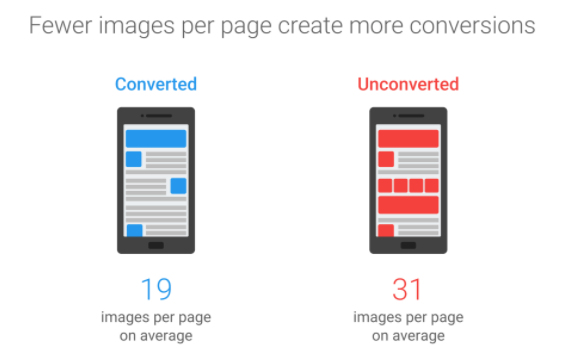
Consider removing images from your pages. Research from Google Analytics suggests that websites with fewer images have higher conversion rates.

image1 8

Based on everything we just discussed, this makes sense.

Lots of images will slow down your page loading time, increase bounce rates, and ultimately kill your conversions.

But if you remove clutter, simplifying your design, users won’t have an issue navigating through your pages.

5. Not accounting for scrolling

Most pages will require the visitor to scroll.

That’s fine. I’m not saying you shouldn’t have scrollable pages, but it’s important you recognize how your screen will change as the visitor navigates by scrolling.

Think about the current placement of your CTA buttons.

When someone scrolls down a page of your website, are the CTA buttons still visible? If the answer is no, it’s going to hurt your conversions.

Scrolling through a page is great because it gives the visitor more information about your brand, products, or services. But let’s say they get halfway down the screen and decide they want to convert.

If the conversion link is all the way back up at the top of the screen, they’ll need to scroll back and go hunting for it. That’s not a good scenario for you.

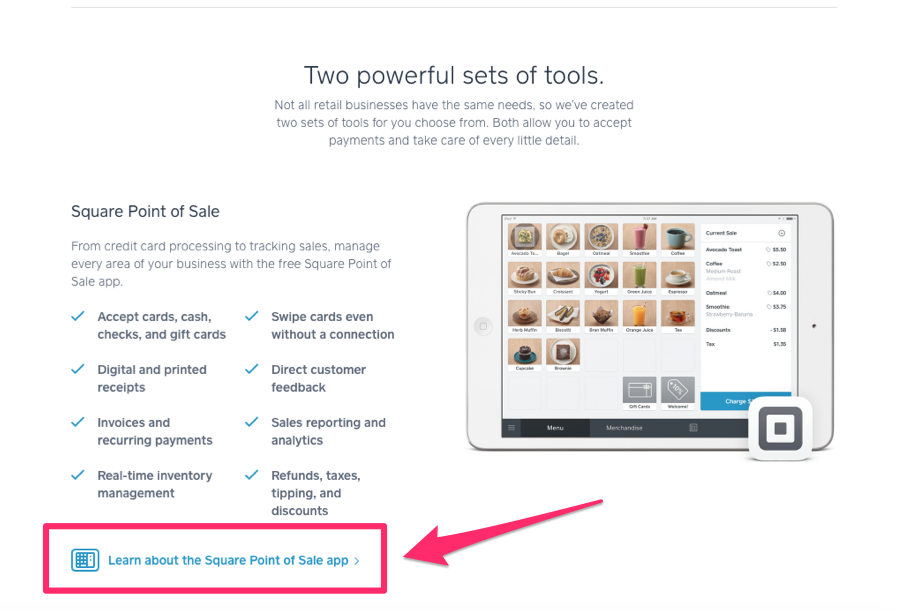
Each additional step people take to convert is going to hurt you. Let’s take a look at the Square website to give you a great example of what I’m talking about:

image9 3

This is its homepage. As you can see, it follows a standard layout and doesn’t have any clutter, which are two of our previous discussion points.

But what happens when you scroll lower on this page?

Let’s see if you can still locate the CTA button at all times:

image4 8

This screenshot is from the same page.

The way the CTA fits on the screen makes it appear as if the visitor is on a new page. As you can see, the CTA button is still clear and visible.

Now, as the visitor learns more information about the product, they can click on the link and convert.

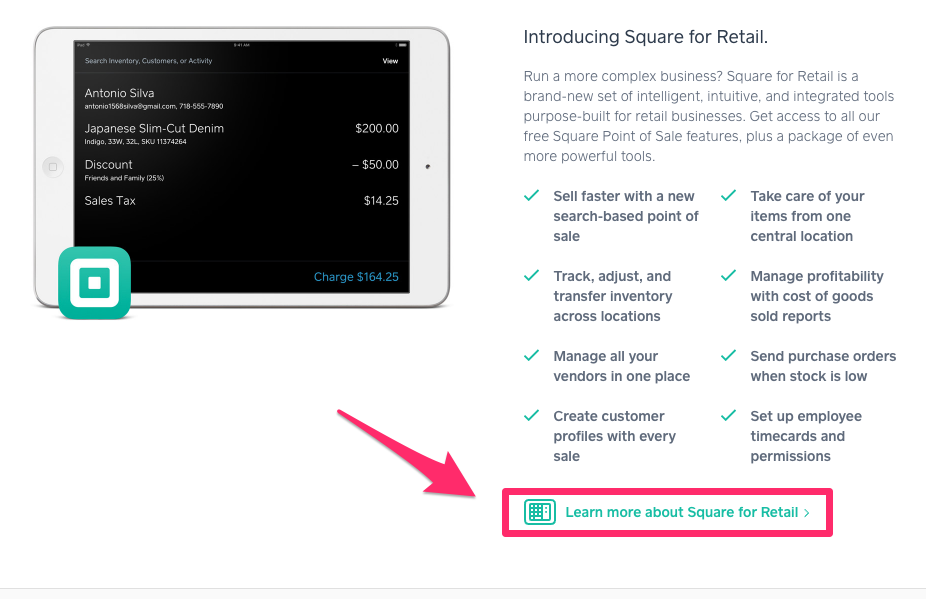
But that’s not the end of the page. Let’s continue scrolling to see whether this pattern continues:

image6 8The pattern is indeed the same.

Keep in mind we’re still looking at Square’s homepage. I haven’t navigated to another screen yet or made any clicks. But as I continue to scroll, I always have an option to convert.

This statement holds true all the way to the very bottom of the homepage.

image3 8

I think I’ve made my point clear.

Square has perfectly designed its navigation to ensure that website visitors always have an option to convert.

Use this as a reference for your pages as well. Keep in mind that each scrolling screen should almost appear as a completely new page to be as effective as possible.

You could also consider implementing a fixed menu bar with a CTA button at the top of your screen. That way, when a visitor scrolls, the menu is visible at all times.

6. Complicated checkout process

If you sell products or services on your website, you need to put shopping cart optimization at the top of your priority list.

Consider all the design elements on your checkout page.

If the buttons required to complete the transaction are hidden or mis-written, it’ll kill your conversions.

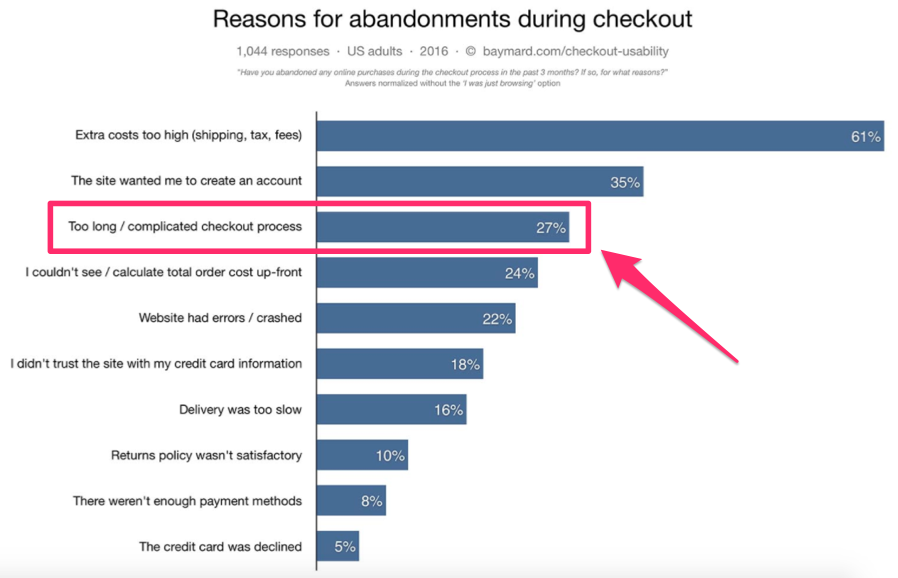
Furthermore, you need the checkout process to happen in as few steps as possible. Take a look at the top reasons for shopping cart abandonment:

image5 8

A checkout process that is long and complicated ranked third on this list.

Your navigation elements play a huge role in how customers finalize their transactions. So analyze your site, and figure out where customers are abandoning the page.

Make sure your purchase buttons are big, bold, and clearly displayed on the screen.

7. Forgetting about mobile users

Navigation on smartphones and tablets differs from navigation on computer screens.

Just because you implemented changes on your desktop site doesn’t mean your navigation is perfect. You still need to optimize your design for mobile users.

Remember earlier when I discussed the importance of speed? Well, speed is even more important when it comes to mobile browsing.

Mobile sites that take longer than three seconds to load have a 53% abandonment rate. Furthermore, 50% of mobile users expect pages to load in less than two seconds.

If you have an ecommerce site, this is extremely important for you to recognize. That’s because 70% of all mobile transactions are completed from smartphones.

When you optimize your mobile site, you need to make sure it encompasses all the previous design elements we discussed:

  • labels that drive conversions
  • standardized layout
  • similar CTAs
  • no clutter
  • scrolling-friendly

To check whether your mobile site is properly optimized, you can use tools such as the mobile-friendly test from Google:

image2 8

But just because the site is mobile optimized doesn’t mean all your navigation elements are perfect.

It’s up to you to manually make all those design changes if you want to increase your conversions.

Conclusion

Having lots of website traffic is great.

But traffic doesn’t automatically translate to conversions. If you think your page conversions are below satisfactory or have room for improvement, you need to take the time to analyze your navigation elements.

Recognize how visitors browse on your site. What do they see?

Their eyes will be drawn to your labels and headline options. Write them so they drive conversions.

Your website design isn’t the place to experiment with your differentiation strategy. Use a standardized layout for a smooth navigation. That’s what people are used to, so don’t confuse them.

The CTAs on your screen need to be related to each other. Too many conflicting CTAs will lower your conversion rates.

Remove clutter on the screen. Use blank space to your advantage.

Check what the users see when they scroll through your pages. There should always be a CTA button visible to drive conversions.

Simplify your checkout process. Don’t ignore mobile users.

If you avoid making these 7 navigation mistakes, you’ll see a significant improvement in your website conversion rates.

What navigation elements on your website need to change to increase conversions?


Source Quick Sprout https://ift.tt/2J8k8yy

الأحد، 27 مايو 2018

The Biggest Retirement Risks and How to Prepare for Them

Over the past century, life expectancy in the United States has dramatically increased, a fact that has profoundly impacted the financial security experienced during our golden years.

After World War II, the first generation of retirees were generally expected to live less than a decade after leaving the workforce. Now, the average American is living to be about 78.8 years old, and as a result retirement can last anywhere from 20 to 30 years, with some people spending more time retired than they did working.

That sort of longevity is wreaking havoc on the best of financial plans, particularly when combined with the rising costs of some of life’s most significant expenses.

“About half of Americans are at risk of not being able to maintain their standard of living throughout retirement,” said Michael Gerstman, CEO of Fort Lauderdale-based Gerstman Financial Group.

Health care (including long-term care) and housing are among the biggest financial burdens and potential threats to your stability during retirement, said Gerstman, often derailing retirement plans.

What’s more, depending on which financial advisor you speak with, there are additional costs that many retirees fail to anticipate or properly plan for, from inflation to the premature death of a spouse, to things like unexpected emergencies, caring for children and grandchildren, and the cost associated with filling all of your newfound free time.

Taken collectively, or even individually, these issues can seem overwhelming at best.

Health Care

A male retiring today can expect, on average, to spend about $245,000 on healthcare during retirement, according to the recently published book Common Financial Sense. It’s a figure that excludes nursing home or long-term care expenses. And because of longer life expectancies, women may have to spend even more than that after retirement to cover general medical expenses.

As for those long-term care costs, they now average more than $43,500 per year, while a bed in a semi-private room in a nursing home carries an average charge of more than $82,000 a year.

“No one really understands healthcare costs and how they can escalate,” explained Greg Makowski, one of the book’s authors. “We’re so used to being under an employer’s plan,” he continued. “All of sudden you hit 65 and are on Medicare, and you could be paying $10,000 a year for premiums.”

Most people don’t pay for Medicare Part A. But if you do have to pay for it (generally because you didn’t pay Medicare taxes for a long enough period), premiums for a couple retiring at age 65 currently average $644 per month, according to the book. By age 75, average expenses escalate to $1,239 a month, and by age 85 they reach $2,387 per month.

Those costs are simply for Medicare Part A costs like premiums and coinsurance. There’s also the financial burden associated with Medicare Part B (which covers 80 percent of outpatient care), and all of the supplemental insurance that people are not necessarily accounting for – such things as vision, hearing, and long-term care. None of these things is paid for by Medicare, and thus typically come out of your pocket.

“As you get older, you lose your hearing, you need eye surgery, and your teeth go because you wear them out,” said Makowski. “And these things – hearing aids, vision, dental – are not covered.”

So what’s the solution, if there is one?

Makowski says as a society we have not yet developed a meaningful way to address the financial realities of retirement other than socking away all the money you can away in 401(k) plans, savings accounts, and health savings accounts, while you’re still working.

“What ends up happening is people can’t live the retirement they thought they could live,” continued Makowski. “They end up living very modestly.”

Meanwhile, Gerstman said he often suggests clients purchase a life insurance policy that includes a long-term care rider.

“How it works is that if care is needed, the amount of the death benefit is the amount that can be used for the long-term care expenses, with certain annual maximums,” Gerstman explained. “If the coverage is not used up in your lifetime for long-term care, the balance is paid out to your named beneficiary.”

Housing

Housing costs make up close to half of the expenses identified by the Consumer Price Index–Elderly (CPI-E).

To help reduce this cost, homeowners and those considering buying a home should plan to pay off their mortgage before retirement, says Steve Wang, a certified financial planner and personal finance expert.

“If your current mortgage doesn’t allow for that, then consider refinancing it to a fixed-rate loan,” said Wang.

Homeowners with traditional 30-year mortgages can eliminate about seven to eight years of payments — and tens of thousands of dollars in interest — simply by making one extra payment annually toward the principal, added Gerstman.

“If you can further increase your monthly payment to your mortgage, let’s say an additional 5%, you can knock more years off of the loan,” said Gerstman.

Renters, meanwhile, have the advantage of not worrying about home repair costs, but will face the disadvantage of having a housing expense that never goes away. If you’re in this boat, it’s important to start saving sooner rather than later for housing expenses in retirement.

“Start saving now and make your money worth more down the road when you retire,” said Wang.

Inflation, Death of a Spouse, and More

While the Federal Reserve currently targets a 2% inflation rate, inflation has averaged about 3% annually since 1913 and 4% annually during the past 50 years, according to data from the U.S. Bureau of Labor Statistics.

“However, there have been periods when inflation exceeded 15%,” says Thomas Walsh, a certified financial planner at Palisades Hudson Financial Group. “While you can’t tangibly see it, inflation, especially unexpected increases in inflation, can do real damage to a retiree’s purchasing power, many of whom are living on a fixed income.”

To address this problem, Walsh says it’s important to continue to maintain some exposure to more aggressive investments during retirement, including equities. Being too conservative with investments during retirement can be costly if inflation spirals out of control.

The premature death of a spouse during retirement, meanwhile, will be made even more difficult if it brings with it a financial surprise.

“It’s important for both spouses to understand how their income is generated and what will happen when one spouse dies,” Walsh continued. “Going from two Social Security checks to one can represent a significant drop in income. The loss of a pension benefit, or a cut in the survivor’s benefits, can lead to the same issue.”

Again, it’s important to plan for such scenarios and to understand how they impact the household finances, in this case for the surviving spouse. Walsh recommends purchasing enough life insurance to make up for any loss of income and to cover funeral expenses.

The Cost of Free Time

One last cost associated with retirement that’s often not properly budgeted for – the expense of filling your free time.

“I like to say that retirement is having your week be comprised of six Saturdays and one Sunday,” says Jeff Motske, who’s recognized as one of the top financial planners in America and is author of The Couple’s Guide to Financial Compatibility. “It’s wonderful to finally have the time to devote to all those activities and projects you’ve been putting on the shelf. Unfortunately, a lot of those projects typically have a price tag attached to them.”

Whether it’s home improvement, traveling, or a new hobby, many retirees’ newfound projects take up both time and money.

Yet another reason to begin saving early, create a well-thought out retirement plan, and minimize expenses wherever possible.

Related Reading:

The post The Biggest Retirement Risks and How to Prepare for Them appeared first on The Simple Dollar.


Source The Simple Dollar https://ift.tt/2Ly53ol

Turning 21? Here’s How to Manage Your Money Like a Real Adult

السبت، 26 مايو 2018

How I Get Things Done

One of the most regular questions I get from readers centers around how I manage my time and focus. The questions tend to focus on some specific element of my overall system for managing all of the things that I need to get done in my parallel roles of writer, father, husband, coach, involved community member, child, and all of the other roles I fulfill in a given week, along with some time left over for self-care.

I’ll be the first to admit that it’s hard to juggle all of those things. There are constantly things to be done, appointments to remember, places I’m supposed to be, tasks that need to be done. It is utterly relentless.

Over the years, I’ve tried all sorts of tactics and techniques for managing my time and focus and energy to get as much value out of each day as possible. My systems for doing this have evolved over time, in ways I’ll mention below, but here is my system for getting things done and staying sane.

Key Principles

Before I dig into the specific tools I use, here are the five key principles that underlie the entire system. All of the tools and practices I have follow these five key principles. If I try something and it doesn’t measure up to these principles, I don’t keep it.

Full trust I absolutely have to trust the systems I’m using. If I find that I’m trying to remember tasks or appointments or other things rather than fully trusting my system, then something is wrong with the system.

The entire purpose of all of the things below is to make sure I don’t have to waste any of my thinking on trying to remember appointments and tasks and other random pieces of information. They don’t have to enter my mind, ever. I know that everything I need to know is stowed away in my calendar, my to-do list, or in an inbox that’s about to be entered there.

If I ever doubt that feeling, then something is broken in my system and needs to be fixed. I absolutely have to fully trust it or it’s more trouble than it’s worth.

Positive value Every single element in my system must give me positive value for the time and effort I put into it. If I spend fifteen minutes a day dealing directly with managing my to-do list and calendar, that time better be repaid in efficiency throughout my day (it clearly is, as I’ve discovered when trying to manage life without those tools).

I use this rule of thumb for every single thing I try to add to my life for the purpose of being more productive. Is it a net positive in terms of productive time? Does it make it easier for me to have time left over for self-care? Does it make it easier for me to get everything done in the allotted time I have each day? If the answer is yes, I’ll keep it. If the answer is no, or even if the answer is unclear, I’ll ditch it.

Managing energy above all else The truth is that all of the things I’m describing here manage my energy more than anything else. It’s all about organizing my day so that there’s something to fill the time no matter where my energy level is or where my focus level is.

I know from experience that my focus for writing and other “deep” tasks peaks between 8 AM and noon each day, so I do those kinds of “deep” tasks in that time frame. Before that, I know that my brain is creative and fairly “off the rails,” so I use the early morning time for brainstorming and brain dumping and some small bites of learning. In the early afternoon, I’m often dull and tired, so I do mindless tasks. In the late afternoon, my focus and energy come back somewhat, so I address the class of things I consider “important but not urgent” in my life.

Almost all of the things I mention here allow me to take advantage of the moments in my life when focus is strong and to get the most out of times when focus isn’t as strong. They form a structure in my life where productivity comes naturally to me.

Self care is not optional Spending time and energy ensuring that I am healthy and rested is not wasted time. In fact, it is the most valuable time. It is the time that needs to come first.

I block off time for things like exercise and making home cooked meals and simply enjoying my hobbies, and those times are sacrosanct. They are among the most uninterruptible times on my schedule. If I have a block set aside for hobbies, it doesn’t matter how much I have undone in other areas, I set those tasks aside and go read a book. The same is true for exercise.

This is difficult, don’t get me wrong, but I recognize that self-care and managing core relationships is pretty much the embodiment of “super important but not urgent” and I intentionally make sure I always have room for them. They come first. It’s not that much different than a “pay yourself first” financial strategy.

Always aim for the “flow state” The “flow state” is when you’re so mentally (and sometimes physically) engaged with what you’re doing, you lose track of time and place for a while and just do it. I find that any time I spend in a flow state is incredibly valuable and highly productive time. I get fantastic results from almost anything I do in a flow state.

Thus, a big part of these tools and this system is to nudge me into flow state regularly. The fewer distractions I have and the sharper I am, the more likely I am to fall into a flow state, so this entire system is all about minimizing distractions and getting me mentally sharp.

There are other secondary principles that I use that will come out in the following sections.

Key Tools

Here are the tools that I use to keep everything going. Note that the specific tool of each type is just one that I prefer for my own needs. There are lots of different digital calendars, for example; try some and use the one that works for you.

Digital Calendar
My preferred tool: Fantastical as a front end for Google Calendar

The purpose of my digital calendar is to organize my day. This doesn’t mean just managing appointments, which is of course vital, but organizing my day into blocks of time that I use for different tasks.

Most days, I have blocks of time for exercise, for family, for writing, for brainstorming, for a morning routine, for an evening routine, for household tasks, for self-care, for flex time (to make up for unexpected events), and for sleep. I do my best to actually stick to that schedule each and every day. (I’ll get into the specifics of this again in a little while.) It makes for a calendar that looks quite full, but it really doesn’t feel that full in practice.

The real purpose is that at any given time during the day, I can look at my calendar and know what I’m supposed to be doing. I don’t have to think about it. My thinking in terms of deciding what needs to be done is mostly done well in advance and reviewed the night before and in the morning. I don’t have to think about it during the actual day – I just get stuff done.

Having a digital calendar means that it’s loaded with all kinds of reminders that tell me when I should be switching from one task to another and sometimes with advance alerts of things I need to know are coming up in the next hour or two (like going to my child’s school for a parent/student lunch or something like that). My calendar is one of the few interrupting distractions that I allow, and it also functions as a timer of sorts that tells me when it’s time to switch to something else.

Digital Task Manager
My preferred tool: Omnifocus

A digital task manager is basically just a fancy to-do list that allows me to categorize tasks and move them around without having to erase and recopy tasks in a paper planner. The real purpose is to simply keep track of the multitude of tasks that need to be done.

I keep all of my tasks in various categories that match up with the blocks of time I have during the day. I have a “Work” category, a “Household Tasks” category, and so on. I even have categories for things like “Family/Friends” and “Self Care” and “Hobbies,” though the tasks in some of those areas tend to be sparse much of the time. I will also sometimes make up sub-categories under these for tasks related to specific projects, like planning a trip or something like that.

Most of the tasks have a due date associated with them, and I usually assign a high priority to tasks that I really need to get done today (I do this during a morning review, which I’ll talk about in a bit). My task manager makes it easy for me to find these things.

Again, a key part of what makes this work is trust. I trust that everything I need to do is in my task manager. Without that trust, it’s not a very efficient tool. When I don’t have that trust, I’m always trying to remember things I need to get done. When I have that trust, I don’t think about that at all, just the task at hand. Thus, trusting my to-do list means I can focus much better on the task I happen to be working on, and that means it gets done much more efficiently and with higher quality results than if I didn’t trust my system.

Pocket Notebook
My preferred tool: Field Notes with a Uniball Signo 0.38 mm black pens

One of the big challenges with to-do lists is that I’ll often be in the middle of one task and I’ll suddenly recognize something I need to do in the near future. I’ll be writing an article and it will suddenly occur to me that we need to get some nails to re-shingle our rabbit hutch for our children’s pet rabbit, or I’ll be doing the dishes and see that we only have a little bit of dishwashing detergent left and realize that we need to get more.

For those moments, I keep a pocket notebook in my hip pocket at all times, along with a pen that won’t break or leak. When that fresh idea or task or whatever pops into my head, I pull out that notebook, write down the idea or task or whatever it is, and then go right back to work.

Later on in the day – usually in the evening, but sometimes I’ll do it during the day, too – I’ll pull out that pocket notebook and go through it, copying everything over to where it belongs. Appointments go in the calendar. Tasks go in the task manager. Ideas go in my idea repository (literally the next section in this article). I cross them out as I go along and when everything is crossed out, I move on with life.

This pocket notebook is key. It is a big part of ensuring that things don’t slip through the cracks. It ensures that I don’t forget ideas in the moment and that I don’t lose focus on my current objective while trying to remember them.

Electronic Document and Note Storage
My preferred tools: Evernote and Dropbox

Evernote and Dropbox are my storage solutions for all kinds of information. I use them because they’re easy to access from pretty much anywhere and allow me to organize things how I want them.

I mostly use Evernote for text-based ideas with maybe a few pictures thrown in here or there. I use it as an idea repository for my writing, as I have folders for things like potential article ideas or things I should read or follow up on. I use it as an idea repository for most other projects in my life, too.

I use Dropbox for documents of all kinds that I want to have access to everywhere I’m at. Photos, PDFs, and all kinds of other things are stored in Dropbox in a file folder structure that I understand well. I can find almost anything within a few clicks in Dropbox because I have it organized in a way that makes sense to me.

Every sort of document or note that I want to keep around winds up in Dropbox or Evernote, depending on what type of document it is. When I have tasks in my task manager or appointments in my calendar that require notes or documents, I know I can just find them in Dropbox or Evernote.

Paper Journal
My preferred tools: Leuchtturm 1917 dotted medium journal and Uniball Signo 0.38 mm black pens

The purpose of having a paper journal is for reflection and what I like to call “sharpening the axe.” I use it in both the morning and evening to reflect and brainstorm on my life and get things out of my head that aren’t always easy to extract. For me, it’s less of a recording of the events in my life than a way to make sense of and clarify the mishmash of thoughts and emotional responses in my head so that, when I’m done with the journal, my head is clear and focused and ready to deal with the day or sleep in peace.

There are three big things I do with the journal regularly, usually every day.

First, I write three morning pages. It’s basically just three pages, written by hand, on whatever is in my head. I just dump out whatever is on my mind at the moment onto paper. I don’t question it or guard it, I just let it come out. I find that forcing myself to think about those things at the pace of my handwriting brings a ton of clarity to the ideas I’m struggling with or the life issues I’m trying to figure out. I do this in the morning, usually before anyone else wakes up – I consider it a part of brainstorming.

Second, I go through a modified practice that I learned from Triggers by Marshall Goldsmith. In the morning, I simply write down a list of things that I want to be working on today. These aren’t necessarily tasks, but ways in which I want to behave and interact with the world. I want to do something to encourage my physical fitness. I want to eat healthy foods. I want to write well. I want to spend as little money as possible. I want to work on my virtues. I write each of these as sentences describing what I’m going to do today. In the evening, I review each of those and give myself a score on how I did today on those things. I usually keep them up for at least a week at a time and then reconsider them each week during a weekly review. This is so powerful in terms of nudging me to be a better person.

Finally, I go through a series of eight questions suggested by Michael Hyatt. I usually do this in the morning as well. The biggest one for me is his question of “what lessons did I learn from yesterday?” I usually note a few lessons, but I usually take one and tear it apart, doing an after-action review of it in detail.

I won’t lie – this takes a long time. I probably spend an hour, and sometimes more, doing this each morning (usually from about 5:45 to 6:45 AM) and probably another 10 to 15 minutes in the evening. That seems like a ton of time, but what I’ve learned is that when I’m done with this practice, I am absolutely ready to nail the day. I have a sense of mental clarity about what I should be doing and a great ability to focus for most of the day. On days when I don’t do this, I often feel like a lumbering sloth meandering through the fog in comparison. I more than make up that hour spent on journaling on days when I journal compared to days when I don’t really get it done.

So, how do I actually use these tools?

“Ideal Week”

It starts off with the “ideal week.”

Each week, I spend about an hour or so on Sunday reviewing the week and getting myself prepped for the next week. One part of doing that is reading through my journal for the week. I also go through my to-do list and see if there’s anything really vital that was left undone.

Perhaps the most important part, though, is the “ideal week.” I plan out my week to come, starting off with a calendar template that I call the “ideal week.”

Basically, this just consists of a whole lot of repeating events in my calendar that specify what I would be doing each hour of each day assuming that I am going through an average week that’s going along perfectly with minimal interruptions. Assuming everything was perfect in my normal life, what would an “ideal week” look like? I basically just fill that out in Google Calendar and set every single block of time to repeat every week.

So, on Monday, it starts off with a block for sleep starting at 10:30 PM Sunday and running to 5:30 AM Monday. That’s followed by a block of “morning routine” and journaling from 5:30 AM to 7 AM, followed by half an hour of getting the kids ready for school, followed by another half an hour of “morning routine” (I’ll get back to that in a second). After that, I have a four hour block of “writing” scheduled, followed by “lunch,” followed by “exercise,” followed by “other work tasks,” followed by “deep reading,” followed by “flex time,” followed by “family time,” and so on. You get the idea. I just block out my whole day with what I will ideally be doing during each hour.

When I add events to my calendar, those are deviations from the “ideal week.” During my weekly review, I look ahead and try to resolve any conflicts for the next month or so between my “ideal week” and the things I add to my calendar, usually giving the appointments priority. I figure out what needs to be moved around and make room for the appointment. What am I giving up? I decide that then.

Most of the time, this is pretty easy. I’ll usually shrink down a few things and then expand them on the weekend, which is mostly made up of self-care, family and community commitments, and flex time. For example, I’ll often shrink down my daily “deep reading” (basically research or trying to learn a new topic) and then expand that very activity on the weekend.

I usually try to keep my morning routine and writing routine sacrosanct unless weeks are very exceptional, like family vacations or holidays. Even then, I’ll often still do some smaller form of those routines.

“Morning Routine” and “Evening Routine”

So, what exactly are my morning routine and my evening routine?

My morning routine is the big one, and it usually eats up about two hours of my day if I do it in full, with journaling taking up about half of that or a little more. The rest of that routine involves reviewing my calendar and to-do list (and picking out a few high priority things to be done today), doing some basic morning hygiene, meditating for fifteen minutes, exercising a little (this is mostly stretching and a bit of calisthenics in the living room, usually stuff to supplement my taekwondo classes), and doing a bit of reading.

My evening routine is basically a review of the day. I write in my journal a little bit, peek at my calendar and to-do list, and get ready for bed with some evening hygiene (brushing my teeth and so on). I just try to do the same four or five things every evening so it feels completely natural.

I tinker with the exact contents of my morning and evening routines regularly, but they’re largely settled at this point. My “tinkering” mostly involves messing with the order of things, changing up my exercise tactics, or trying out a new element for a while.

Going Through the Day

During the day, I mostly just follow my calendar, which is usually made up of time blocks. During those time blocks, I follow what’s on my to-do list associated with that time block.

So, when I’m in the midst of a “writing” block, as I am right now, I’m basically just going through my list of to-dos related to writing. Those usually involve drafting a specific article, then editing and formatting that article (a separate task, because I give it some breathing time between those two steps), then scheduling and posting that article, along with some brainstorming tasks and reminders to check the various places where readers send messages. I have other work tasks, but those are the ones really associated with The Simple Dollar directly in terms of what you guys read. I spend my work block mostly doing those kinds of things in 50 minute stretches, with 10 minute breaks to stretch and go on a short walk around the block.

The same is true for other blocks. During household chore blocks, I go through my list of household chores and just knock off as many as possible. During focused family time blocks, I try to do things with my family with all digital distractions shut off. You get the idea here.

If something pops into my head that I want to deal with later, I just pull out my pocket notebook and write it down. This keeps me away from digital distractions. About once a day, as part of my evening routine, I copy everything over to my other systems as described above.

I usually have timers that go off at the end of time blocks, letting me know it’s time to switch to other things.

A big part of this system is freeing myself up to get into a “flow state,” as I mentioned earlier. If I can slip into a flow state during any one of those blocks, it’s going to go really, really well. If I can do it several times during the day during various different blocks, it’s going to be an amazing day.

The Perfect Is the Enemy of the Good

This system might seem complicated at first glance, but it works extremely well for me. It enables me to keep my mind very sharp throughout the day – my mind doesn’t wander due to having things on my mind. I do focused things when my energy and focus levels are high and do less intense things when my energy and focus levels are low. It enables me to prioritize self care without letting go of all of the other things that I’m responsible for in my life, so that I can continue to be responsible for those things into the future.

That being said, I’m not perfect with this system. There are days when I don’t execute perfectly. I don’t write in my journal some days, though I try to at least get something down every day. I don’t exercise as much as I should every day. The one element I really strive to be perfect on is to keep my calendar and to-do list as trusted as possible by writing things down in my pocket notebook and adding them to those tools as needed, but pretty much everything else will sometimes slide if I’m not feeling 100%.

That’s okay. The perfect is the enemy of the good. A bad day doesn’t mean I discard the system and give up and think of myself as a failure. It just means that I do better tomorrow.

I do know that when I nail all of this stuff, I feel practically superhuman in terms of how much I can get done in a day. My mental clarity in the middle of the day if I’m nailing all of these things is just incredible. I genuinely feel like there were earlier parts of my life where I was practically working in a fog at half speed all the time. It’s those ideal days, when I am constantly slipping into a flow state and really getting lots of things done, that makes all of this worthwhile, because those days are amazing and they happen surprisingly often.

What Can You Take Home?

If you pull out anything from this, it’s that those five key principles are the foundation of everything else I’ve written.

Get things out of your head and into a system that you fully trust. Everything you do should have positive value – it’s either improving you (I put self care and genuine leisure time in here, but not time wasting), improving a relationship, making money, or making one of those other things more efficient. Do high energy and high focus things when you actually have energy and focus; do mindless things when you feel mindless. Do not skimp on self-care, which includes genuine leisure time, good healthy food, exercise, good personal relationships, and adequate sleep. Aim for the “flow state” in everything you do, because you’ll never be better than when you’re so engaged that you lose track of time and place and just get lost in the moment.

All of the stuff in this article is an embodiment of those principles that works well for me. Some of those specific tactics might work well for you, or they might completely fall flat. We all have different minds and bodies that work in different ways. Try things and figure out what works best for you, and use the tactics here as things to try out, not things to blindly follow.

Good luck, and may your days be amazing!

The post How I Get Things Done appeared first on The Simple Dollar.


Source The Simple Dollar https://ift.tt/2sgHffJ

Gluten Free? These Apps Make It Easier to Grocery Shop, Cook and Eat Out

الجمعة، 25 مايو 2018

FDA Says Claims About Sunscreen Pills Could Burn Sun Worshippers


Bathing suit? Check. Beach towel? Got it. Sunscreen? Absolutely — but you may want to heed this new warning first.

The Food and Drug Administration is cautioning sun worshipers that a pill marketed to keep them safe from damaging rays actually could put them at risk.

Not to mention waste their money.

The agency this week warned four companies to stop advertising sunscreen pills and capsules as effective in preventing sunburn. FDA Commissioner Scott Gottlieb says the companies are misleading consumers and putting people at risk of harmful sun exposure.

“The FDA has not approved any pill for the claims these companies are making, so that should be a red flag,” said Theresa Eisenman, an FDA spokeswoman. “There’s no pill or capsule that can replace your sunscreen.”

At $25 to $50 a bottle, the pills are also pricy — especially if they don’t work.

The warning comes just in time for “Don’t Fry Day,” the Friday before the unofficial start of the summer vacation season — Memorial Day. The National Council on Skin Care Prevention designated the day to encourage people to cover up and use sunscreen to protect against skin cancer, the most common cancer in the U.S.

The FDA on Tuesday sent warning letters to Advanced Skin Brightening Formula, Sunsafe Rx, Solaricar and Sunergetic. The agency says the companies are illegally marketing dietary supplements and making unproven drug claims — namely, that their pills and capsules protect people from sun damage and, in some cases, even skin cancer.

On Friday, one of the companies was still advertising its product on its website as a method “backed by science” to protect eyes and skin from ultraviolet rays.

According to the warning letters, the companies claim their pills are useful in preventing or mitigating disease — an assertion the FDA says illegally establishes them as a drug. The FDA must approve all drugs sold for human consumption in the U.S.

These four companies aren’t the only ones advertising such products on popular sites such as Amazon, eBay and Walmart.com, so consumers have to be vigilant.

The only legitimate sunscreens are sold over the counter as creams, sprays, lotions or sticks, Eisenman said.

Board-certified dermatologist Dr. Thomas Rohrer advises his patients to apply sunscreen liberally, stay in the shade when possible, wear a hat with a wide brim and protect their eyes with sunglasses when they’re outside. And never sunbathe.

An SPF — sun protection factor — of more than 50 isn’t necessary, he said, although he uses sunscreen with an SPF of 85 or 100. Sunscreens with a higher SPF tend to cost a little more, but Rohrer, whose practice is in Chestnut Hill, Massachusetts, said they do no harm and may provide extra protection.

Effective ingredients are critical, but it’s also important to choose a sunscreen that feels good on the skin.

“Find one that is cosmetically appealing,” he said. “You have to find a sunscreen that you’ll use.”

It’s never too early to start protecting against skin cancer, according to new guidelines from the U.S. Preventive Services Task Force. The group advises doctors to counsel their patients about the importance of sunscreen for babies as young as 6 months old.

Rohrer says an annual screening for skin cancer is a good idea, especially for people who have had the disease or have a history of it in their family. May is Skin Cancer Awareness Month.

Finally, don’t ignore moles that change in size, shape or color or pimples in a sun-exposed area that linger, crust over, bleed or get larger. They could be signs of cancer or pre-cancer, he said.

One in five Americans will get skin cancer by the time they reach age 70, according to a 2010 study published in the Archives of Dermatology.

Susan Jacobson is an editor at The Penny Hoarder. She always wears sunscreen.

This was originally published on The Penny Hoarder, which helps millions of readers worldwide earn and save money by sharing unique job opportunities, personal stories, freebies and more. The Inc. 5000 ranked The Penny Hoarder as the fastest-growing private media company in the U.S. in 2017.


source The Penny Hoarder https://ift.tt/2s6pv7I