Thousands of courses for $10 728x90

الثلاثاء، 4 سبتمبر 2018

Finding a Job Is a Tough Job in Itself. Stick to a Schedule to Stay on Task


So you’re out of a job. Maybe you had enough of your boss and quit, or maybe your boss asked for your key card and had the security guard escort you out of the building.

Either way, it’s time to start looking for new employment.

“The most important thing you can do is treat looking for a job as a job,” says Frank Grossman, who hosts a weekly job-seekers support group for the Philadelphia Unemployment Project. “You are in essence working for yourself.”

So you shouldn’t be rolling out of bed and filling out a couple of online applications, then spending the afternoon watching YouTube videos. Instead, you should be waking up, getting dressed and ready to start job hunting by 9 a.m. — and you should stay on task until the usual time you’d leave work.

So if you’re unemployed or spending your weekends looking for a new job, here are some tips and a schedule to follow while on your quest to find gainful employment.

Keep an Action Diary

When success strategist Carlota Zimmerman starts helping someone find a job, she warns that job hunting can be an isolating experience. Even sitting in a crowded coffee shop, filling out online application after online application — often with no replies for days, weeks or possibly ever— can weigh heavily on a person’s psyche.

That’s why Zimmerman encourages job seekers to keep an “action diary,” a notebook or Google Doc in which job hunters plan and record what they accomplished that day. The diary is a way to make sense of the chaos during the job hunting process.

Start each day with a goal of completing five positive acts, Zimmerman says. These acts can include updating your resume and LinkedIn profile, setting up networking meetings with industry colleagues or submitting online applications. That way when you’re feeling discouraged about your job search, you have a record of everything you’ve accomplished.

“It's a way of keeping your panic and anxiety at bay,” she says. “By writing it down, you're reminding yourself, ‘OK, I did something purposeful today.’”

Don’t Get Burned Out During Your Job Search

Some people have a hard time wrapping their head around the idea that a job hunt can take months to complete. That’s why Zimmerman reminds people that they’re not robots and that they shouldn’t put so much pressure on themselves to find a job immediately.

“Human beings are sensitive,” she says. “So treat yourself with some care, delicacy and respect.”

To avoid burning out, take time to exercise, see friends and pursue your hobbies in the evenings or during the weekends. That way, you’ll be mentally refreshed and prepared to start the next day’s job search or go into a job interview with confidence.

Here’s a Job Search Schedule to Follow

We combined tips and strategies from job-hunting experts to create a schedule you can follow. This outline is flexible, so feel free to customize it to suit your needs. But no matter what schedule you decide to follow or what personal goals you set each day, be sure to stick with what works for you.

9 a.m. — Be Ready to Start Your Job Search

This means you’re showered, dressed and ready to work. No pajama bottoms. If you don’t have a suitable workspace in your home, go to a coffee shop or a public library.

9:00-9:30 a.m. — List Your Goals in Your Action Diary

This is your time to write down the goals you wish to accomplish today. Remember to be realistic. Don’t tell yourself “I’m going to apply for 10 jobs today” when you know it takes you a long time to fill out those electronic application forms.

9:30-11 a.m. — Work Block One

Spend the next 90 minutes searching job boards for positions you wish to apply to that day. Also consider messaging people in your industry to set up networking coffee dates or make tweaks to your resume and cover letter needed for a particular job.

11-11:15 a.m. — Take a Break

Step away from the computer for 15 minutes. This is not a time to start scrolling on social media. Use this break to take a walk around the block, do a quick chore or pour another cup of coffee.

11:15 am.-12:30 p.m. — Work Block Two

Start applying to the jobs you found on job boards that match your skill set. Respond to any email replies you’ve received.

12:30-1 p.m. — Lunch

Take a break and enjoy your lunch. Side note: If job hunting outside the house is a better fit, then pack a lunch the night before and eat it wherever you work.

1-2:30 p.m. — Work Block Three

Continue to apply for jobs, search for networking functions in your area and complete any positive acts that will help your job search.

2:30-2:45 p.m. — Take a Break

Step away from the computer. Maybe try meditating, starting a load of laundry or doing some stretches.

2:45-4:30 p.m. — Work Block Four

Finish the day strong by completing any job applications you need to hit your goals.

4:30-5 p.m. Record What You Accomplished in Your Action Diary

Write down everything you achieved today. Include the positions and companies you submitted applications to, who you connected with for upcoming networking functions, etc.

5 p.m. — Call It a Night

Now that you’ve successfully completed your goals for the day, it's time to take the rest of the evening off and relax. Fix dinner. Exercise. Spend time with family and friends. De-stress and recharge so you can be fresh in the morning.

What if You’re Job Searching While You Already Have a Job?

The biggest benefit of searching for a job when you already have one is that there’s no pressure to find work. Even though you hate what you’re doing eight hours a day, you’re paying your bills and eating. When career counselor Helen Godfrey helps people who want to switch jobs but who are unmotivated after a grueling day at work, she reminds them that things will stay the same if they don’t make change happen.  

“Even the act of looking gives them hope because they see there are choices [out there],” Godfrey says. She encourages people to set aside time each day to do the following:

  • Get up an hour earlier and search for positions on job boards before heading to work
  • Apply to jobs from your personal computer during your lunch break outside the office
  • Spend an hour after work sending more applications or scheduling networking opportunities

You can also use the hourly schedule above to leverage your weekends and devote more time to finding a new career. Whether you’re employed or not, job hunting is the worst job in the world, Zimmerman says. But remember, it’s temporary.

“A successful job search is about being in a healthy, positive mental space,” she says. “It's about believing in yourself, believing in your skills and having some kind of a plan.”

Matt Reinstetle is a staff writer at The Penny Hoarder. When he was blindsided in a layoff, he stuck to a plan of submitting three applications a day. About a month later he accepted a job offer.

This was originally published on The Penny Hoarder, which helps millions of readers worldwide earn and save money by sharing unique job opportunities, personal stories, freebies and more. The Inc. 5000 ranked The Penny Hoarder as the fastest-growing private media company in the U.S. in 2017.


source The Penny Hoarder https://ift.tt/2wFsJAr

Our Experience Cutting the Cord and Eliminating Cable Television

Last month, my family decided to eliminate our cable service. We had already disconnected it from our television for a trial run and learned that we could easily live without it. Given that, we just chopped that bill out of our life.

Let’s get caught up on the full story of our use of cable television over the last several years. We’ve always been a one-television household with just a single television that resides in our family room. I rarely watch it aside from the occasional live event, on family movie night, or when Sarah and I are cuddled under a blanket binge-watching something.

We’ve been a cable subscriber for many years, and I suppose that I should put “cable” in quotes because we’ve bounced around to satellite providers as well. Mostly, we’ve hopped around in an effort to take advantage of competitive pricing when possible.

Over the last few years, however, I’ve noticed that I barely watch any television at all. I just generally prefer to read books or to play a board game in the evening rather than watching television. So, for me, the cost of a cable bill is kind of excessive. I could justify spending $10 or $15 a month on Netflix, but paying $80 or $100 a month for a bunch of channels I don’t watch just isn’t worth it.

Cord Cutting Strategy #1: Start with the dollars and cents. Seeing how much you can save per month by ditching cable entirely or replacing it with an inexpensive streaming service or two can really bring things into focus.

So, as a next step, I decided to just ask those in my family to keep tabs on what it is that they actually watch on our television, just so we can figure out what’s worth it for us to keep and what isn’t.

As I kept vague tabs on everyone’s television habits over the spring and summer, a few patterns emerged. The biggest one was that Youtube and Netflix were watched on the television far more than the actual cable service. The second was that most of what was actually watched on the cable service were series that could easily be found on other streaming services for far less money. By subscribing to Netflix and Sling TV, with occasional subscriptions to other services for a month to binge watch a particular series or two, we cover virtually everything that we had watched on television throughout the spring and summer.

Cord Cutting Strategy #2: Keep track of what you’re actually watching (not what you think you’ll watch or what you thought you watched) over a given month and see if there’s a cheaper way to watch most of it elsewhere. See what’s actually available on Netflix, Sling TV, and Hulu.

The “Cutting” Day

It didn’t take much math to realize that eliminating our cable service (DirecTV at the moment) and instead going with just Netflix and Sling in tandem would save us about $100 a month, and the programming we would actually miss would be minimal. So, we decided to cut the cord.

Step one, we simply unplugged our DirecTV box for a week and instead plugged in a Roku to give it a try. Roku provides the ability to watch a bunch of different streaming services on your television with minimal fuss; alternatives include an Amazon Fire Stick, Apple TV, and so on.

Cord Cutting Strategy #3: Give cord cutting a trial run first by unplugging your cable box for a few weeks and using an inexpensive streaming device like a Roku Express or an Amazon Fire Stick (those are two really easy to use options that are also pretty cheap).

Cord Cutting Strategy #4: Sign up for a trial run of streaming services that you think you’ll use to replace your cable service. Take a look at Netflix, Sling TV, Hulu, HBO Now, and so on. Be sure to only try services that are actually replacing what you watch. Sign up for trials for those services and set them up on your streaming device.

After about two weeks of not using the cable box at all, we realized that we weren’t getting any value out of it, so we called to disconnect the service.

For us, the best strategy seemed to be to tell the customer service folks we talked to that we simply did not watch the service at all, thus it didn’t matter how cheap they made it. This was a true statement, after all – we hadn’t watched it at all for weeks prior to the call. While they gave us some pushback and tried to make some lowball offers, I simply responded with, “That’s great, but we just don’t watch the service at all,” and it’s really hard for them to say anything about it.

Cord Cutting Strategy #5: When you call to cancel the service, they will try to retain you with some very low offers. Ignore those offers and stick to your plan. Stating clearly that you do not watch the service any more is a great way to cut through their offers. Expect to spend some time on the phone, and expect some significant “we want you back” offers afterwards; just ignore them all.

Directv told us to keep all of the equipment, which did mean we were responsible for removing the dish from our roof (which actually turned out to be pretty easy) and dispose of the box ourselves.

My estimate is that I spent about an hour on the phone, most of which was on hold while I was being transferred from department to department as people tried to talk me into staying with the service. The actual device switchover and setup took perhaps an hour as well.

What Did We Save?

For us, this switchover meant dumping Directv and instead signing up for Sling TV as a direct replacement. This retained almost all of the programming we actually watched and saves us about $75 per month.

The remaining programming that isn’t directly covered by Sling either already exists on Netflix, is available over the air (we’ll get to that in a minute), or is on HBO. We intend to wait a few months and then subscribe to HBO Now for a few months.

So, for now, our savings is $75 per month. We may eventually subscribe to HBO Now for a while, cutting our monthly savings down to $60 per month. We’re losing almost none of the programming we watched over the past several months.

Over the Air Signals

As part of this switch over, we installed an over the air antenna. This allows us to pick up a large number of local channels. We live close enough to the Des Moines metro area that we can pick up strong signals from a lot of stations in Des Moines. (It’s worth noting that this is aided by the fact that there’s a repeater tower within five miles of our house, which means the signals are strong.) This includes the major broadcast networks – ABC, CBS, Fox, NBC, PBS – and a large number of additional channels of varying quality, including an all-children’s channel and a channel that seems to be nothing but a loop of the weather forecast.

Setting this up was easy, too. We bought an inexpensive antenna at a local store that was on sale and simply attached a coax cable to the back of that antenna (the cable came with the antenna) to the cable port on the back of our television, then simply went into the menu on our television and scanned for channels. It found around 30 of them, and they come in crystal clear in about 480p – not high resolution, but good enough, especially on a smaller television. Once the antenna is set up and running, the programming is completely free.

Cord Cutting Strategy #6: If you live within 30 miles of a major city and have some unobstructed views of the sky in the direction of that city, you’re probably going to be able to get a lot of channels with an inexpensive digital antenna, costing $20 to $30, and no ongoing costs. It’s easy to set up, too.

So, what about other situations?

It’s Not Always Perfect

After hearing about our experience, my parents decided to give the same setup a try. They purchased an over the air antenna and a Roku with the intent of dropping Dish Network and sticking with Netflix and Sling TV instead.

Over this past weekend, Sarah and I spent several hours trying to get them set up… and it didn’t work quite as well.

For starters, the nearest major network broadcast signal to their home is 41 miles away. There are a couple of signals that are closer but the channels they really wanted to get over the air are 41, 43, and 47 miles away as the crow flies.

If you’re wondering about how we were able to figure this out, we used AntennaWeb, which lets you type in your zip code and estimate what stations you’ll be able to receive there.

Cord Cutting Strategy #7: If you’re considering an over-the-air setup, take a look at AntennaWeb before you get started. I highly recommend only relying on stations that AntennaWeb identifies as “yellow.”

Making the problem even more difficult was the fact that my parents live in a spot that’s surrounded by woods. They’re only able to receive a Dish Network signal through one small window through the trees.

We gave it the old college try, though. We tried several locations for a digital antenna throughout their house and were only able to receive a few weak signals. We also tried placing the antenna outside aligned almost identically with their existing satellite dish and it was only marginally better.

Eventually, we contacted a relative in the area who’s an electrician and often works on electrical-adjacent odd jobs like this. He examined the situation and concluded that our best chance for getting a good signal was to get above the trees with a small tower, which moved the project out of their budget for the time being.

All other aspects of the project worked fine. Their Roku worked like a charm and they were able to watch a variety of streaming options with ease. However, the lack of broadcast channels was a deal breaker for them and they won’t be moving forward with the switchover at this time.

Life Without Cable

So, what’s life like without cable?

We still watch television sometimes. I don’t think anyone’s television watching habits have changed drastically. Our kids still prefer watching their preferred Youtube channels over anything else during their allotted screen time. I still watch on family movie night and binge-watch series with Sarah. Sarah’s viewing habits have probably changed the most, but this switch has actually nudged her into digging deeper into Netflix and she now seems to have more stuff in her queue than she can possibly watch.

(It’s worth noting that Sarah’s not really a television addict, but that she likes to have television on in the background while she’s doing busywork, of which she has quite a bit from her job. You can often find her in the late evenings with about 70% attention on some low-intensity work task and about 30% attention on something on the television. Personally, I prefer to listen to white noise when working, but to each their own.)

I get weather alerts on my phone faster than local channels have ever been able to report them, so I don’t find myself missing local weather if it were to happen to go out during a thunderstorm or something.

Honestly, I’m hard pressed to come up with a negative change that’s resulted from the elimination of the cable box.

It might be harder for me to watch postseason baseball (which is an October tradition for me), but it looks like I can watch most of the games via streaming and listen to any that I miss. (I’m rooting for a Cubs/Astros World Series, but I think it’ll be Cubs/Red Sox.)

I usually look at internet sources for breaking news.

I can’t name a television series that I care about that I no longer have easy access to. There are a couple where I might not be able to watch the current season, but I’ll be able to catch up in a few months.

As noted above, my children mostly watch Youtube anyway, so this had little impact on them. There were a few series that they watched occasionally, but we still have access to literally every one of those series.

It really comes back to Sarah, and – here’s the kicker – she was the one who, in the end, pushed for the switch because of the crazy cost of cable. I didn’t mind keeping it around if she (and/or the kids) got a lot of value from it. When she brought up the subject in the spring, on her own, I suggested that we spend some time evaluating what everyone watched rather than cutting the cord immediately.

In the evenings, the kids still watch a little bit of Youtube, I’m still doing household chores or reading a book, and, later, Sarah’s still binge-watching a series while doing busywork. Nothing’s really changed except for possibly the exact series that Sarah’s watching at the moment.

The benefit? We’re saving (at least) $75 a month thanks to the change. That’s $900 a year if you want to put it in annual terms, an amount that can make a real difference in our lives.

Would We Ever Go Back?

So far, I can’t think of a reason that would move us to go back to traditional cable or satellite. I suppose that if the cost of such a service lowered to a point that it was directly competitive with what we get out of Netflix and Sling, we’d consider it again. Until that happens, I see no reason to move back.

Going forward, I expect us to stick with the services we have, while occasionally adding another service for a month or two in order to binge-watch their unique offerings. I don’t expect us ever to return to a traditional cable package, at least not in the foreseeable future without some major changes to the structure of how cable television service works.

Goodbye cable. It was nice knowing you.

The post Our Experience Cutting the Cord and Eliminating Cable Television appeared first on The Simple Dollar.


Source The Simple Dollar https://ift.tt/2CelCVC

From Pop Up to Online: How This Woman Made Her Way in Plus-Size Fashion

Moneywise First 50 Funds interview: Fundsmith Equity’s Terry Smith

Terry Smith Fundsmith Equity

Terry Smith gives Moneywise the lowdown on Fundsmith Equity - a Moneywise First 50 Fund for beginner investors, and discusses his firm's plans to launch a global small cap investment trust. 

What is Fundsmith Equity? 

Fundsmith Equity is a long-only global equity fund [meaning it invests with a long-term view in global companies].  

What do you look for in companies you buy?

We only invest in good businesses. This may sound blindingly obvious, but you might be surprised how many investors either don’t do this or don’t have a good definition of a high-quality business. 

In our view, a high-quality business is one that can sustain a high return on operating capital employed [assets minus liabilities] in cash. In other words, if you take the cash flow it generates each year and divide it by the capital employed in the business, you get a high number – currently about 28%.

We invest in companies where the assets are intangible and difficult to replicate, such as big brands. We want companies that are resilient to change, particularly technological innovation, and with growth potential. We avoid anything that needs leverage or debt in order to generate returns.

Fundsmith Equity held 27 stocks [companies] at the end of August.

It had a 92% active share against its benchmark [MSCI World Index]. Active share measures how much a fund differs from its benchmark index.

Read more: Investment trust managers reveal their longest-held stocks

Close to two-thirds of the portfolio is in the US – why is that?

We have no bias towards any country, including the US, and are simply looking for the best companies to invest in. We are looking for a combination of high quality and reasonable value, wherever they may be incorporated, headquartered or listed in the world.

At what point do you sell companies?

After managing to buy good companies at reasonable prices (or better), we hope that we need take no further action.

We don’t believe that we, and frankly anyone, has the ability to time the markets. You should think about your investments in the stock market on a long-term basis because if you have at least 15 years to invest, you are very likely to make money. 

We sell companies when:

  • They get taken over – if we are offered cash or don’t want to hold the shares of the acquirer.
  • Managers of the company start making what we consider to be bad decisions about the allocation of our capital.
  • Something happens to make the business much worse than when we originally bought the shares.
  • The shares become too highly valued relative to other companies we would like to own.
  • When we get it wrong and realise we shouldn’t have bought the shares.
  • The portfolio turnover ratio for 2017 was 5.4%, which is much lower than most funds.

What stocks have you sold recently?

We sold our holding in Nestlé after the company announced its acquisition of the distribution rights for certain Starbucks products. This concerned us, as the price paid was high for a very limited range of products, and there is also a royalty payment to Starbucks.

What stocks have you bought recently?

We recently bought Facebook. The tech company produces a high return on capital and has enjoyed a spectacular growth rate.

Although we expect that growth rate to maybe halve to, say, 20% a year, that is still very good. As a result of the recent furore over the use of data, the shares are only valued as an average company.

What has been your best and worst investment decision since starting the fund? 

We sold out of our holding in Domino’s Pizza in 2015 as it had reached a valuation that we felt was only justifiable if Domino’s rapid rate of growth was sustainable, which we doubted. We made seven times our initial investment. 

At the time, I said that we sold it with some regret and trepidation. Regret, since it is undoubtedly a fine business and had been our best performing share since the launch of our fund. Trepidation, since selling shares in good companies is something we are justifiably reluctant to do and is almost always a mistake. This was the case with Domino’s, which remains a quality company and has continued to perform strongly.

Read more: Stress-test your investment portfolio for a bear market

What opportunities and concerns do you have for the fund next year?

I don’t like to think in terms of years. A year is the time it takes the earth to go around the sun and has no significance in business or investment, except in agriculture. 

What is the rationale for launching the Smithson Investment trust?

Last year we hired Simon Barnard and Will Morgan from Goldman Sachs to research the opportunity presented by applying Fundsmith’s proven investment process to companies typically smaller than the ones the Fundsmith Equity Fund would invest in, hence the name Smithson. The results were compelling, hence they are launching this new fund.

Read more: Fundsmith launches global small cap investment trust

How could Smithson sit alongside Fundsmith Equity within a broader portfolio?

Our analysis shows that small and mid cap companies tend to have higher expected returns but also higher expected risk, defined as price volatility, when compared to larger companies. However, adding a small and mid cap portfolio to a large cap portfolio can raise expected returns without increasing risk, due to the different risk and return characteristics that small and mid cap companies provide.

What’s your top tip for a beginner investor?

My advice would be to understand what you are investing in. If you have a scintilla of doubt about whether you understand it, you don’t. If you don’t, then opt for a low-cost index tracker fund.

The investment industry is full of unnecessarily complex products that are designed to baffle investors, which is one of the key reasons why I launched Fundsmith. 

The man behind the fund

Terry Smith founded Fundsmith, where he is chief executive and chief investment officer, in 2010. Fundsmith’s range includes Fundsmith Equity, Fundsmith Sustainable Equity, and Fundsmith Emerging Equities Trust. Prior to setting up the fund management business, Mr Smith held senior positions at Tullett Prebon, Collins Stewart, and UBS Phillips & Drew. Prior to this, he worked at Barclays Bank, where he became an Associate of the Chartered Institute of Bankers. Mr Smith has a degree in History from University College Cardiff.

Fundsmith Equity: Key stats

Launched: November 2010
Fund size: £17 billion
Ongoing charge: 1.05%
(T share class)
Yield: 1.54% (i) (gross)

(i) As at 31 August 2018. Source: Fundsmith Equity factsheet

Section

Free Tag

Related stories

Twitter


Source Moneywise https://ift.tt/2wHTuVU

Watch Free Videos Online to Save Money on Car Repairs and Maintenance


Taking your car to the auto shop is like getting dental work done. Many people avoid it for as long as they possibly can.

But when it comes to visiting a mechanic, the pain isn’t physical. It’s financial. A recent survey of 2,000 car owners, conducted by Cooper Tires, found that about 40% have put off going to an auto repair shop because of fears that they won’t be able to handle the cost of the service.

With the average cost of car repairs ranging between $500 and $600, it’s no wonder. But you can’t just close your eyes and wish auto problems away. Avoiding car issues can end up making the situation worse — and costlier.

Performing regular maintenance jobs and minor repair jobs yourself can save money on the upkeep of your car. After all, a chunk of your auto shop bill isn’t the price of parts and equipment — it’s the price of the mechanic’s labor.

But if you’re a novice when it comes to working on cars, where do you start?

If you learn best by watching someone do a task, you may find that auto repair and maintenance videos can help.

You can find a variety of free instructional videos on YouTube posted by skilled auto enthusiasts. One YouTuber who goes by the name Chris Fix has dozens of videos and 3.7 million subscribers. He offers detailed explanations on performing a variety of auto jobs, like how to change your spark plugs and how to change your brake pads and rotors.

Other popular YouTube channels for auto work include Scotty Kilmer and Eric the Car Guy. You can also just search YouTube for specific jobs to do on your particular vehicle.

Some auto supply retailers and auto repair shops also have free instructional videos on their websites. The videos will likely include a sales pitch, but you can ignore that if you plan to purchase parts or equipment elsewhere.

AutoZone has a video library that will teach you maintenance jobs like how to change your headlight and how to flush and fill your cooling system. Meineke has videos that will teach you how to change a tire, how to change your oil and how to jump-start your car.

When it comes to doing your own auto work, your skill set and comfort level really come into play. Learning how to do maintenance work and minor repairs shouldn’t replace your need for a trusted skilled mechanic who’ll handle any major work that needs to be done.

Having auto knowledge also won’t replace your need to have savings set aside in case of major repair jobs or emergencies. That way, the next time your “check engine” light goes on, you won’t break a sweat.

Need help growing your savings? Here are a dozen ways to get you on the right track.

Nicole Dow is a senior writer at The Penny Hoarder.

This was originally published on The Penny Hoarder, which helps millions of readers worldwide earn and save money by sharing unique job opportunities, personal stories, freebies and more. The Inc. 5000 ranked The Penny Hoarder as the fastest-growing private media company in the U.S. in 2017.


source The Penny Hoarder https://ift.tt/2wFY0nP

Income Share Agreements: A Fairer Way to Pay for College, or a New Debt Trap?

New York University recently made headlines with its bold announcement that it will offer free tuition for all medical students.

The school intends to begin covering the tuition of such students regardless of merit or need, because it’s concerned about the “overwhelming financial debt” graduates are saddled with.

The move was lauded as a step in the right direction at a time when the cost of attending college — and the resulting debt students take on — are both hitting record levels. Unfortunately, NYU remains a rare example of a university taking such measures to help ease the crushing financial burden of higher education in this country.

Some schools, however, have been offering a lesser known loan alternative for a few years now: income sharing agreements, or ISAs.

With an ISA arrangement, students pay for their education after graduation — and after they’ve secured a job. The school or a private investor fronts the student’s tuition and fees, and then takes a small, set percentage of the graduate’s income each month for several years, until the cost of the education is paid off.

In theory, ISAs present a sexy new way to address the spiraling cost of education. They also appear to hold a school’s feet to the fire, ensuring it adequately prepares students for a successful future, while placing a value on the education that’s based on a successful outcome.

A handful of schools offer ISAs — including Purdue University, Norwich University, Allan Hancock College, Lackawanna College, and Clarkson University — and according to several news reports, more schools are likely to join that list in the near future.

But while ISAs appear promising at first blush, they’ve also been fraught with false starts, with some private investors and schools initiating programs only to abandon them later. In addition, there are many factors a student should keep in mind before signing onto an ISA.

Here are the important takeaways for students contemplating this approach to financing a college degree.

Income Share Agreements: The Basics

ISAs are contractual agreements under which a student receives funds from either a private investor or a school’s philanthropic fund. The ISA recipient agrees to pay the investors or school a certain percentage of their salary after graduation for a set period of time.

ISA repayments can vary from 2 percent to 17 percent of one’s income, with terms varying based on a variety of factors, including one’s chosen field. Medical or engineering students tend to pay a smaller share of their income, and for a shorter period of time, than do fine arts or literature students.

The Benefits of Income Share Agreements

ISAs can have a number of benefits. For starters, you don’t have to pay for college while pursuing your degree. But more importantly, many ISAs don’t seek repayment in times when the borrower isn’t earning a minimum income or is unemployed.

“Part of the elegance of an ISA is that the lender only wants a share of income when the borrower is getting a regular income,” explained Mark Kantrowitz, a leading national expert on student loans who has testified before Congress about student aid policy. “If you’re unemployed or underemployed, they’re not interested. So, from the borrower’s perspective, you’re automatically getting a suspension of payments when you’re not doing well.”

In addition, because ISAs are based on a percentage of income, graduates who fail to land steady or lucrative work may in the end pay less than the cost of their tuition under this funding approach, reports The Economist.

The Drawbacks of ISAs

Like any other form of debt, ISAs are potentially prone to abuse – and there are other drawbacks to be considered, too.

For instance, a student won’t necessarily end up paying back the same amount as was initially borrowed. Because ISAs are based on making payments for a set period of time, in some cases, you may end up repaying much more than the education actually cost.

“For example, suppose you agree to pay 0.5% of your income for 10 years for each $1,000 you borrow through an ISA, and receive $30,000,” said Kantrowitz. “That’s the equivalent of 15% of your income for 10 years after graduation. The average starting salary for a bachelor’s degree is $50,000. Assuming a 3% annual raise, your salary will grow to $65,239 by the 10th year. The total amount you will pay under the ISA is $85,979, which is 2.9 times the amount you borrowed.”

Many programs offer caps on the total amount paid. At Purdue, for example, which first introduced ISAs in 2016, no graduate pays more than 2.5 times what they borrowed. But even with a cap, you could still be paying more than you would with a federal student loan.

There are additional concerns and criticisms surrounding ISAs as well, including that they’re a form of indentured servitude and that students from disadvantaged backgrounds could unfairly wind up paying more for the very same education as a more affluent student.

“Say student A is from a wealthy background and student B is a first-generation, low-income college student. Student B decides to do the ISA and they ultimately end up paying $28,000 for their education, hitting the typical cap on ISA repayment,” explains Rick O’Donnell, founder and CEO of Skills Fund. “But student A says, ‘I’m fine with taking a $14,000 loan at five percent interest.’ So, the school, in essence, will have charged $10,000 more to the person who is more disadvantaged.”

Questions to Ask About College ISAs

For students considering this route to financing a degree, there are several important questions to think about before signing on the dotted line.

To begin with, it’s critical to ensure that the full, potential cost you’ll be paying is fully disclosed, advises O’Donnell. If the school’s tuition is $14,000 a year, what’s the amount you’ll be repaying under the ISA terms? Will you end up paying more than that over the term of the ISA?

“Ask, ‘What’s the max I might be required to pay?’” says O’Donnell. “Is there a cap [on what you’ll be required to pay]? And if so, what is the cap? And is it a dollar cap or is it an amount of time cap?”

Caps can be complicated, so be sure the ISA agreement makes clear in dollar terms what you’ll be required to ultimately repay, and for how long.

You should also ask how the ISA will impact your credit score. Will it be treated as debt? Is it going to hinder your ability to get a mortgage or other loans? “Every ISA is different and its impact on your credit is important,” said O’Donnell.

What’s more, if it’s a school that’s funding the ISA and not a private company, find out whether the school intends to sell the ISA. Some schools without large endowments sell the loans on Wall Street at a discount because they need the money up front to operate.

The Inherent Challenges of Income Share Agreements

Several schools and companies have tried to make a go of income share agreements over the years, but have had difficulty ironing out the details, says Kantrowitz.

Yale was among the first to attempt an ISA program in the 1970s. The school instituted a cohort model under which no one student’s obligation ended until all students in the cohort had fulfilled their obligation.

“So even if you had a few who were unwilling and unable to fulfill (the payments), then all of the students were required to keep making payments,” Kantrowitz says, “until Yale realized this was making a lot of alumni upset, so they ended program.”

Some private companies have also offered ISAs with varying success, among them My Rich Uncle, Lumni, 13th Avenue, Upstart, and Pave. Many failed, unwilling or unable to adhere to typical loan regulations, Kantrowitz says.

Still, not all ISA programs have shuttered. Perdue’s Back a Boiler income-share agreement fund, launched in 2016, remains in place and nearly 500 Purdue students have enrolled in the fund for a total of $5.9 million. Private investors are also coming back to the table.

“There certainly seems to be more interest on the part of investors than in the past,” Kantrowitz says. “They’re becoming more comfortable with cash flow characteristics of the product.”

But for the borrower, least for the time being, ISAs continue to be a product that should be approached with caution, perhaps even viewed as a last resort. Particularly because many federal student loans continue to offer better terms – they’re cheaper, more widely available, and offer income driven repayment based on your discretionary income, not your overall income as is the case with ISAs, which is an important distinction.

“I would advise a student to evaluate ISAs very carefully in conjunction with other options,” concludes Kantrowitz. “This is not a magical sweep-it-under-the rug solution. If you need an ISA to pay for college, you may be overborrowing or borrowing more than you can afford to repay.”

More by Mia Taylor:

The post Income Share Agreements: A Fairer Way to Pay for College, or a New Debt Trap? appeared first on The Simple Dollar.


Source The Simple Dollar https://ift.tt/2Q1Cylb

الاثنين، 3 سبتمبر 2018

Secrets Of Six-Figure Bloggers: How To Make Money From Your Blog

Run a quick internet search, and you’ll discover hundreds of online experts telling you how to make money from your blog. Dig a little deeper, and you’ll find income reports from bloggers who earn five- or even six-figures a month. Yet, the reality is most new bloggers struggle to earn their first $100, let alone […]

The post Secrets Of Six-Figure Bloggers: How To Make Money From Your Blog appeared first on The Work at Home Woman.


Source The Work at Home Woman https://ift.tt/2NfXI0i

Check statements to ensure you don’t pay out needlessly

Aviva statement

Moneywise helps a reader making needless payments.

In December 2016, I tried to call and email Aviva to cancel two policies. I couldn’t get through on the phone and couldn’t find an email on the website, so I contacted it through its website contact form. Unfortunately, I did not get any record of it receiving my cancellation. Nor did I cancel the direct debits.

Aviva continued taking money from my account until May 2018, which added up to more than £600. When I realised, I immediately cancelled the direct debits.

I submitted a complaint with Aviva, but heard nothing. I recently emailed Aviva again, and as soon as I mentioned reporting it to the Financial Ombudsman Service I received a reply. It also sent me a cheque for £50 as an apology for having to wait so long for anyone to respond to my complaint.

My question is: if I cash in the £50 cheque, will it have a negative effect on the current investigation with the Financial Ombudsman Service?

KH/London

That’s an interesting question. The answer should be simple: a goodwill payment – which is what this was – should have no impact on any complaint you’re making. However, I would always advise people to check, as some firms have been known to offer money in ‘full and final’ payment, and if you have a valid claim you should never accept less.

The good news for you is that after further investigating your case, Aviva agreed that you intended to cancel both policies. It refunded all your premiums, and added interest, to hand you £683.27.

On top of that, it gave you a further £100 “for the trouble and upset we have caused you”, to bring the total goodwill payment to £150.

I think this is an excellent result, and good for Aviva for reacting positively, after it initially failed to respond in a timely and efficient manner when you first made contact.

But I will take you to task for failing to notice all that extra cash going out of your account every month. I’d advise all readers to check their bank statement regularly – at least every month – to ensure that there aren’t any rogue payments.

OUTCOME: Reader gets £683.27 refund, plus £150 goodwill payment


Section

Free Tag

Related stories

Twitter


Source Moneywise https://ift.tt/2oCavME

Trump's rollback of pollution rules to hit coal country hard

GRANT TOWN, W.Va. (AP) — It's coal people like miner Steve Knotts, 62, who make West Virginia Trump Country.So it was no surprise that President Donald Trump picked the state to announce his plan rolling back Obama-era pollution controls on coal-fired power plants.Trump left one thing out of his remarks, though: northern West Virginia coal country will be ground zero for increased deaths and illnesses from the rollback on regulation of harmful emission from the nation's [...]

Source Business - poconorecord.com https://ift.tt/2NHxAso

Hands-On Work: Your Potential to Heal as a Massage Therapist

How to Generate Recurring Sales by Implementing Subscriptions

Every business needs to come up with creative ways to drive sales.

Sure, you may be doing well today, but how are you planning on making money tomorrow? What about next month or next year?

Whether your company sells a physical product or offers a service, the subscription business model is something that you should consider using to generate recurring sales.

Historically, implementing a subscription business model has proven to be highly profitable.

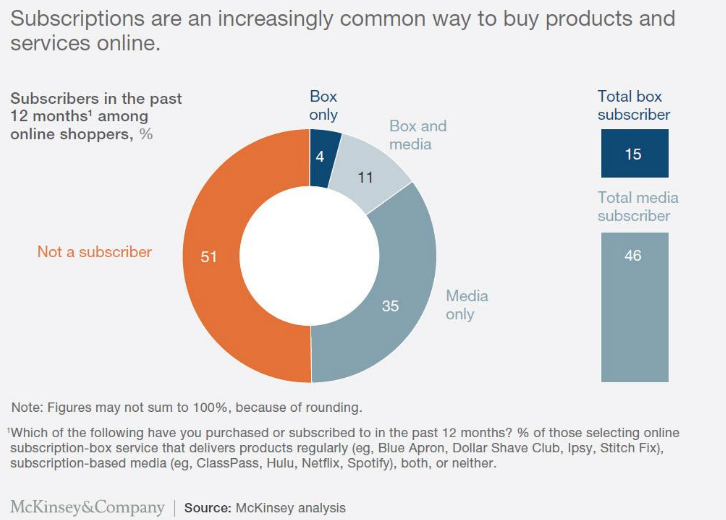
In the last five years, this model has grown by more than 100%.

Businesses that know how to offer valuable subscriptions end up with extremely loyal customers, which is why it’s such an effective customer retention strategy.

Even ecommerce brands have been using subscriptions to drive sales.

That’s because the consumer market has accepted this model, causing it to grow in popularity over the last year.

grow

Once you’re able to get customers to pay for a subscription, you’ll get recurring sales on a monthly or annual basis.

As a result, your company will be in a great position for sustainable growth over time.

But if you’ve never implemented a subscription model to your business, it might be a little bit intimidating for you. Where do you start?

Some of you may have already set up a subscription model for your business. But unfortunately, it’s not working out as well as you thought it would.

That’s why I created this guide.

Whether you’re new to the subscription concept or you want to make adjustments to your existing subscription model, I’ll explain what you need to do to be successful in this space.

Don’t charge for your basic package

Offer your most basic package for free.

Now for some of you, this may not be realistic. For example, if you’re offering clothing or accessories delivered on a monthly basis to your customers, you can’t just give that away for free each month.

But for those of you who are offering an intangible service, it’s a great way to get people interested if you have multiple packages.

  • games
  • mobile apps
  • streaming services

These are all great examples of how you can leverage a free package to eventually get your customers to pay for the service if you’re in these industries.

For those of you who have a mobile application, this strategy is a great way to improve the profitability of your small business mobile app.

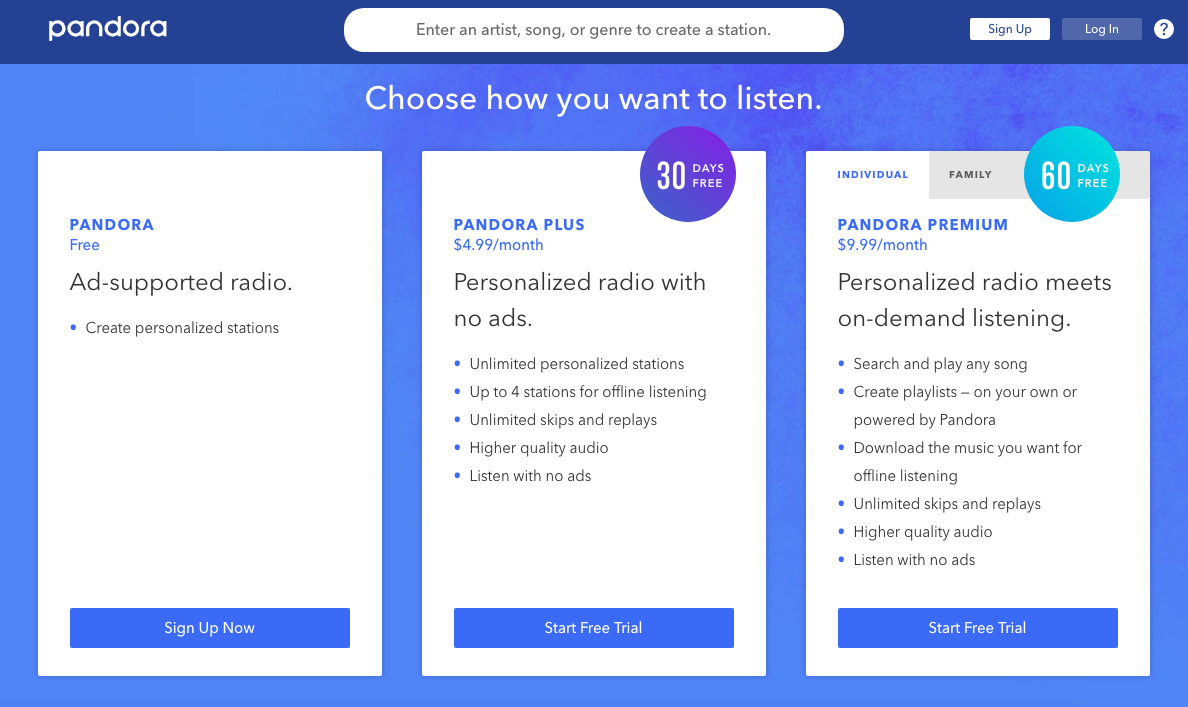
Let’s look at the Pandora packages as an example.

pandora

For those of you who aren’t familiar with this company, they offer a music streaming service.

As you can see from their website, they have three different listening packages. The basic package is free.

This introductory package gets people familiar with the service. If they had to pay from the beginning, they’d be less likely to try it out in the first place.

But if you offer something for free, there is no risk in people using it.

Now you’ll have a better chance of getting these free subscribers to upgrade their service for a fee.

Offer a free trial for your premium services

So you’ve offered your basic package for free. But customers still haven’t upgraded yet.

Why not?

Well, they don’t know what they’re missing.

If you offer them a free trial of a paid service, it will be harder for them to go back to the basic version. Let’s refer back to the Pandora example.

They offer a 30-day free trial for their $4.99 package. So for one month, customers on this trial will experience personalized content with no advertisements.

Once they go back to music that’s not personalized and are forced to listen to ads, they’ll be more inclined to pay the monthly fee for the enhanced experience.

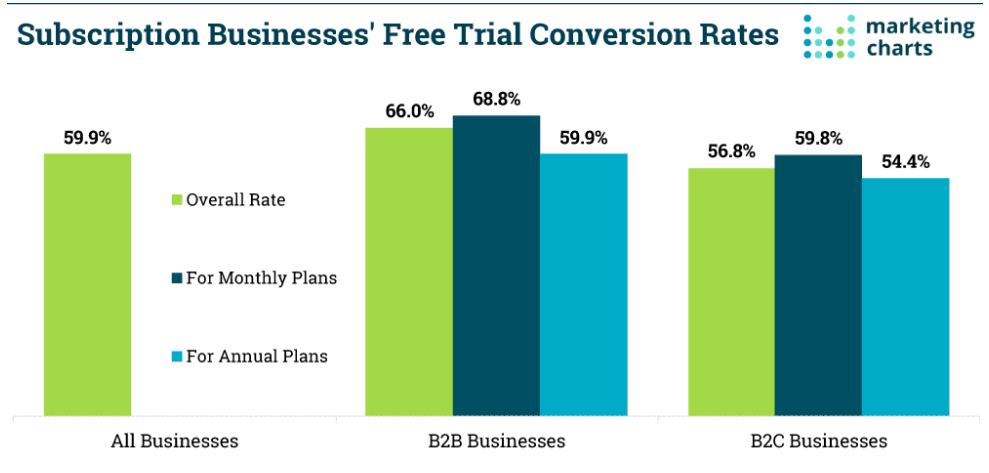
Roughly 60% of all businesses are able to convert free trial users to customers.

free trial

Those conversion rates are outstanding.

For those of you who are offering physical products, such as a box of items mailed to customers on a monthly basis, you can use this strategy as well.

Even though you may not be able to do this long-term, you can still offer a month or two of your package for free.

Here’s something else to consider. The more expensive your subscription is, the longer you should offer the free trial for.

Again, we’ll continue to use Pandora as an example.

They offer a 60-day free trial for customers who want to try out their most expensive package at $9.99 per month.

It’s worth giving away two months for free if they’re able to generate $120 per year from each subscriber.

Set up different membership plans

Profitable subscription models have different plans. There are a few reasons for this.

First of all, not everyone can afford your most expensive membership, but you don’t necessarily want to exclude those people from being paying customers.

Second, you want to offer plans based on the needs of different customers.

People don’t want to pay for a feature or benefit that they won’t use. But if someone knows that they need something, they’ll gladly pay an additional fee.

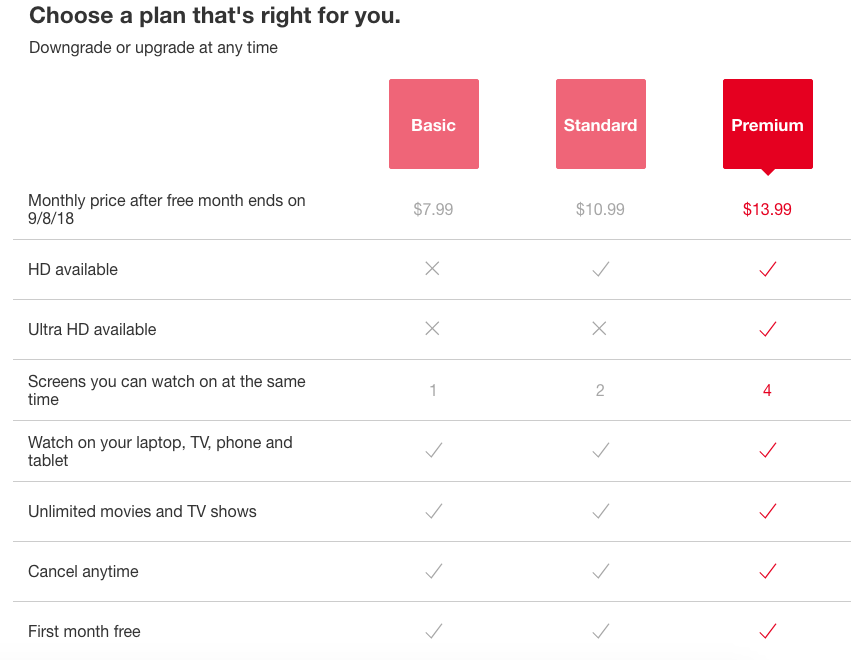
Let’s look at the Netflix membership plans as an example.

netflix

All of their plans offer the first month for free and the ability to cancel anytime. Their customers can watch from their laptops, tablets, phones, and TVs.

But the basic membership doesn’t offer HD video and only lets you watch on one screen at a time.

So for someone who doesn’t have an HD television and doesn’t plan on sharing the account with anyone else, this is a suitable option.

But if you’ve got a family that’s going to be sharing the account and streaming simultaneously from multiple HD devices, this won’t be enough for you.

Those customers will need to subscribe to the most expensive option.

Allowing customers to select their plan gives them a personalized experience. Plus, we already know that personalizing your website boosts conversions.

So analyze your features and come up with a few different membership plans that target the needs of various customers.

Give discounts to customers who pay in advance

Obviously, you want your customers to be a subscriber for as long as possible. That’s how you make money with recurring sales.

But with that said, you don’t want to force your customers into a long-term contract.

This strategy can make people hesitate to sign up. Consumers like having the option to cancel at any time without having to pay a penalty.

That’s why monthly subscription plans are so common.

The problem with monthly subscriptions is that if a customer cancels after a couple of months, you didn’t really have a chance to generate high profits from them.

Who knows. Maybe in that short period of time they didn’t have a chance to fully experience everything that your subscription plan has to offer.

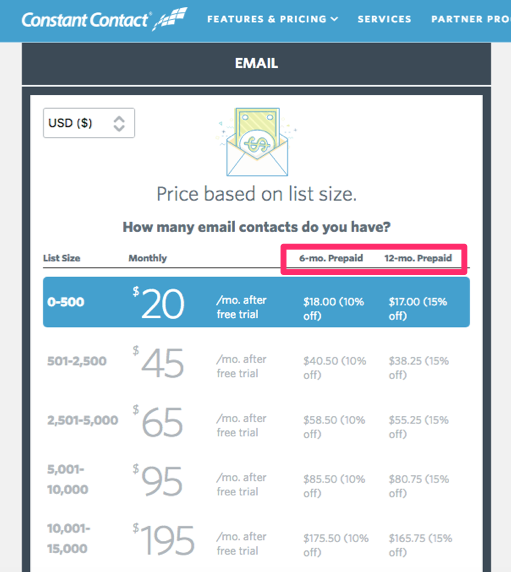
If you want people to commit for longer periods of time, you can offer discounts if they pay in advance. Take a look at this example from Constant Contact.

constant contact

As you can see, they offer a 10% discount and 15% discount for subscribers who pay for six months and 12 months in advance, respectively.

Even though you’re making less off each customer per month, you’re locking them in for a longer term.

This is a much more effective strategy than forcing your customers to commit to a year contract that charges them on a monthly basis.

Giving them the option benefits both of you. They’ll get a discounted rate, and you’re guaranteed to make money.

Plus, it adds more of a personal touch, which we previously talked about and we’ll continue discussing in greater detail throughout this guide.

Provide added benefits to your customers

Depending on your business, offering subscriptions exclusively may not be in your best interest.

You can still have other business models that you use in addition to your subscription model.

So for those of you who fall into that category, you need to make sure that the subscription memberships come with benefits that justify the cost to your customers.

Otherwise, they won’t have any incentive to join.

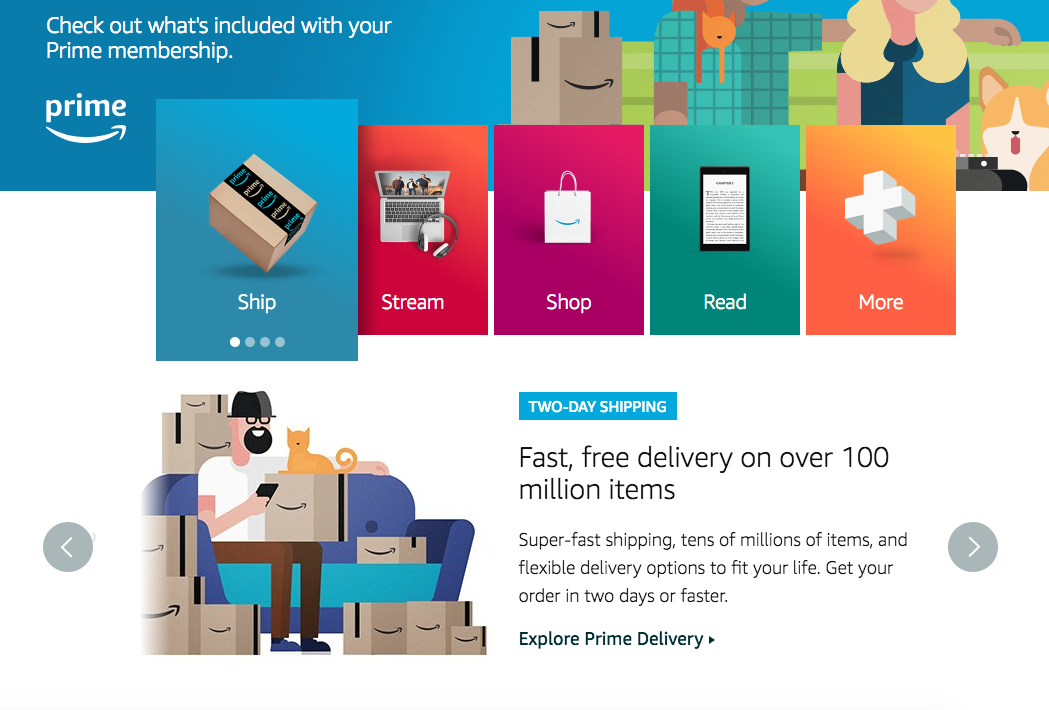
A perfect example of what I’m talking about is the Amazon Prime membership.

amazon prime

You don’t need to pay a monthly or annual fee to buy something on Amazon. Anyone can use this ecommerce platform.

But for customers who shop frequently and want their items delivered as fast as possible, they may be more inclined to pay for the Amazon Prime subscription.

This membership offers two-day free shipping for subscribers.

In addition to the shipping benefits, Amazon Prime members also get access to music and video streaming services.

As I explained earlier, they have packages designed for everyone.

For customers who just want the video streaming service, they can pay $8.99 per month.

To get all of the membership benefits, including video streaming, two-day shipping, music streaming, photo storage, unlimited reading, and free same-day delivery for certain items, it costs $12.99 per month.

That totals just under $156 for the year, assuming that they keep the membership without canceling.

But if a customer wants to save money and knows that they’ll use the service for an entire year, they can pay $119 annually and save roughly 25% on their membership.

Amazon also offers a free trial for prospective members to try out their Prime service for 30 days at no cost.

Do you see how they incorporated most of the strategies that we talked about so far?

It’s always a good idea to follow the lead of successful companies and apply their concepts to your own business.

Set your subscriptions to renew automatically

Let’s say you get someone to sign up for one of your subscriptions. That’s great news!

You’ve got their credit card information, and you’re ready to start processing their account.

But you want to make sure that you set these memberships up to renew automatically.

Don’t worry, I’m not saying that you should do this to be deceiving or trick your customers. Just include this in the terms that they agree to when they’re signing up.

You don’t want to annoy them each month asking them for their credit card information again. So get their permission from the beginning to bill their card each month.

This is a great way to get recurring sales.

If you give the customer the option to opt-out each month, they may decide to cancel.

But if their card just gets charged without any contact or notification, they may just keep the service whether they’re using it or not.

For example, how many of you have a gym membership or have had a gym membership in the past? You get charged each month whether you’re there every day or never show up.

You don’t cancel it because it’s more of a pain to go through that process and then sign up again when you want to go.

So your customers will treat this membership the same way. Sure, you obviously want your customers to take advantage of the products and services that you’re offering.

But if they’re paying for it, either way, does it really matter if they do? Not really.

Allow your customers to customize their subscriptions

We’ve talked about personalization quite a bit in this guide.

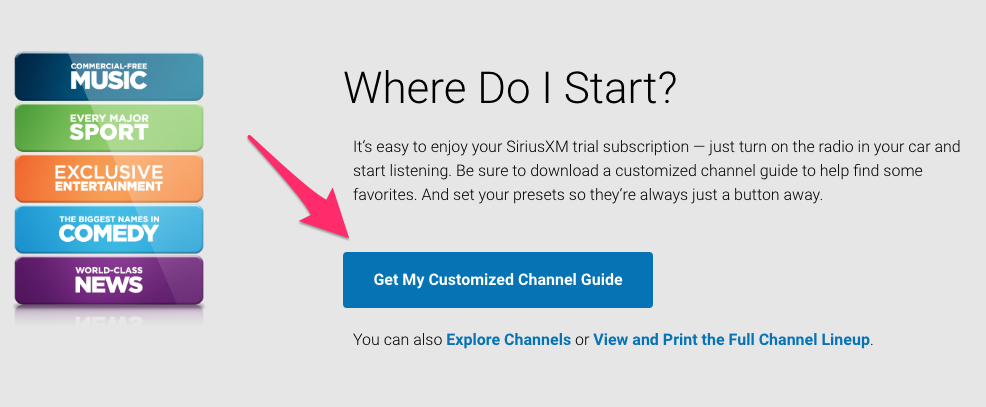
You can take this concept to the next level by allowing your customers to fully customize their subscriptions. Take a look at this example from Sirius XM Radio.

sirius xm

They have membership options that allow customers to pick and choose which stations they want on their account.

You can find ways to apply this same concept to your business as well.

For example, let’s say that your brand sales beard grooming and shaving products for men.

You sell products directly from your website, and you also have subscription options to deliver a box of products on a monthly basis. Allow your membership subscribers to customize each order.

Some customers may want more razors, while others want more shaving cream and after shave lotion.

The membership prices will vary based on the type of products and quantity of items that the customer wants to be delivered each month.

Conclusion

The subscription business model is extremely profitable, and it’s growing in popularity.

Whether you’re adding subscriptions to your business for the first time or you’re making changes to your existing model, there are certain tips and tricks that will improve your chances of being successful.

Offer your basic package at no charge. Then, let customers try out the premium options with a free trial.

Create different membership plans to target a wider range of prospective customers.

Your standard memberships should be charged on a monthly basis and renew automatically. Encourage customers to pay in advance by offering discounted rates for an annual plan.

Provide added benefits to make sure that your subscriptions are worth the cost.

Focus on personalization and customization that entice consumers to sign up for your subscription service.

If you follow the advice that I’ve outlined in this guide, you’ll be able to achieve sustainable growth in the form of recurring sales through subscriptions.

How is your brand using the subscription business model to generate recurring sales?


Source Quick Sprout https://ift.tt/2Neudfe

This Unique Auto Repair Shop Offers Special Services and Advice for Women

Questions About Sabbaticals, Side Gigs, iPad Uses, and More!

What’s inside? Here are the questions answered in today’s reader mailbag, boiled down to summaries of five or fewer words. Click on the number to jump straight down to the question.
1. Afraid to invest in 401(k)
2. Cutting off child
3. Musings on a difficult house
4. Sabbatical and job risk?
5. Sharing Simple Dollar information
6. NY Times on early retirement
7. Cloth kitchen towels are inconvenient
8. Twine app question
9. Animation career advice
10. Opening an insurance company
11. Thoughts on Patreon
12. Finding uses for iPad

In the last year or so, several people in my life have become parents for the first time.

I love being a parent and I wouldn’t trade it for anything, but the reality of it is that if you actually do your job as a parent with any degree of responsibility, it’s going to massively change your life. You suddenly find yourself trying to figure out how to do a bunch of new things. You find yourself with a ton of additional time commitments that largely boot social activities and much of your solid blocks of free time out of your life. You often don’t get as much sleep as you once did. All of that hits at once, and it’s hard, even if you think you’re ready for it.

Some of my closest friends in the world are people who were friends with us before we had kids and have remained friends with us through all of the changes. A lot of friends simply fell off the radar at some point – we became inconvenient for them. I would far rather have five true friends than a diverse social life.

It’s been interesting watching the various people in my life deal with these changes. Some have handled it in stride. Some are very stressed and tired. Some are struggling with little free time. Some are dealing with friends that are “disappearing.” Some are just glowing with the new experience.

Different people handle things in different ways.

On with the questions.

Q1: Afraid to invest in 401(k)

I started working at my current job in 2013. 29/F/single. I know I should sign up for the 401(k) but I am really freaked out by the prospect of just losing some of my hard earned money to the market. From reading about retirement planning I would say I am extremely risk averse. How should I save for retirement if I don’t want to lose any of my savings?
– Quinn

There are very few investment options out there that are so low risk that you have almost no chance of losing money. The problem is that such investments have a really poor return, barely matching inflation.

For example, you can put your money in a money market account which will return around 1% per year these days and won’t lose money. You can buy some bonds that will return better than that and slightly beat inflation with very, very, very low risk, but you can’t touch the money for years (unless you sell the bond to someone, I suppose).

The thing is, short term risk and return usually come hand in hand. If you demand no risk, you’re going to have almost no return on your money. That’s just the reality of things. The return comes as a result of that risk.

You should always remember that you have a very long time until retirement. There is no period of 25 years or more in which people have ever lost money in a broad investment in the stock market (like matching the S&P 500). Losses occur only over shorter time frames, like three years or five years. I think my best advice to you is to stop looking at the time frame of a day or a week or a month or a year or even a decade when it comes to your investments. All that matters are returns over the course of 20 years or more. Focus on that time scale above all else.

Q2: Cutting off child

My husband and I are in our late forties. We have a child that’s 24. He graduated from college two years ago with a degree in electrical engineering that we thought would quickly net him a great job but he basically never bothered to apply for anything. He just moved into his old bedroom again and spends most of his time playing video games. We told him he had to move out if he didn’t get a job so he got a dead end job at a gas station. When we bring up the subject he says that he hates electrical engineering and would kill himself if he had to do that for the rest of his life but he has no answer about what he’s going to do with his life. We were considering downsizing to a smaller home before he moved back in. I don’t mind helping him if he’s trying but it doesn’t feel like he’s trying beyond matching the letter of the absolute minimum we ask of him. What should we do?
– Brenda

You should raise the absolute minimum of what you’re asking of him.

The only way to get him to start building a life for himself is to nudge him out of the nest like birds do. That nudging starts gently and keeps increasing in firmness until the bird leaves. For some, it takes only a gentle nudge. For others, it gradually escalates into nearly being shoved out of the nest.

What is the next step your son needs to accomplish on his route to full independence? I’d say that he’s either actively applying for electrical engineering work or actively in the process of going back to school. If he’s not doing either, then he needs to move out. Be firm about this policy and stick with it.

Q3: Musings on a difficult house

Recently, after 9 years of overseas posting (and just as many years of overseas education prior to that), our family just moved back to my in-laws’ place. By this time my parents are deceased and we have no house, so we figure that this temporary arrangement would work out best for everyone concerned: we got a place to stay, near a good school for the kids, we can ‘take care’ of the aging parents, while they enjoy having the grandkids about instead of somewhere beyond some seas. Too bad life is not perfect, right?

Thankfully we have not gotten to a bad personality clash, however, we do get afoul on a big problem: stuff. Like, literally, objects, posession, belongings…. stuff. There are just so much stuff in this house. My in-laws are (thankfully) doing pretty well financially, and they live in a 1500 sq. ft. house in the city. The house, however, is FULL of stuff. There are equipment kept from years back, clothes (quite a portion of them does not fit anymore), freebies (both my in laws are doctors), etc etc etc. Neither of them are quite hoarders, but they do find it difficult to throw stuff away. Then there is also a sister in law (not in residence) who seem to treat the house like a secondary storage facilities while she continues feeding her shopping addiction.

In addition to the stuff is also the fact that my in laws did not seem to believe in the value of having things done by professional. The house was basically designed by a medical doctor, and most probably built (and maintained) by non-certified contractor that also sells his services as jack-of-all-trades with disastrous results in various aspects of the house: working design, electrical wiring, plumbing etc. Cleaning the house is not easy, and all the stuff being kept here also complicate the problem.

Basically this is a very high maintenance house that does not work well and very much beyond the ability of 2 aging pensioner to keep properly. Unfortunately they refused to move. So.. I suppose we have to make it work.

My sharing basically boils down to a few things:

1. There is value in having professional do their stuff: designing a building, building, wiring, plumbing. The question you want to ask yourself: how difficult would you like your life to be?
2. Empty nester, do a mirror check, and admit if sticking to an old standard (big house, lots of stuff, etc) is really what you want to do with the rest of your days
3. Kids who already left the house: your parents house is NOT a back up storage facility. Take responsibility of your own stuff, people!

Sometimes, I don’t even know why my husband and I are even making the effort to clean up the house (oh yeah, I guess we would like to feel comfortable while we stay here) when nobody seems to care. But then I remember something. I had to deal with my parents’ stuff after their death and it was pretty overwhelming. Their stuff is still meagre compared to what I am facing now and it was pretty overwhelming still. Now that we are in between jobs (we still have enough savings and we do plan on taking a couple of months break), it seem like a good time to do this just so it wouldn’t be too much just in case something happen to either of them. The current timing is ‘convenient’ which is not something you can count on at any other time. So we forged on.
– Angela

Angela’s story is a perfect example of why it’s incredibly valuable to keep your possessions under control and why it’s a good idea, particularly as you age, to live in a smaller and easier to maintain home with fewer possessions.

I wish that I had good advice for moderate hoarding situations, but I don’t, aside from simply asking yourself what good really comes from saving this item, whether you’ll actually remember it when you need it, whether it’s requiring a larger home just to store it, and how this stuff will be dealt with when you pass. Those thoughts have already moved me away from having as many possessions.

I’m trying to nudge my parents in this direction, too. They have a small home, but it has a lot of things hidden away in there.

Q4: Sabbatical and job risk?

I am 29/M. I have dreamed since I was a kid of walking the Appalachian Trail. I have been doing tons of hiking since moving to Colorado 5 years ago and I want to actually do the Appalachian Trail in the next few years. I estimate it will take me six months to do it.

Obviously this would require a sabbatical from my job. I have worked at [a very large business] for the last five years and I think I have a strong reputation here.

What would be the best approach to taking a six month sabbatical in a year or two that wouldn’t risk permanently losing my job?
– Joe

Sit down right now and talk to your boss about it directly. Simply state that walking the Appalachian Trail has been a lifelong goal of yours and that you hope to do so in the next two years, but then describe what it would take for you to do so.

Being at a large company actually works in your favor here because it’s easier for them to spread out your work during your sabbatical, provided that you prepare appropriately for it.

There is always a risk with a sabbatical that your organization might devalue you while you’re gone leaving you in a worse career position when you return. The best way to counteract this is to build a strong reputation for quality work before you leave so that your absence is missed.

So, my advice? Do a good job. Talk to your boss sooner rather than later. Start documenting now.

Q5: Sharing Simple Dollar information

I love The Simple Dollar ideas I’m receiving in my email. What can I do to share this information via a newsletter or email to my clients?
– Jim

You can feel free to directly forward the emails from The Simple Dollar to your friends, family, and clients.

If you wish to quote writing from The Simple Dollar, feel free to do so, just include a link back to the original article. You can always find the original article by clicking on the title of the article in your email.

If you wish to fully reprint an article, please contact us by using the contact form.

Q6: NY Times on early retirement

Wanted to get your thoughts on this article. https://www.nytimes.com/2018/09/01/style/fire-financial-independence-retire-early.html
– Terry

This is a solid article on aggressive saving for early retirement that spells out the strategy with some nice stories.

My only objection to it is that it explains this strategy as a “millennial thing.” I don’t agree with that. While it’s definitely a strategy that can be used by millennials to great success, that doesn’t mean that a person who is older can’t start saving aggressively in order to retire earlier than they might otherwise have done.

Financial independence is a good financial goal for everyone. It’s not just a “millennial thing.”

Q7: Cloth kitchen towels are inconvenient

I took your advice and switched to having a “cloth towel drawer” in my kitchen rather than using paper towels for everything. I got a bunch of them for cheap. After using them for a month I am just finding them less convenient than paper towels mostly because of the need to wash them. Advice?
– Tim

You just need to get a system in place.

Our system is simple. We have a cloth towel drawer in our kitchen. Whenever we use one and it’s no longer reusable without being cleaned, we toss it either into a small bin under the sink or directly down the stairs so that it’s close to the laundry room. Those towels usually get washed in the next load of whites, folded, and returned to the drawer.

It really doesn’t take any more time than throwing the paper towels in the trash and then dealing with the extra trash. Instead, we’re throwing the cloth towels down the stairs and then dealing with a bit of extra laundry (it doesn’t cause another load, just another item to fold and return).

Given the savings (no more paper towel purchases) and the minimal time cost, it’s a good system.

Q8: Twine app question

Has anyone a review on John Hancock’s Twine app? I’m trying to find the best way to invest some short term savings (saving 20k for a car) and I’m wondering if there are ways to invest the money other than in a savings account.
– Geoff

Twine is a “savings app for couples” that encourages couples to link their separate accounts together so that both can see the account balances and set and plan for goals together.

It’s a great idea for newer couples who are in the process of merging their financial accounts or older couples who simply want convenient glances at their partner’s retirement and investment accounts for planning ahead.

The thing is, over time, many couples migrate toward sharing all of their day-to-day accounts and openly share access to their retirement accounts anyway. In other words, I think Twine is a great bridge from separate accounts to shared accounts, but eventually it’s not necessary. I know it’s not useful for Sarah and myself.

Q9: Animation career advice

I am an artist wanting to pursue a career in the animation field. Considering that it is kind of the norm for animators to have bachelors degrees, is it wise for me to go to a technical school and graduate with a certification degree instead where I can graduate and learn faster in that specific major? Is it optional to still make it inside of the doors, just as any one else with a bachelors degree instead?
– Isaac

If I were you, I would ask animators already in the field. What do they recommend for education? Some fields offer a lot of employment opportunities for trade school graduates, while others do not. The only way to know is to ask around within the industry.

If I were you, I’d identify a big handful of working animators and contact them individually asking for educational advice. Twitter is a great place to start with something like this.

I will say this: regardless of where you go to school, one of the best things you can do is to start working on complete projects of your work that can be shared as a portfolio of sorts. Take what you’re learning and go beyond the classes into actually making things, then share those things. This will not only teach you a lot, but it gets something of a portfolio for yourself out there.

Q10: Opening an insurance company

How can I open my own business insurance company?
– Andy

There’s already a good article on The Simple Dollar covering most of what you need to know. Check it out – How to Start Your Own Insurance Business.

I will say that one of the most important things in insurance sales is personality. Are you charismatic and extroverted? Can you easily build rapport and good relationships with people? If you can’t answer those things with an honest and resounding “yes,” then you should be very careful about entering a field that relies almost entirely on sales and customer service.

I would also be careful about taking out loans for such a business unless you already have a strong roster of potential clients. If you’re going into this with a future of nothing but cold calls, you either need to be an exceptional salesperson or very lucky.

Q11: Thoughts on Patreon

I support several of my favorite writers and podcasters through Patreon. What are your thoughts on Patreon? Do you have one?
– Jeffrey

I do not have a Patreon for my personal finance writing. The big reason is that I would prefer that any readers who get genuine value from my writing “pay” for it by either sharing the stuff they value with others or getting their own financial house in order. The site earns income through ad support and affiliate links.

Having said that, I would definitely consider Patreon if I were writing or producing content consistently in other fields. I think that the idea of “micro patronage,” where people who support a writer or a podcaster or a video maker support them by giving them a couple of dollars a month or a dollar for each new article/video/podcast they make, is a great strategy for both parties. It allows people who really value content and want to see it continue to actively take part in that, while it gives the content creator some financial support to continue their work either as a part time gig or a full time one.

I am a huge believer of supporting what you value. If you value someone’s writing or their podcast or their videos, support them in some way. You can do that by throwing a few dollars a month to their Patreon if they have one, or just sharing their articles or videos or podcasts with your friends or with people you know who are fans of the topic. The same is true for companies that provide services with a free version and a paid version; if you find yourself using the free version a lot and relying on it, it’s worthwhile to pay for the paid version just so it’s more likely to stick around.

Q12: Finding uses for iPad

My kids got me a 9.7″ iPad and an Apple Pencil for my birthday. I played around with it but I really don’t know what to do with it. Writing on it is clunky (I am sending this email on my old laptop!). What do you do with your iPad? I don’t want to just sell it because my kids were so thrilled to get it for me but I don’t find myself using it at all.
– Kristin

I have a 10.5″ iPad Pro with a Pencil and a case that has a keyboard built into it and I use it for a bunch of things. Here’s a brief list:

– I sometimes use it for writing articles for The Simple Dollar.
– I use it alongside the Pencil to take notes when I’m reading a book.
– I often prop it up on its side in the kitchen when making something that involves a recipe or a video.
– I do the same when doing some DIY or repair projects, just propping it up on its side with the case to watch a video when doing a project.
– I really like reading on it, so I often use it as a Kindle or to read PDFs or other documents on it. In fact, I really wish my entire cookbook collection was in PDF format so I could just keep them on an iPad. I turn off notifications when doing this by toggling it into Airplane Mode.
– I have several games I enjoy playing on it, especially Twilight Struggle.
– I watch Netflix on it occasionally.
– I often use it as a “second screen” when working on my laptop or my desktop computer, as I prop it up on its side in the case when doing so. It usually displays my to-do list.

Between those things, I find myself using it daily, usually multiple times a day.

Having listed all of that stuff, I really don’t recommend investing a ton of money into a new iPad. Instead, I’d try to get an older used iPad off of Craigslist or something and see if you find value in it. For some reason, iPads seem to click well with some people and not click with others.

Got any questions? The best way to ask is to follow me on Facebook and ask questions directly there. I’ll attempt to answer them in a future mailbag (which, by way of full disclosure, may also get re-posted on other websites that pick up my blog). However, I do receive many, many questions per week, so I may not necessarily be able to answer yours.

The post Questions About Sabbaticals, Side Gigs, iPad Uses, and More! appeared first on The Simple Dollar.


Source The Simple Dollar https://ift.tt/2Ce6DLD

Patrice Banks’ Auto Repair Shop Is More Than a Business — It’s Her Mission