Thousands of courses for $10 728x90

الأحد، 30 سبتمبر 2018

Don’t Get Blindsided by These Retirement Risks

Retirement planning doesn’t let you just run out the clock; any number of threats can turn a winning plan into a loss.

Unforeseen circumstances are the downfall of any great retirement plan, and they don’t all have to be tragedies. Unexpected deaths can wreak havoc on retirement and estate planning, but so can an unexpectedly long life. Meanwhile, a changing economic climate leaves retirement funds vulnerable to an increased cost of living. So how do you combat these changes?

We talked to Thomas Walsh, a certified financial planner with Palisades Hudson Financial Group in Atlanta, who brought four key retirement threats to our attention. He also laid out strategies for dealing with all four while not deviating too significantly from a retirement plan.

1. Premature death of a spouse

It isn’t something that most people want to think about, but premature death doesn’t only affect estate planning, inheritance, and succession planning (if you own a business), but financial planning in general. Funeral costs and outstanding debt need to be dealt with, but the loss of a partner’s Social Security checks or private pension can make that a lot more difficult. “Many people don’t consider this,” Walsh says.

Solution: Changing the plan, with the help of life insurance

The Social Security Administration provides online tools to assess how your benefits may change due to the death of a spouse. Survivor benefits help, but only if you’re age 60 or older or caring for children under age 16. Meanwhile, you may actually have to give back some of the deceased’s benefits.

If there’s still other income (like a salary or a pension) that can’t be replaced, you may have to do some math and determine just how much you’ll need to cover the shortfall. “Life insurance can be used to make up for the loss of a spouse’s pension income,” Walsh says, but no one plan works for everyone. For younger couples, Walsh recommends inexpensive term life insurance. For people past 65, however, cash-value policies such as whole life end up being more affordable over the long term.

Just make sure you’re communicating the whole way through. If one of you is more financially savvy than the other, that person is going to want to make sure their spouse is taken care of. Provide routine updates and maintain a list of all checking, savings, investments, and credit cards, as well as an estimate of each account balance, Walsh says.

If you pay bills online, keep a list or file with the logins and passwords for each account to avoid late payment penalties and missed payments. Keep a file for your important documents like insurance policies, wills, and powers-of-attorney. Make sure your spouse knows your financial adviser, tax preparer, attorney, and insurance agent. Unfortunately, they’ll be some of the first people your spouse has to contact after you die, so it will be helpful if you’ve already made the introduction, Walsh says.

2. Health care costs

Just about every retirement survey conducted by financial firms finds that people underestimate what they’ll need to save for health care and don’t seem to realize how much health care costs are going to rise. Medicare plans, including Medigap and Medicare Advantage, don’t cover most long-term care, dentistry, vision care, hearing aids, eyeglasses, or private nursing. Prescription drug coverage also has a caveat for the most expensive drugs, which means you could pay up to $5,000 annually. Meanwhile, medical cost inflation regularly outpaces standard inflation.

“If you face a major medical issue or need long-term care, you may have to spend your savings at a much faster pace than you expected,” Walsh says. “I’ve seen many clients unintentionally low-ball their estimated medical costs in retirement because they’re in perfect health at age 55. But health can change quickly, especially in old age.”

Solution: A health savings account or other tax-advantaged account

The biggest upside to a health savings account (HSA) isn’t simply saving for future medical expenses: It’s the combination of the immediate tax deduction for your contributions and future income tax exemption on withdrawals for qualified medical expenses.

However, to qualify for an HSA, you must have a high-deductible health plan, and you can’t be on Medicare. The minimum annual deductible is $1,300 for self-coverage and $2,600 for family coverage.

While employers typically offer an HSA as part of a health care package, any qualifying individual can open an HSA with banks and insurers that offer them. If you don’t qualify, retirement plans like IRAs, Roth IRAs and 401(k)s basically perform the same function. To keep up with health care costs, though, Walsh suggests keeping a diverse portfolio with at least a portion in further diversified stocks.

3. Inflation

Inflation has averaged roughly 4 percent a year over the past 50 years, according to the U.S. Bureau of Labor Statistics (though it’s held under 3 percent so far this century). Using the longer-term model, $1 today would buy only 46 cents worth of goods in 20 years.

Solution: A diversified investment portfolio

Walsh suggests a mix of stock mutual funds and exchange-traded funds (ETFs). How much you’ll invest in each varies by your risk tolerance.

Also, resist the temptation to abandon stocks completely during retirement. “Being too conservative with your investments during retirement is a mistake,” Walsh says. “If you have all of your savings in low-yielding investments like bonds or CDs, it will be difficult to keep up with inflation.”

Stocks will offer the best long-term returns but are more volatile year to year. You can manage that risk by putting together a mix of U.S. large-capitalization, U.S. small-cap, international, natural resources, and real estate investments. By building your portfolio with mutual funds and ETFs, you tamp down on risk by owning thousands of individual securities across multiple asset classes.

4: Outliving your savings

Your chances of living longer increase as you age. For example, according to the Internal Revenue Service’s life expectancy tables, a 30-year-old is expected to live to age 83. Yet, if you’re 65 years old today, you can expect to live until age 86.

Solution: Periodic planning

Take stock of your health and investments, but also take a glimpse at those IRS tables every so often. They won’t gauge exactly how long you’ll live, but they’ll give you some idea of what to expect and how to plan. As Walsh says, the effectiveness of your retirement plan is only as good as the assumptions going into it. If you underestimate how long you’ll live, you’ll end up shortchanging yourself.

“Hopefully, you’ll live happily to a very old age. Give yourself some cushion and save and invest with that in mind,” Walsh says.

More by Jason Notte:

The post Don’t Get Blindsided by These Retirement Risks appeared first on The Simple Dollar.


Source The Simple Dollar https://ift.tt/2xOJwTj

You Don’t Need a Green Thumb to Easily Grow These 5 Herbs at Home

السبت، 29 سبتمبر 2018

Books with Impact: Triggers

The “Books with Impact” series takes a deeper look at specific books that have had a profound impact on my financial, professional, and personal growth by extracting specific points of advice from those books and looking at how I’ve applied them in my life with successful results. The previous entry in this series covered Walden by Henry David Thoreau.

I first read Triggers about two years ago… and it was one of those experiences where I could tell that the book was meaningful, but it simply wasn’t the right moment in my life for the book to click with me. I did my usual routine with nonfiction books, which is that I highlighted it like crazy as I was reading it, let it sit for a few weeks, and then went back through the highlights, writing down the ones that were still jumping out at me, and writing down my own reflections on those thoughts, too. Then, for whatever reason, I put those notes and thoughts aside and didn’t think about them any more.

Then, several months ago, one of my favorite podcasts released an episode where they discussed the book in detail. After listening to that discussion, I went back and looked through my notes on it, and something clicked this time. I reread the book and, after my second time through it, something clicked, and it nudged me to put the principles into practice on something of a trial basis.

It’s been a pretty stunning success, and I’ve moved on to trying to use them on a much broader basis in my life. I can feel the impact of this book constantly in my life right now, and I wanted to share it with you.

Triggers is fairly well summarized by its subtitle: Creating Behavior That Lasts – Becoming the Person You Want to Be. The core idea of the book is that virtually everything we do is made up of a sequence of behaviors that are triggered by our internal and external environment. Something inside us or outside us triggers a thought or a behavior, we execute that behavior, and then the cycle loops.

The problem is that we’ve built a life out of a complex set of triggers and behaviors and changing them is incredibly difficult. It’s a mix of changing the actual triggers in our environment – adding new ones, reducing or eliminating old ones – as well as changing the behavior we have in response to those triggers.

Goldsmith’s basic model is this: an event of some kind (the trigger) happens, we have a cascade of thoughts (often mostly subconscious, but some conscious), and this often results in us taking some kind of action (or non-action) in response.

A concrete example is probably a good idea here.

Let’s say I’m driving along in my car and I drive by one of my favorite independent bookstores in the world – Plot Twist Bookstore in Ankeny, Iowa. (Please, if you live in central Iowa and like books, stop in there if you get a chance.) The triggering event, for me, is getting close to that store – I notice the sign, or I simply realize by other environmental triggers that I’m close to the store.

Inside of me, a series of thoughts occur, most of them subconscious. I’m deliberating whether or not I should stop at Plot Twist and check out their selections, which comes with a real risk of buying a book or two, or drive on by and get to my destination. Being in that location is the trigger, my conscious and subconscious mind percolate with thoughts, and out comes a decision – I decide to stop in for a few minutes and see what’s on the shelf.

Another example: let’s say I’m walking through the kitchen, headed for the bathroom on the south end of the kitchen, when I walk by the fridge. That trigger causes a subconscious thought process, one that I am barely even aware of – am I hungry? is there something yummy in there? – and I take action on it by raiding the fridge or by continuing onward to the bathroom.

The core of his argument is that, if we want to change the actions we take in order to elicit better behavior, we need to find effective ways of either changing elements of our environment – which we have limited control over – or, more importantly, altering that cascade of thoughts in response to a trigger.

It makes sense. A lot of triggers in the environment are things that we can’t really change – sure, we can change a few things, but not everything. I can’t move the location of Plot Twist Bookstore (though I can, on occasion, drive a route to my destination that doesn’t take me anywhere near Plot Twist). I can’t really move the location of the fridge (I can use another bathroom, but… really? I’m not going to do that.) Goldsmith is fine with using some environmental changes to nudge things in a better direction, but the focus of the book is on that cascade of thoughts – the ones that take us from “trigger” to “action.”

Goldsmith spends perhaps the first half of the book setting up these concepts, as well as discussing the inherent difficulty of adult behavioral change.

The real problem is that we usually don’t recognize the vast, vast majority of the triggers in our environment and how we react to them. Instead, we walk through life being constantly nudged by triggers in our environment that nudge our behavior. (This is why advertisement and marketing is so effective – it’s all about nudges and altering that subconscious thought in response to a trigger just a little bit, just enough to get some more people to make a purchase.) We operate through inertia most of the time, almost on autopilot, bouncing from trigger->subconscious thoughts->behavioral response over and over again almost without recognizing it at all.

The revelatory point in this entire book boils down to one simple thing: the only way we change those subconscious thoughts and behaviors is through a truly effective feedback loop on our behavior. We need to be giving ourselves constant feedback on how well we’re doing with the changes we want to make in our lives.

Goldsmith offers an incredibly effective way of developing this kind of feedback loop for ourselves that hinges on a few key principles, two of which I really need to highlight here.

First of all, you should be judging your effort, not the results or the specific steps you took. Not every day is made the same – there are simply some days where you can’t make it to the gym because of other responsibilities. The question is how much effort you put into physical fitness that day, not whether you did some specific thing or achieved some specific result.

Second, this process tends to work best with an accountability partner of some kind who’s on board with helping you. That’s because it is easy for us to lie to ourselves, but much harder to lie to an accountability partner. I have a friend with whom I’ve been doing this practice for a while, and I’ve also been sharing the resulting data with a small group of close friends on a private website. Having others aware of what you’re doing adds the additional pressure of public humiliation to the equation.

Goldsmith calls this practice the “Daily Questions.”

Daily Questions

The daily questions are simply a series of questions intended to help you specifically evaluate the effort you’re putting into making a particular behavioral change happen in your life.

It starts with simply making a list of behaviors you want to change. This is different than a list of goals. For example, saying “I want to lose 20 pounds” isn’t a behavior you want to change. “I want to eat less food on impulse,” however, is a behavior you want to change, or “I want to eat smaller portions at meals” or “I want to eat a much higher proportion of vegetables” and so on. These behaviors certainly can overlap with goals, but the purpose here is to alter your behavior in such a way that the goal becomes a more or less inevitable outcome.

So, let’s say that the five behaviors we wanted to change are:
1. I want to eat mostly vegetables in my diet.
2. I want to improve my physical fitness.
3. I want to stop spending so much on coffee.
4. I want to read more.
5. I want to be a better listener for my close friends.

Goldsmith strongly recommends that being happier should be one of your behaviors that you want to change, simply because a happy mindset is one that makes all other change easier, that most people actually have a lot of things to be happy about in their lives even if they don’t think so, and that happiness is a conscious choice most of the time. So we’ll add that as a sixth one.

The idea of daily questions is that, as a daily practice, you ask yourself a simple question about how you did regarding that behavioral change today.

So, you might have these six questions at first glance:
1. Was I happy today?
2. Did I eat mostly vegetables today?
3. Did I improve my physical fitness today?
4. Did I control my spending on coffee today?
5. Did I read more today?
6. Was I a better listener for my close friends today?

Remember, however, a good daily question is focused on your personal effort to change this behavior, not on the yes/no completion of a specific step.

Goldsmith offers a brilliant formula for this: simply start each question with “Did I do my best today to…” So, your six questions might look like this:
1. Did I do my best to be happy today?
2. Did I do my best to eat mostly vegetables today?
3. Did I do my best to improve my physical fitness today?
4. Did I do my best to control my spending on coffee today?
5. Did I do my best to read more today?
6. Did I do my best to be a better listener for my close friends today?

Each evening, you simply go through each of those questions and answer them with a score on a scale of 1 to 10 based on how well you think you did on each one. Did you regularly try to be happy by thinking positive thoughts about situations and seeking out some things that made you joyful? You’d probably give yourself a pretty good score. On the other hand, if you downed a bunch of steak for dinner and left vegetables on your plate, your score for the “eating vegetables” question is probably pretty poor.

The nifty part about this is that it’s not about results, which can easily be affected by – and blamed on – the environment. Rather, it’s about your effort, which is strictly on you.

Think back to Goldsmith’s model for how we behave. We are triggered by things in our environment, go through a cascade of thoughts, and that results in behavior. The entire purpose of the “daily questions” is to nudge that cascade of thoughts, to focus solely on the first part of that equation that you control. It prevents you from simply blaming your environment for terrible behavior because, in the end, you chose that terrible behavior. Being at a steakhouse did not force you to eat a giant steak and no vegetables; rather, your own thought processes and choices did. If you had put effort into change there, you would have ordered a large salad and maybe a small steak instead, or ordered a meal, eaten the vegetables and just a bit of the steak and taken the rest with you, or simply asked your friends to eat at a different restaurant. That’s the “effort” – better thoughts you have and better actions you take as a result.

Giving a low number as a score for a particular question at the end of the day feels pretty awful, and that itself becomes a pretty strong motivator to do better, especially when you’re reporting that score to a friend.

How I Practice the Daily Questions

Surprisingly, Goldsmith really doesn’t offer a good methodology for actually doing these daily questions and making it into a daily practice. The one model he clearly gives in the book is simply having a friend ask you these questions each day, which doesn’t necessarily work for everyone’s life. He makes offhand mention of emailing his self-scores to people, but, again, he doesn’t quite put forward a model for doing it.

Over the last several months, I’ve worked out a system for doing this that has worked well for me, and I want to share it here.

First of all, I did a trial run of this in June with a few behaviors, then changed it up and decided to do this for 90 days with several behaviors in the third quarter (July through September). It helped a lot with the things I wanted to work on – some finance related, but many addressing other spheres of my life. For the next quarter (October through December), I’m going to do it again with a somewhat modified set of questions based on what I want to work on now.

So, here’s my system.

One of the first things I do each morning is to simply review the behaviors I’m working on. This is basically the “daily questions” written down as a series of statements.

Today, I will do my best to be happy.
Today, I will do my best to be humble.
Today, I will do my best to control my food intake.
Today, I will do my best to minimize my hobby spending.

Those are just four examples that I’m using for my upcoming quarter. I just get out of bed, read through those statements slowly as one of the first things I do for the day, and then start my day. Sometimes, I’ll look at those statements at other points during the day, just to make sure they’re “front of mind.”

At the end of the day, sometime in the hour or so before bedtime, I score myself on a series of questions that mirror those behavioral statements.

Did I do my best today to be happy?
Did I do my best today to be humble?
Did I do my best today to control my food intake?
Did I do my best today to minimize my hobby spending?

I do this in a spreadsheet that I can access from pretty much everywhere. I have a row for each question and a series of columns for each date where I can enter the scores.

For each question, I reflect on the day a bit and give myself a score based on my effort to do better, not necessarily the results. Some days, the environment around me gives me lots of easy reasons to be happy, and on some days, it does not. That means there are days when I feel pretty happy but didn’t put much effort into it, so I give it a mediocre score, while there are other days when I struggle but largely succeed at finding happiness, so I give it a pretty high score even if I didn’t seem quite as happy as I did on the easy day. The difference is effort – did I do my best to do this thing today?

This spreadsheet is shared with a couple of friends who are also sharing their sheets with me, so every day or two, I check their sheets and send them some positive thoughts or questions about their results. (You can share sheets really easy with Dropbox or Google Sheets.) They do the same for me. We have a strong understanding between us that the feedback we give here is never, ever intended to be hurtful, but only helpful, so if the question stings, that’s on us and not on the friend asking the question who is merely trying to help. I try to check their sheets every day if I can, and I make a strong effort to check if I miss a day.

Another key thing that I do is use this information as part of my weekly review. Each week, usually later on Sunday morning, I put aside an hour or so to review several things about the week gone by, use that information to assess how things are going, and think about what I want to do in the week ahead. My “trigger question” numbers for the last few weeks have become a significant part of that review. What do those numbers tell me? They usually make it clear what areas I’m doing well in in terms of my actual behavior and what areas I’m not doing well in, so that might inform things I specifically want to work on in the coming week.

What do the results look like, though?

As I mentioned, I did a trial run of this in June and then spent the last three months practicing this virtually every day. The big areas I wanted to work on were handling day-to-day stress better, improving my professional workflow, and generally feeling better about the state of my life, and the changes in each of those areas have been profound. The last quarter has been extremely trying in a number of ways, but through it I’ve managed to handle a ton of little stressors that have dropped on my plate while, at the same time, drastically improving my writing process and feeling better about things in general.

My focus in the questions I’m using for the rest of the year are around physical health, financial behavior, and building relationships, areas that I feel weaker in at the moment. I’m aiming to try to break out of an easy fitness routine, curb some of my worst spending habits (I’m looking at you, online spending), and work on some of my relationships while building some new ones.

Final Thoughts

For me, the core revelation of this book is that behavior changes only through continuous effort, and frequent assessment of one’s effort is the key to making that happen. Effort isn’t in what one achieves today, but in how hard one tries to achieve positive things in that area of behavior, and honestly evaluating that effort (and sharing the evaluation with friends, if possible) on a frequent basis is absolutely vital.

There are parts of this book that seem to drag on and on, particularly in the earlier sections. They’re focused solely on the underpinnings of all of this – why behavioral change is hard, the entire model of trigger -> cascading thoughts -> behavior, why the part that matters is the effort towards improved behavior, and so on. I first started writing this article as a chapter-by-chapter discussion, but I realized that writing about the early chapters alone would make for some dreadful reading. The thing is, those early chapters are foundational for the genuinely interesting and powerful stuff to come. He spends a lot of time on the “why,” setting things up, before describing the system, and although the “why” parts are pretty dry, they make for a pretty solid foundation.

I’ve been using this system for four months now and it’s really powerful. I feel like it’s been responsible for the most useful behavioral change in my adult life since my actual financial turnaround, and it’s a book well worth reading and putting into practice. I can’t really speak much more highly than that.

The post Books with Impact: Triggers appeared first on The Simple Dollar.


Source The Simple Dollar https://ift.tt/2R72aOh

We Crunched the Numbers and Found the Best College Bargains in Each State

الجمعة، 28 سبتمبر 2018

3 Ways to Protect Yourself From Scammers in Hurricane Florence Aftermath


Although Hurricane Florence is long gone, the effects of the storm are still evident throughout the states impacted by its wrath.

Officials are warning well-meaning citizens of scams targeting everyone from homeowners looking to rebuild to people wishing to donate toward the effort.

How to Avoid Hurricane Florence Scams

The Federal Trade Commission (FTC) offered a blog post this month that highlighted some nefarious practices that residents are at risk of encountering in the days — or even the weeks and months — after a storm or other natural disaster. Here’s how to protect yourself.

Protect Your Personal Information

Ask for identification before you share your Social Security or account numbers.

“Scammers sometimes pose as government officials and ask you for your financial information or money to apply for aid that you can request on your own for free,” wrote FTC consumer education specialist Colleen Tressler.

She emphasized that government officials will never ask for money in exchange for information.

Verify Your Contractor’s Credentials

The FTC also warned against debris removal and cleanup scams. Be skeptical of people who promise immediate cleanup or debris removal, and check licensing information before paying a contractor or signing a contract. As with any normal work you’d have done on your property, get a written estimate and signed contract.

Make Sure That Charity Checks Out

What about those wishing to lend a financial hand after a disaster like Hurricane Florence? The FTC says to research groups soliciting donations, and cross-check your research with a database that tracks charitable organizations. Don’t contribute by cash or gift card, but rather, use a check or credit card so your payment can be tracked.

The North Carolina Attorney General’s office told local news station ABC11 this week that it received several complaints about charity scams.

If you suspect a scammer is targeting you, report the incident to your state attorney general’s office or the FTC.

Lisa Rowan is a senior writer at The Penny Hoarder.

The Penny Hoarder Promise: We provide accurate, reliable information. Here’s why you can trust us and how we make money.

This was originally published on The Penny Hoarder, which helps millions of readers worldwide earn and save money by sharing unique job opportunities, personal stories, freebies and more. The Inc. 5000 ranked The Penny Hoarder as the fastest-growing private media company in the U.S. in 2017.


source The Penny Hoarder https://ift.tt/2R9w2JS

17 Solitary Ways for Introverts to Make Money (No Conversation Required)

New Data Shows That the Online Gig Economy is Much Smaller Than We Thought


Nearly a decade after Uber debuted, the U.S. Department of Labor has started tracking how many Americans make money though it and similar apps. And it turns out we might be overestimating the power of the gig economy.

Last year, roughly 990,000 people logged on to walk dogs with Rover, build IKEA furniture with TaskRabbit, drive for Lyft or Uber or do a number of odd — or not so odd — jobs through dozens of online employers. About 701,000 workers performed other online-based work-from-home jobs like graphic design, data entry or teaching English to Chinese students with sites like VIPKID.

If you look at both categories of work, they account for 1% of the total labor market. That’s peanuts when compared to some previous research.

Specifically, the BLS refers to this new data as electronically-mediated employment (sigh). Despite the bureaucratic jargon, it does dig deeper into what most folks consider the gig economy than a similar report the BLS released on contingent employment earlier this year.

And here’s another gig-economy myth these new numbers call into question: that these are just side hustles to make a little extra cash.

More than 1.1 million workers do this type of work full time. Only 26% of those who did electronically-mediated work did so as a second job or for some extra cash during the week.

The Penny Hoarder is currently analyzing the underlying survey data for an even deeper look at the gig economy, but there are some things we’ve already learned.

About half of those working electronically-mediated jobs have a bachelor’s degree or higher, which is nine percentage points greater than the economy as a whole.

And black workers accounted for 17% of the online gig economy, which is greater than their 12% of the overall labor market.

There are still questions about the gig economy’s slice of the U.S. labor market. And now that the government is finally tracking it, we might get those answers soon.

Alex Mahadevan is a data journalist at The Penny Hoarder.

The Penny Hoarder Promise: We provide accurate, reliable information. Here’s why you can trust us and how we make money.

This was originally published on The Penny Hoarder, which helps millions of readers worldwide earn and save money by sharing unique job opportunities, personal stories, freebies and more. The Inc. 5000 ranked The Penny Hoarder as the fastest-growing private media company in the U.S. in 2017.


source The Penny Hoarder https://ift.tt/2OYETfO

Don’t Panic Yet if Your Public Student Loan Forgiveness Petition Was Denied


The Department of Education released a report this month that detailed results from the first group of applicants to the federal Public Service Loan Forgiveness Program (PSLF).

The program was established in 2007 to offer student loan relief to public servants; the first “class” of eligible borrowers was able to apply for forgiveness in October 2017. According to the report:

  • The department received nearly 33,000 applications from over 28,000 borrowers as of June 30, 2018.
  • Of those, more than 20,500 applications were denied because borrowers did not meet the program’s requirements.
  • Another 8,100 applications were rejected because they were missing information.

Only 289 applications were approved for forgiveness by the end of June, according to the department’s data report and press release, “resulting in $5.52 million in processed discharges for 96 unique borrowers.”

Again, for the folks in the back: More than 28,000 people submitted applications to have their loans forgiven, but only 96 were successful.

Is the PSLF Program Doomed?

The Department of Education release explained that borrowers whose applications were denied for eligibility reasons have been contacted to see if they qualify for the “temporary expanded” public service loan forgiveness (TEPSLF) program, which may cover borrowers who followed a payment plan that didn’t qualify for standard PSLF.

TEPSLF was created in May 2018 as a second-chance pool for applicants who had direct loans and worked for qualifying employers but were on the wrong payment plan for part of the repayment period. Borrowers who made payments under a graduated repayment plan, extended repayment plan, consolidated standard repayment plan or consolidated graduated repayment plan may be able to qualify for TEPSLF. The $350 million fund is dispersed on a first-come, first-served basis.

Slate’s Jordan Weissmann struggled to get details from the Department of Education about why PSLF applications were denied.

But student loan attorney Adam Minsky wrote on his blog that it’s not time for borrowers to panic.

“So many people were not meeting all of the eligibility requirements back in 2007-2008, as the program was not well-publicized then and [income-based repayment] didn’t even exist,” Minsky wrote. “I would expect the approval rate to go up steadily during the next few years.”

He also noted that it’s possible the 28% of applications that were rejected for errors will be approved once they’re resubmitted.

“Borrowers presently on track for PSLF should continue to keep up with the annual requirements and maintain very good records of their payments and employment histories,” he advised.

Lisa Rowan is a senior writer at The Penny Hoarder.

The Penny Hoarder Promise: We provide accurate, reliable information. Here’s why you can trust us and how we make money.

This was originally published on The Penny Hoarder, which helps millions of readers worldwide earn and save money by sharing unique job opportunities, personal stories, freebies and more. The Inc. 5000 ranked The Penny Hoarder as the fastest-growing private media company in the U.S. in 2017.


source The Penny Hoarder https://ift.tt/2NOcHjh

The Secret Trick These Readers Used to Earn up to $278 by Online Shopping

How to Communicate with Your Customers Effectively on All Your Distribution Channels

As a business owner, you need to communicate with many people on a daily basis.

You’re used to delegating tasks to your employees and dealing with merchants, accountants, lawyers, bankers, and everyone else who makes your operation possible.

Communication skills are also important in your personal life. You need to manage the relationships with your family and friends while running a company at the same time.

But how well are you communicating with your customers?

Effective customer communication is the backbone of your business. Your ability to communicate can make or break your marketing campaigns and determine whether you can optimize the customer experience.

You could have a great product, service, or promotion, but if you can’t communicate these things to your customers, your business could struggle.

The Internet has made it possible for brands and consumers to contact each other from virtually anywhere at any time. You need to recognize this reality and use it to your advantage.

With so many different distribution channels at your disposal, it’s imperative you apply your communication skills on all of these platforms.

I see this particular problem often when giving consultations to business owners. They know how to write a perfect email newsletter that converts, but their Facebook posts are awful. Or they have an awesome Instagram marketing strategy but struggle with blogging.

To be successful, you need to be able to communicate with your customers on all your distribution channels. I’ll explain what you need to do to make this happen.

Create an authentic voice

Your communication style and voice need to be consistent across every channel.

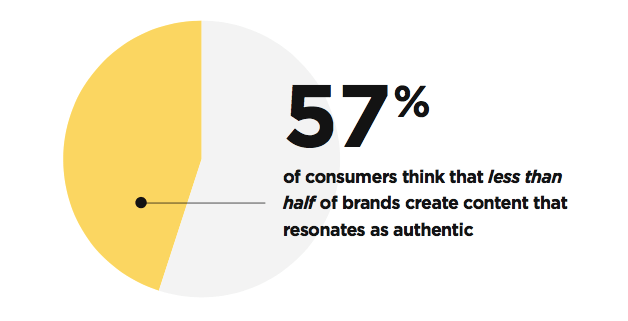
This helps create authenticity. The majority of consumers don’t think that brands are distributing authentic content.

authentic

Furthermore, 86% of consumers say authenticity is an important factor when determining whether they’ll support a brand.

What does this tell you?

Your customers want you to be authentic. Establishing an authentic voice will give you a huge advantage over your competitors.

All your content needs to sound as if it’s coming from the same person, even if it’s not.

For example, you might write your blogs, but someone from your staff may be in charge of email newsletters. A third person could be responsible for your social media content.

There is nothing wrong with delegating tasks this way, but it can create a discrepancy when it comes to being authentic.

The best way to overcome this hurdle is establish some ground rules. Create a writing guide that everyone who produces content can reference.

Here are some examples of things you could include in this guide:

  • always spell out the word percent instead of using %
  • write from the first-person perspective
  • use the Oxford comma

You can even take this guide one step further. For example, you could say that every piece of content you produce, whether it’s a blog, email, or social media post, always needs to start with an inspirational quote.

If your writing is consistent, it creates authenticity.

That way when your customers engage with your brand on multiple channels, they’ll feel they’re listening to the same voice.

Monitor your comments sections

Part of having effective communication means being active on as many platforms as possible.

Your increased social media presence makes it easier for your customers to reach you. Don’t worry—this is a good thing.

But if you’re not constantly monitoring your comments, you’re failing your customers when it comes to communication.

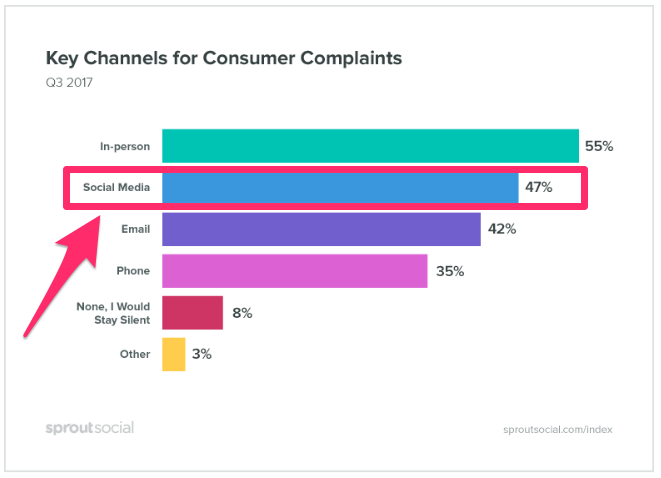
Social media is one of the top channels for consumers to voice their complaints.

complaints

Put yourself in the shoes of your customers. You’ve got to understand their thought process and mindset.

They just experienced some sort of problem with your business. It could have been related to one of your products, services, or employees.

On top of the issue, they took time out of their busy day to let you know about it by commenting on one of your social media posts. Even though this comment might be negative, it’s still a good sign.

Why? You haven’t lost this customer yet.

Research shows that 96% of unhappy customers don’t complain. They just leave and don’t come back.

If one of your customers is complaining via social media, you still have a chance to keep their business as long as you respond in a timely fashion.

Studies show that 84% of consumers expect a business to respond to their social media comments within 24 hours of posting.

But this also depends on the platform. For instance, 72% of users on Twitter expect brands to respond within an hour.

I know what you’re thinking. How could you possibly keep track of all your social media comments each day while trying to run your company at the same time?

Those of you who don’t have a social media manager or the budget to hire one need to take advantage of my favorite time-saving social media marketing tools.

Certain tools can notify you whenever someone comments on one of your posts. You can get these notifications on one platform instead of having to monitor each social site individually.

Segment your email subscribers

For your email marketing campaigns to be successful, you need to make sure you’re delivering relevant content to your subscribers.

After all, your customers have different wants, needs, and preferences. It’s nearly impossible to create content that can appeal to all your customers.

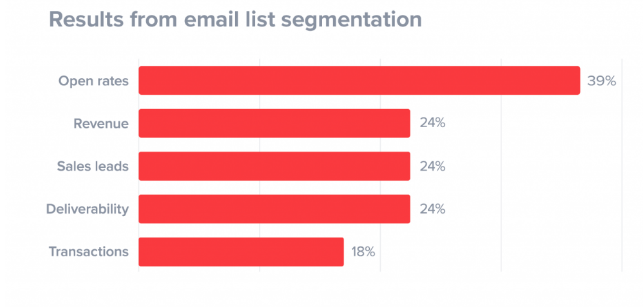
That’s why segmenting your subscribers will improve your communication with everyone.

email segmentation

Here’s a staggering fact you need to take into consideration.

A person who works in an office gets on average 121 emails a day. Assuming they work five days per week, that translates to over 600 emails per week and more than 31,000 emails per year.

Now, let’s say you email your subscribers once a week, which is a reasonable assumption.

Your messages are just a fraction of a percent of the total number of emails your customers receive. If your content isn’t adding value to their lives, they won’t engage with it.

Surveys indicate that 73% of marketers say their top priority is to create more engaging content.

Segmenting your subscribers will make your communication with them more effective. Here’s why.

Let’s say you run an ecommerce clothing business. You ship products globally, but the majority of your customers are located in the United States.

Subscribers who are men living in Miami, Florida, shouldn’t be getting the same emails as women living in St. Paul, Minnesota.

Emailing a promotion for bathing suits and tank tops in December to all your customers is not an effective way to manage your communication. But if you segment your subscribers, it will help ensure your marketing emails are more relevant to each recipient.

Add live chat to your website

As a consumer, I love using live chat. It’s just so simple.

I don’t need to pick up the phone, wait on hold, and talk to someone. It also saves me a trip back to the store. Plus, I buy so many things online that it’s not even practical or realistic for me to visit businesses in-person after making a purchase.

Live chat makes things easier. As a consumer, I’m not alone in that preference.

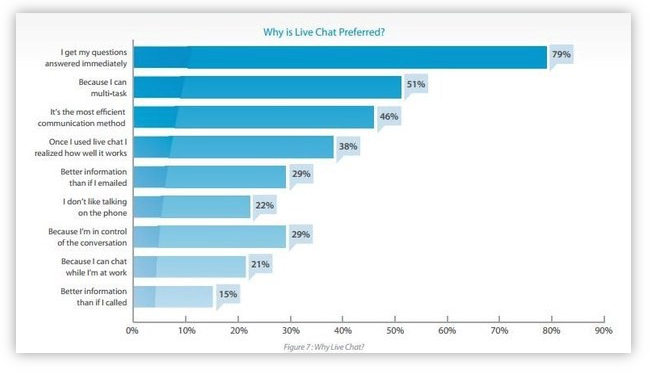
In fact, 73% of consumers say live chat is their preferred method of customer service communication. This ranked as the top option.

Here’s a look at the reasons why people prefer live chat:

live chat

If live chat makes your customers’ lives easier and it’s their preferred method of communication, why aren’t you using it?

Some of you may just not know where to start. I get it. New technology can be intimidating.

But you need to be able to adapt and make changes if you want to survive.

Your live chat feature should be easily accessible on your website. Make sure you respond quickly to these messages. Your staff need to be knowledgeable and properly trained for this communication method to be effective.

If you need help setting this up, refer to my guide on how to provide better customer service by implementing live chat.

Use language your audience can understand

This relates to the concept of authenticity.

Your customers want to communicate with a person. It shouldn’t feel as if they’re dealing with a robot or some nameless and faceless brand.

Use language your audience can relate to.

Your content shouldn’t sound like it’s coming from a doctor or a lawyer, even if it is. Speak in terms your customers use every day.

Just make sure you keep it professional. I normally wouldn’t recommend using slang, but there are times when it’s OK if that terminology fits with your overall brand image.

For example, a company that sells surfboards might use terms such as rad, stoked, or gnarly in its marketing emails. This would resonate with its target audience as opposed to a formal greeting, like Dear Sir or Madam.

As far as the exact language you’re using, that’s a judgment call on your part. But I recommend keeping communication casual and conversational.

Make sure your brand message is clear

Why are you in business?

Outside of the obvious financial reasons, you must have other motivation for operating. You need to be able to tell your customers why you exist and how you can make their lives better.

That can be conveyed in your brand message.

But if you fail to communicate your message or if it’s too ambiguous, you won’t have a positive impact on your customers.

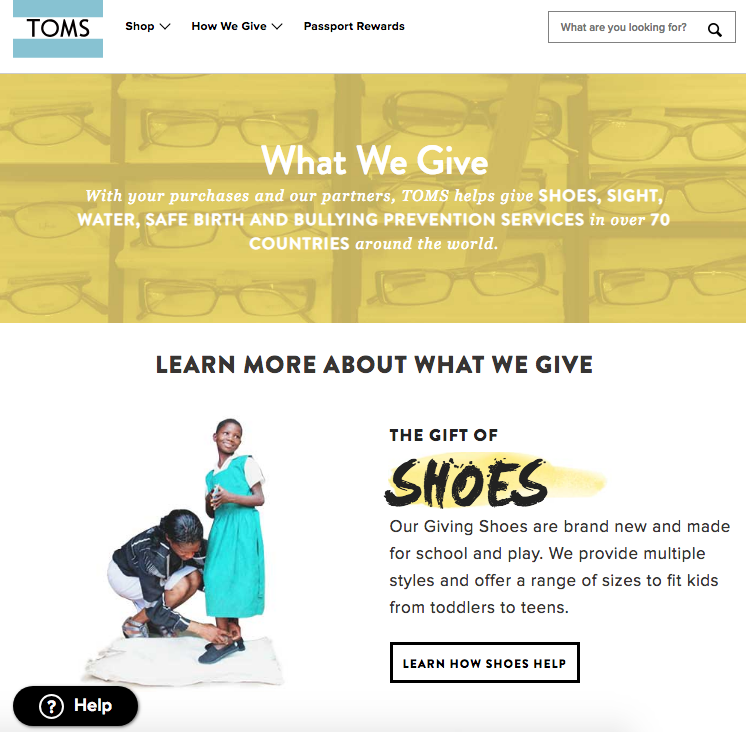
Here is a great example of a brand message from TOMS shoes:

Toms

Buying products from this company means you’re helping people internationally.

TOMS helps provide those less fortunate with shoes, clean water, vision needs, and safe births. The company even supports a bullying prevention campaign.

The message is clear.

TOMS has a dedicated landing page explaining what they give, and the message is on other parts of its website as well.

You don’t need to be a nonprofit organization or affiliated with certain charities to have a strong brand message.

For example, let’s say you have a meal delivery service.

Your brand message can convey something along the lines of helping busy professionals eat healthy.

Once you’re able to identify your brand message, make sure you can display it clearly on all your distribution channels.

Be consistent

Just like authenticity, consistency is also key when it comes to effective communication.

I mentioned earlier creating a guide to keep your writing style consistent on every channel. But you can take this one step further with all your promotions as well.

It all starts with your goal.

Before you run any type of marketing campaign, you need to clearly identify this goal. What do you want the result of this campaign to be?

It could be acquiring more website traffic, adding email subscribers, increasing your social media followers, or driving sales to your newest product.

Whatever your goal is, the easiest way to achieve it is by being consistent on all your channels.

If you run a promotion on Instagram, make sure your website shows the sale too. Otherwise, it can create confusion for your customers.

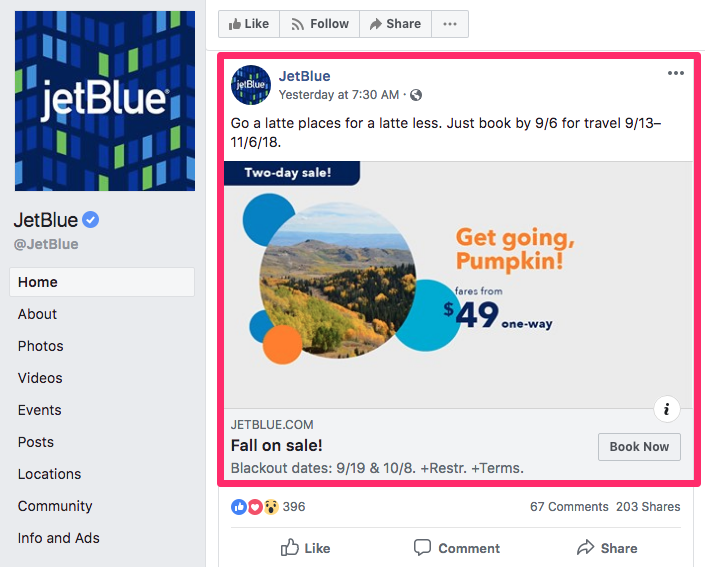
Take a look at this example from Jetblue:

jetblue fb

The company posted this promotion on its Facebook page.

Its fall sale advertises flights starting at $49 one-way.

There are certain restrictions and conditions for the sale. Customers need to book their flights by a certain day and travel within a certain time frame as well. There are even a couple of blackout dates.

Either way, Jetblue clearly communicated this promotion in this Facebook post.

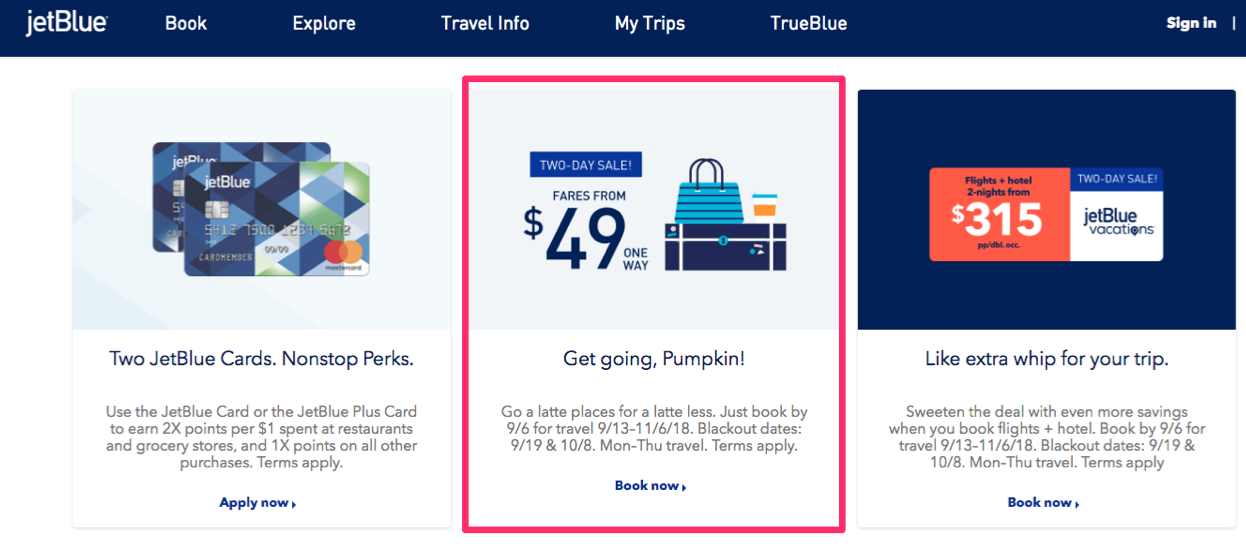
Now if customers navigate to its website, they’ll see the consistency:

jetblue site

As you can see from what I’ve highlighted, the same sale is being advertised.

All the terms and conditions are the same, and the ad uses the same phrase, “Get going, Pumpkin!”

Even though the style, placement, format, and images differ on each distribution channel, the message remains the same.

In addition to improving the way you communicate with your customers, being consistent will ultimately help you increase conversions.

Know which channels your customers prefer

You need to be able to communicate with your customers on all your distribution channels. This should go without saying.

However, it’s important for you to recognize which networks your customers are using.

Now you can prioritize this communication based on the platforms your customers prefer.

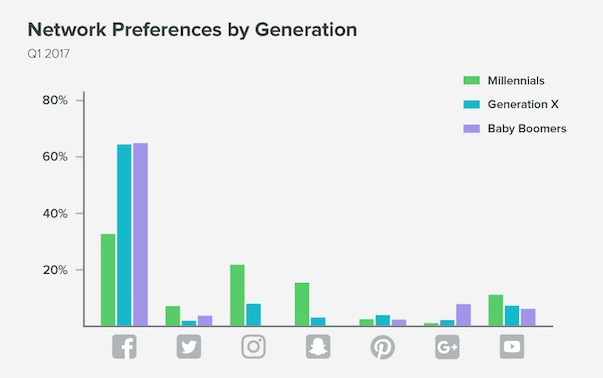
For example, let’s say you segment your target audience with generational marketing.

After doing this, you’ve discovered that the vast majority of your customers are Baby Boomers. Now you need to figure out how to reach them.

network preference

Based on this research, it wouldn’t make sense for you to focus on Instagram and Snapchat if you’re marketing to Baby Boomers.

This would obviously be much different if you were targeting Millennials or Generation X.

You should still have active profiles on as many platforms as possible, but you need to know which ones are reaching your customers.

Conclusion

Communication is an important aspect in both life and business.

As a marketer, you need to be able to effectively communicate with your customers on all your distribution channels.

Learn how to create an authentic voice.

Monitor your comments on social media and respond to those customers, especially if they’re voicing a complaint.

Segment your email subscribers to deliver the most relevant content to everyone.

Implement a live chat feature on your website.

Speak in terms your audience can understand. Make sure you clearly define and communicate your brand message across every channel.

Be consistent. Figure out which channels your customers use the most, and prioritize those means of communication.

If you follow the tips I’ve outlined in this guide, you’ll be able to improve your customer communication tactics across all your distribution channels.

How are you leveraging your distribution channels to effectively communicate with your customers?


Source Quick Sprout https://ift.tt/2OjoDJj

Our ‘Low-Hanging Fruit’ Coupon Strategy

My recent article on how to find and get the most value out of your local discount grocer led to a lot of great follow-up questions and comments from readers.

One reader, Laurie, wrote in:

What about coupons? I still clip coupons from the Sunday paper and use the Redplum and Target apps to nab coupons. What does your couponing strategy look like?

Sarah and I have tried a lot of couponing strategies over the years. We used to be very adamant about clipping coupons from the Sunday paper and even used a coupon binder for several years.

Over the years, though, I learned several things about couponing.

First, the more time you invest, the more the returns diminish. I view couponing as one of those things where you’re investing your personal time to get a financial return on that time. If you can find a $2 coupon and have it in hand for a minute’s effort, then it’s well worth it. On the other hand, if you’ve already clipped $25 worth of coupons and are spending a lot of time trying to eke out another dollar or two in savings, then it’s no longer worth it.

I have found, over and over again, that if I’m spending more than five or 10 minutes on grabbing coupons for my next shopping trip, I’m very quickly reaching the point where it’s not worth my additional time. Almost all of the value I find in coupons comes in the first few minutes of searching and clipping, so it’s a good idea to stop right then and there.

Second, name brand coupons rarely make an item as inexpensive as the store brand version. If a store brand item is $1.99 and the name brand is $2.49 and I can only find a $0.40-off coupon, then the store brand is still cheaper.

To put it simply, a name brand item has to have a pretty nice coupon for it to be a winner over a store brand item or a generic item. A $1 off coupon might look nice, but if the item is already $0.75 more expensive than the store brand, I’m really only saving a quarter.

Third, there typically aren’t coupons for a large portion of my grocery list. A lot of my grocery shopping is spent in the produce section or the dry good bins section. I do buy some items in the aisles, but a lot of it is household supplies and toiletries.

To tell the truth, most of our coupon use is actually for coupons for toiletries and household supplies, not food items. Most food items we purchase are simply not ones for which coupons are found regularly.

All of that being said, couponing does play a small role in our overall grocery shopping strategy. It’s just not the centerpiece, because the time and effort we would have to put into couponing to actually save a notable amount of money simply wouldn’t be worth it. Why? The other tactics we use save us a lot of money just by default, and the value provided by coupons is eaten up by those practices for the most part.

I refer to our couponing as “lowest hanging fruit” couponing, because we’re really only looking for the obvious wins at a quick glance, because the time invested beyond that never pays off. Here’s how we get to that point.

SnipSnap is an app I use on my phone that pops up coupons automatically upon entering a store. Often, it’ll find things like “30% off any item in this store” type coupons, which is just pure savings. This doesn’t typically happen at my usual grocery stores, but it does happen at a lot of specialty stores, like if I’m going to Jo-Ann Fabrics to pick up some yarn for my wife (who’s a prodigious crocheter) or if I’m going to PetSmart to find some pet food for one of my children’s pets (two of them have quirky diets).

SnipSnap checks my GPS location in the background and, if it sees that I’m close to or inside a store, it checks to see if there are any store-wide coupons available for that specific store and, if there is, it just fires off a popup alert for me. I tap on the alert and there’s the coupon. No effort at all – this is pure low hanging fruit.

Store brand coupons are actually a real thing at some stores, where the grocery flyer will actually have coupons for the store brand version of items. Since I already download the grocery flyer when making my meal plan and grocery list, snagging any coupons that I notice is a good choice.

One store that does this quite often is Target. I sometimes shop at Target for household items and the Target app, which I keep on my phone, typically includes several coupons for their various store brands (Up and Up, Archer Farms, and so on). I check the app as I’m strolling through the store looking for whatever household item I’m looking for, and if they have a coupon for a store brand staple that I know I’ll use, I’ll typically pick it up because a store brand with an additional coupon is usually well below the name brand version. I recently stocked up on dry pasta doing this very thing.

General coupon apps aren’t very useful for me, but I do look at them if I’m standing in the checkout aisle. What I’m looking for are coupons for any name brand items in my cart. I find that about 20% of the time, I find a coupon of some sort, which basically is as good as finding money on the ground in the checkout aisle. I generally use the SmartSource and Red Plum apps for this.

An example: I was recently at the store and needed sugar for a recipe and the C&H brand sugar was on sale, making it the least expensive five pound bag there (I think there’s a store brand that’s usually cheaper, but not that day). As I was standing in the checkout, I flipped through the Smart Source app and lo and behold there was a $1 off coupon for C&H sugar. That’s as good as finding a dollar bill, which is a lot better use of my time in the checkout than looking at the cover of gossip magazines or checking Facebook to see pictures of my neighbor’s cat.

The lazy Sunday coupon flyer is an occasional thing because we don’t subscribe to a print Sunday paper, but if I’m somewhere where there’s a Sunday paper sitting around and I’m just sitting there, I’ll glance through the coupons and grab any that seem like they might be something we’d use.

Something I’ve noticed with newspaper coupons is that, almost always, if you wait two or three weeks, the exact item that you have a coupon for goes on sale at the store before the coupon expires. While I have no evidence of this, I have a feeling that this is a common strategy for food retailers in order to bump sales numbers. They’ll run coupons one week, then work with stores to have items on sale a few weeks later. If you just hold onto the coupon, you can hit both. This often puts the value of the (usually) name brand item well below the store brand version.

I don’t usually have a whole lot of coupons when doing this. The ones I do have are in an envelope and I just check them when I’m making a grocery list, cross checking them with the grocery store flyer. Having a coupon for a name brand item alone is not enough to get me to add that to my grocery list because (a) the coupon alone usually doesn’t make the item much different in price than the normal store brand and (b) there’s probably a sale in that store coming up that I can stack the coupon on, making it actually worthwhile. If that doesn’t work out? I ditch the coupon when it expires – no big deal. This takes maybe thirty seconds when writing out my grocery list.

A final tip: Shop at discount grocers using a grocery list as a starting point. For me, that simple method alone is far better than an extensive couponing strategy. A good discount grocer has strong prices by default and they tend to be super competitive with their store brand prices, which means that name brand coupons really aren’t all that effective unless you’re stacking them on top of a sale already, as I noted above.

To put it simply, I got far better results simply switching to doing meal planning and making a grocery list and sticking to that list than I ever got from just going to the store with coupons and only a vague plan as to what to buy. Also, the cost benefit of switching to a discount grocer for most grocery shopping – in my case, switching from Hy Vee to Faraway – was worth more than coupons ever saved me, even with substantial time investment in the coupons. A third point – buying mostly store brands is a far better money saver than heavy couponing, too.

Not only that, these “low-hanging fruit” techniques give me most of the value I was getting from coupons anyway. Yes, I’m probably missing a handful of coupons that might save me a few dollars all told, but I would spend substantial time finding those coupons, and that’s just not worth it. An easy-to-find coupon that I stumble across in the checkout line that saves me $1 is great; investing an hour to find several $0.50 off coupons that barely add up to $5 in savings is not.

If you’re thinking about couponing, start with smarter grocery shopping strategies first. Make a meal plan. Make a grocery list. Shop at a discount grocer. Buy mostly store brands. Once you have that in place, coupons provide much less value anyway, so stick with the very easy wins.

Good luck!

More by Trent Hamm: 

The post Our ‘Low-Hanging Fruit’ Coupon Strategy appeared first on The Simple Dollar.


Source The Simple Dollar https://ift.tt/2Qh45yb

I’m Happily Renting, but My Mom Thinks I’m an Idiot for Not Buying a House


Dear Happily Renting,

Homeowners’ memories of the homebuying process just can’t be trusted.

So many homeowners have reminded me — a fellow proud renter — how much their mortgage costs each month compared to my rent. They are so very willing to tell me about the equity they are gaining the longer they own their homes. But they rarely volunteer wise knowledge about their down payments, closing costs, homeowner association fees and property taxes, or how much they spent replacing the dishwasher last summer.

Buying a home isn’t the mark of adult stability it used to be. A 2018 survey by the Federal Reserve Bank of New York found that almost half of respondents said they don’t make enough money to even start house hunting. A similar percentage said they have too much debt or not enough savings to think about buying a house.

Want more statistical ammunition? Last year, Bloomberg News reported that renters outnumber homeowners in 52 of America’s 100 largest cities.

Aside from economic factors like wage stagnation and our crippling collective student debt burden, the decision to rent is deeply personal. Renting provides mobility for those with an unshakeable case of wanderlust or who anticipate frequent career changes. It can be a testing ground for partners who want to make sure they can live together without ruining the romance. It can provide peace of mind to know that your monthly expenses will be relatively fixed — and that you’ll never have to fix the dishwasher yourself.

But you probably know all that. What you need now to fend off the scolding from homeowners is a simple mantra to repeat whenever (and every single time) someone gets on your case.

I will suggest a very simple one:

“Renting is the right choice for me right now.”

Say it out loud. Say it with conviction. Say it even if you’re not sure renting is actually your first choice, but your bank account commands otherwise. You do not need to justify your choices to anyone (even your mother!). You do not need to feel compelled to clap back with attitude. You can stick to your mantra with a smile.

Have a tricky money question? Write to Dear Penny at https://ift.tt/2QdRE6k

Lisa Rowan is a personal finance expert and senior writer at The Penny Hoarder, and the voice behind Dear Penny. For more practical money tips, visit www.thepennyhoarder.com.

The Penny Hoarder Promise: We provide accurate, reliable information. Here’s why you can trust us and how we make money.

This was originally published on The Penny Hoarder, which helps millions of readers worldwide earn and save money by sharing unique job opportunities, personal stories, freebies and more. The Inc. 5000 ranked The Penny Hoarder as the fastest-growing private media company in the U.S. in 2017.


source The Penny Hoarder https://ift.tt/2NQpeTp

How I Saved $150 While Exploring the Wilderness

Dosh App Review: Use Your Smartphone to Double Dip With Cash-Back Rewards

Millions of people use rewards credit cards for regular spending and recurring bills with the goal of racking up cash-back or travel rewards. The Dosh app, which can be downloaded to your smartphone from the Google Play Store or the Apple Store, allows you to effectively “double-dip” and earn an additional layer of rewards when you shop.

With the Dosh app, you earn cash-back for purchases you make with a linked credit card (or debit card) at a participating store. Stores and offers change all the time, but the Dosh app often includes popular stores you probably shop at anyway. Examples include Walmart, Sam’s Club, Shoe Carnival, Walgreens, and Target.

How Does Dosh Work?

Getting started with Dosh is simple if you have a smartphone since the app is free and easy to download with the click of a button. Once you add the Dosh app to your phone, you’ll add your favorite rewards or travel credit card (or a debit card) to your account. Ideally, you want to add the card you use the most since this is the card that will earn cash-back with the Dosh app.

From that point, all you have to do is pay with your linked card at thousands of stores and restaurants that partner with the Dosh app. Whenever you make a purchase at a participating store, the percentage of cash-back you earn will be added to your Dosh account automatically. While the average rate of return through Dosh is 2% to 3%, some stores pay up to 10% cash-back.

In terms of cashing out with the app, getting your hands on your earnings is a piece of cake. The Dosh app lets you transfer your rewards to your bank account or to a PayPal account. You can also donate your earnings to charity directly through the app.

Earning cash-back with Dosh is easy. You don’t have to download receipts to qualify, nor do you have to register your purchases. It all happens automatically when you register your card, so your only real responsibility is signing up for the app and using the linked credit card when you shop. It’s as simple as that.

Should You Bother Earning Cash-Back through Dosh?

If you’re looking for a way to earn some easy money on the side, there are many ways to do just that. You can take online surveys with websites like UserTesting.com and InboxDollars.com, or you can log into Swagbucks.com to earn rewards when you watch videos, print coupons, or surf the web.

The Dosh app offers yet another way to earn money on your regular purchases, and you don’t have to perform any tasks to earn rewards, either. Still, you still may be wondering if downloading the app is worth it. While there are a ton of variables that will determine how much cash-back you earn, for most people, the answer is “yes.”

The main reason to consider downloading the Dosh app is the fact that it’s free. You don’t lose anything if you don’t wind up shopping at participating stores as often as you think, yet you have a lot to gain if you do shop at stores that work with the app.

As of this writing, for example, Sam’s Club is offering 2% back through the Dosh app. If you do your grocery shopping at Sam’s Club and spend $700 per month, you’ll earn $14 in easy cash-back every month — or over $168 in cash-back over the course of a year. You don’t have to do anything “extra” to earn this cash-back since it added to your Dosh wallet automatically.

Also remember that you can pair this card’s earnings with a credit card that doles out rewards. Considering the Chase Freedom® is offering 5% back on your first $1,500 spent in wholesale clubs and department stores or with the Chase Pay app the final quarter of 2018, you could wind up earning 7% back at Sam’s Club for three months by using the Dosh app and linking it with your Chase Freedom® card.

Also note that, overall, Dosh has a good reputation when it comes to securing your data from hackers and thieves. According to the company, Dosh uses bank-level, encrypted security. They do not store your password, credit or debit data, or bank account information in the app or on their servers, either. All purchases made using Dosh are also encrypted. To add an extra layer of security, Dosh does ask you to re-verify your email when you sign up.

Dosh Highlights:

  • Earn up to 10% cash-back (usually 2% to 3%) when you use the app and a linked credit card to make a purchase at a participating store.
  • You can earn cash-back with Dosh on top of rewards you earn with a cash-back or travel credit card.
  • Cash-back is added to your account automatically, so there is no work required on your part.
  • You can cash-out your rewards to your bank account or PayPal account once you hit the required minimum of $25. You can also donate your cash-back to any charity of your choice.
  • You can refer friends to Dosh to earn more cash-back. Right now the app is offering $5 for each referral who signs up for the app and links a credit card.
  • You can earn cash-back on in-person and online purchases made with a linked card and the Dosh app.

Earning Cash-Back with Dosh: The Downsides

It’s hard to argue against an app that lets you earn cash-back on regular purchases, but the Dosh app still isn’t perfect. Just like any other offer, there are a handful of cons to be aware of before you sign up:

  • You must have a non-VOIP phone number to sign up for the Dosh app. In other words, you can’t have phone service that isn’t conducted over IP networks. (On a personal note, I tried to sign up for Dosh with my T-Mobile phone number I’ve had for five years but my phone number didn’t work with the app.)
  • You’re required to link a credit card plus a bank account or PayPal account to the Dosh app, which could make you feel uncomfortable regardless of how secure the app is. If you do sign up, you may feel more comfortable linking a credit card to your account instead of a debit card since credit cards offer better liability against fraud.
  • You do need to build up a balance of $25 in cash-back before you can cash out to your bank account, PayPal, or to a charity of your choice. If you don’t shop very often, it may take a while to reach the required level for redemptions.
  • The Dosh app is only available to U.S. residents, which makes it a no-go if you live abroad.
  • Many reports note it can take up to 90 days for cash to be added to your account after a qualifying purchase. On their website, Dosh notes this is because “online offers require 60-90 days for the merchants return period to expire before any cash-back is deposited in your Dosh wallet.”

Should You Sign Up for Dosh?

If you’re making purchases at stores that partner with Dosh anyway, you have little to lose by signing up for the app. You’ll earn cash-back when you make qualifying purchases with your linked credit card, and you don’t have to do anything extra for the rewards to accrue. Also note that, since you can rack up cash-back with Dosh on top of rewards you earn with a credit card, this app offers a smart way to double dip.

Of course, the Dosh app isn’t perfect. Not everyone wants to link a credit card and their bank account to a smartphone app, and some stores pay out as little as 1% cash-back. Downloading the app may not be worth it if you rarely shop or mostly visit small local stores instead of big chains.

At the end of the day, this makes the Dosh app ideal for the right kind of consumer. You may want to consider the Dosh app if:

  • You spend a lot of money at major chain stores regularly and know you could earn a significant amount of cash-back each month.
  • You love earning cash-back or travel rewards with your favorite rewards credit card and want a way to boost your earnings over time.
  • You’re comfortable downloading apps to your smartphone and don’t mind offering up your credit card and banking details.
  • You believe you could refer a ton of friends and want to earn $5 for each referral.
  • You don’t mind waiting until you have $25 in rewards each time you want to cash out.

Should you sign up for Dosh? Only you can decide. At the very least, you can give it a try to see if the cash-back you earn is worth the memory it takes up in your phone.

Holly Johnson is an award-winning personal finance writer and the author of Zero Down Your Debt. Johnson shares her obsession with frugality, budgeting, and travel at ClubThrifty.com.

More by Holly Johnson:

The post Dosh App Review: Use Your Smartphone to Double Dip With Cash-Back Rewards appeared first on The Simple Dollar.


Source The Simple Dollar https://ift.tt/2OVBheF

Show Me the Benefits: How to Compare Job Offers Beyond the Paycheck


When marketing analyst Kirstin Stone received a job offer this year, she initially turned it down, even though it included a 20% pay raise.

“Then about two months later, I decided that I had made the wrong decision,” Stone says with a laugh. “I wound up calling them back and pursuing the option again.”

This time, she looked at more than the salary.

“That 20% wasn’t enough to pull me over the first time,” Stone says. “A lot was decided in large part due to benefits.”

In a hot job market, where companies are having to do more to woo employees, benefits are becoming as valuable as a paycheck. So says Alison Norris, an advice strategist and certified financial planner for SoFi.

“Compensation encompasses so much more than just salary,” Norris says. “Choosing a position [because of] your overall compensation will often be far more financially advantageous than focusing on the one that just has the higher base salary.”

Benefits are more than just add-ons and fun perks — they account for 31.8 percent of an employee’s total compensation, according to the Bureau of Labor Statistics.

But how do you compare the number on a paycheck to benefits like paid dental insurance? Here are seven areas to concentrate on when evaluating job offers.

Determine Your Base Pay

If you’re comparing compensation packages, be sure you’re looking at comparable dollar amounts, Norris advises.

“If you’re having trouble and really want to compare apples to apples, looking at your hourly rate — even if you’re salaried — is often easier,” says Norris, who notes that hiring bonuses should be included when calculating the base pay.

And if you’re comparing a freelance position to a staff one, don’t forget to factor in employer contributions and taxes you’ll owe as an independent contractor, Norris warns.

“If one position is a W2 position and the other is an independent contractor, you should add in the taxes your employer would pay on your behalf, which can be huge,” Norris says. “Employers pay 7.65% of your income in social security and medicare taxes.”

How to Factor in Paid Time Off

One way to assign a dollar value to paid time off is to incorporate it into your hourly rate.

Don’t forget to include paid holidays, volunteer days and sick leave — three weeks of vacation isn’t nearly as generous if you have use up days for Christmas or the flu.

Know Your Pre-Tax Benefits

After determining your base pay, it’s time to start categorizing benefits according to whether they’re taxable.

Norris offers as an example: A trendy new benefit, student loan repayment, may not be worth as much as it seems, since employees are still responsible for the taxes on the student loan payment their employer makes for them.

“One dollar worth of pre-tax benefits — ones that you receive without having to pay income taxes — nets far better than $1 of additional salary raise or a taxable benefit,” Norris says. “Fortunately, there’s a plethora of ones that are tax-free to the employee.

“Some common ones that we see are 401(k) matches, paying of disability insurance premiums, contributions to the health savings accounts and employer discounts.”

How to Calculate Health Insurance

When Stone received a job offer, among the initial benefits that caught her attention was her eligibility for health insurance after 30 days of employment. She decided to dig a little further to determine its actual worth.

“I contacted the HR department and I said, ‘I see that I’ll be eligible for insurance — can you send me the details on what that actually is and what the cost is to me out of each paycheck?’” Stone says. She determined that the cost of her insurance premium per paycheck was lower than her current employer, which meant more take-home pay for her.

Norris agrees that you should ask the recruiting or human resources department for information that goes beyond a company’s sometimes vague offer of health insurance.

“You can also request policy documents if they provide any type of insurance coverage — health insurance, disability insurance, dental insurance,” Norris says. “Normally we find that those policy documents are only provided at the request of the job seeker.“

When comparing two offers, factor in your monthly premium, plus deductibles and co-payments for a clear idea of how much the health insurance will save you — or cost you.

“If they have a high-deductible health insurance, do they also have a health savings account that they contribute into?” Norris suggests asking.

Valuing Professional Development

A benefit that people often overlook, largely because it has no clear-cut monetary value, is a company's commitment to professional development.  

“Sometimes it can be seen as a luxury item, so know how committed the organization is to training and development or tuition reimbursement,” says Anna Bray, executive career coach at Jody Michael Associates. “Is there a training department — that can be an indicator. Or is it like a two-person HR department for 1,000 employees? Or maybe they have a robust partnership with another training organization.”

If a company has a learning stipend or tuition reimbursement program, ask for a specific amount to include in your appraisal of the compensation package.

Determining the Value of Benefits

Companies are getting more creative about the extra benefits they tout to prospective employees, from free onsite childcare to cooking classes to an indoor rainforest.

After you have assigned a monetary value to the benefits package, it’s time to evaluate how much each is worth to you.

“You shouldn’t just take [the company’s] word at face value,” Norris says. “You should determine how will it actually change your life personally and which benefits are helpful for you.”

Subtracting Non-reimbursed Expenses

Although the excitement of a job offer may leave you seeing only the positives, you must also calculate the expenses associated with a job.

“What people often forget are the costs of the position,” says Norris, noting that “if you have to buy a whole wardrobe” or pay for parking, you should subtract that amount from your compensation package.

Although employers may be reluctant to divulge these costs, it’s important to ask about them.

“You really cannot be too over-informed,” Norris says. “We find that employees are very excited when they hear an employer wants them and a little bit reluctant to tip the scale.

“But you’re showing interest by asking questions, and you should really dive deep and then project how that will impact you over time.”

Be Ready to Negotiate

OK, you’ve stacked up a new offer to your current job or compared competing offers. Now what? Don't skip this crucial step: negotiating.

Prospective employers should not be surprised or offended by it. But what components of a compensation package are most negotiable?  

“Salary, paid time off, training and development — those seem pretty wide and varied,” Bray says.

And once you’ve compared all of the tangible benefits, Bray stresses that there are aspects of the job that have no place on your ledger.

“Assuming the jobs are equal and it will provide career advancement, think about the company culture and the mission,” she says.

That’s what sealed the deal for Stone.

“More than anything… the change in the style of management was a big factor,” says Stone, who says she reached out to employees to ask about the company culture. “Knowing that I was going to be able to better balance work and life — that was a big, big deal for me.”

Tiffany Wendeln Connors is a staff writer at The Penny Hoarder. Her favorite benefit at her job is free bike parking. And the cheese.

The Penny Hoarder Promise: We provide accurate, reliable information. Here’s why you can trust us and how we make money.

This was originally published on The Penny Hoarder, which helps millions of readers worldwide earn and save money by sharing unique job opportunities, personal stories, freebies and more. The Inc. 5000 ranked The Penny Hoarder as the fastest-growing private media company in the U.S. in 2017.


source The Penny Hoarder https://ift.tt/2zBq7pW