Thousands of courses for $10 728x90

الثلاثاء، 21 مايو 2019

Don’t Make These Seven Car Insurance Mistakes

When it comes to shopping wisely for a car insurance policy, perhaps the number one rule to keep in mind is the age-old adage about not being a penny wise and a pound foolish.

Cliched as that expression may be, buying too little coverage is one of the consumer mistakes most frequently cited by insurance professionals.

Unfortunately, it’s just one of the many things consumers do wrong when shopping for what can be a particularly critical insurance policy in your portfolio of coverage. Each year there are millions of vehicle crashes in the United States. In 2016 alone, there were about five million crashes that involved property damage and about 2.2 million that caused injuries.

With such figures in mind, here’s a look at some of the other mistakes to avoid when searching for a car insurance policy.

Mistake No. 1: Carrying Too Much or Too Little Coverage

Finding the right balance between purchasing too much and too little coverage is an important part of the process when signing on for a new policy.

Carrying coverage you don’t need is simply a waste of money, says Tony Arevalo from Carsuance.net.

“Collision insurance for an old car is a perfect example,” said Arevalo. “Such a vehicle is cheap enough to repair or replace that you will end up in the long run paying more for insurance than the car’s value.”

Often consumers will have overlapping insurance coverages as well. For instance, some people’s health insurance policy protects them in the event of a car accident, said Arevalo. If that’s the case, there’s no need to pay for medical expense coverage through your auto policy.

Carrying too little coverage is even more dangerous, continued Arevalo.

For example, in Florida, consumers can choose a policy with only $10,000 property damage liability, he explained. Those who opt for such minimal coverage may end up paying a significant amount of money out of pocket in the event of an accident.

Jo Ann Fisher of Premier Insurance Groups says state minimums for bodily injury and property damage are outdated and are no longer enough to protect anyone.
“They were put into place when incomes and prices were so much lower than they are today,” she explained. “People need to make sure they have enough liability coverage to protect their assets, including their income.”

In most states, if your car insurance has paid the maximum that a policy stipulates and that amount is not enough to cover all of the damages you may have caused as part of an accident, there’s a possibility you will be required to pay the difference.

Mistake No. 2: Not Shopping Around

Another critical mistake consumers make when buying car insurance is not exploring the market and the competition, says Arevalo.

“The prices and the quality of insurance vary significantly based on the insurer,” he noted.

As an example, State Farm charges about $251 monthly for full coverage in Long Beach, Calif., according to Carsurance’s own market research. Wawanesa, on the other hand, charges $118 for the same service.

“On top of that, Wawanesa is the second-best Californian auto insurance company in customer service, according to the 2018 J.D.Power rankings, while State Farm is tenth,” said Arevalo. “This illustrates how much variance an average customer may encounter. That’s why shopping around and requesting quotes from at least five insurers is paramount.”

Mistake No. 3: Buying Road Service Coverage

Unless it’s packaged with other coverages you want or need, experts often recommend skipping the road service coverage with your auto policy. Here’s why.
“You may find that you already have this coverage with AAA, through a credit card perk, or as part of your vehicle’s new car warranty,” says David Miller, vice president client executive for personal lines at Plexus Groupe.

The savings associated with not including such coverage on your auto policy may be minimal, but filing a road service claim on your car insurance shows up on your Comprehensive Loss Underwriting Exchange (CLUE) report, explained Miller.

“All of your insurance claims show up on this report, and the data is shared amongst insurance companies when you shop for coverage. More and more insurance companies are starting to look at the total number of “incidents” on your CLUE report, rather than just at-fault accidents, so you want to avoid making towing claims on your insurance policy if possible,” he said.

Mistake No. 4: Carrying Collision Coverage on an Old Car

As Arevalo mentioned, collision is an area where some people overspend if they own an old car. To avoid doing this, it’s a good idea to measure the cost of your collision coverage against the value of your car.

Sites like Edmunds or Kelly Blue Book can provide estimates of your car’s value. You could also check websites like CarGurus to determine what dealers are charging for cars similar to yours.

If you determine that the cost to provide collision coverage is 20% or more of your car’s value, you may want to do away with the extra coverage, said Miller, of Plexus Groupe.

“For example, let’s say you’ve done your research, and your car would sell for about $3,000 retail,” Miller explained. “The cost for collision insurance on your car is $500 a year and you have a $500 deductible. If your car is totaled, your insurance company will pay you $2,500, which is the car’s $3,000 value less $500 deductible. Your $500 premium represents 20% of the value of your car. Over the course of five years, the amount you pay in premiums will equal the value of your car and that’s assuming your car retains that value over the course of five years.”

Mistake No. 5: Not Updating Your Policy to Reflect Life Changes

Everything from moving to buying a home can impact the amount you pay for car insurance. Yet many consumers forget to call their insurance provider and notify them of such updates.

“For example, shortening your commute means you could qualify for lower rates,” Fabio Fashi, property and casualty team lead at Policygenius. “Or if you’re transitioning from being a renter to a homeowner, updating your auto insurance policy to reflect this change could earn you a discount.”

Owning a home generally represents a better financial situation, explained Fashi, which is why it can translate into a preferred rating from insurance companies. The discount will vary based upon the carrier you choose, but is typically around 5%, he said.

Mistake No. 6: Not Getting the Premium-Versus-Deductible Balance Right

Often, to save money, consumers opt for a policy that offers lower monthly premiums in exchange for a higher deductible in the event of an accident. This approach may not always be wise, said Fashi.

“It may not pay off to have lower monthly payments if you can’t afford what you have to pay out of pocket when filing a claim,” he explained.

“The balance between deductibles and premium payments is related to how much money you have in the bank, and if you’d prefer to pay more or less at the time of an accident,” Fashi continued. “For example, if you frequently have less than $1,000 in savings, you probably wouldn’t want to have a $1,000 deductible.”

Conversely, if you have a solid rainy-day fund, it’s more likely that you can afford to opt for the reduced monthly premiums and higher deductible.

Mistake No. 7: Paying for Gimmicks Like Accident Forgiveness

Some auto insurance providers are starting to offer a variety of gimmicky add-on coverage options for policies, and not all of these new products are necessarily worth the cost.

One of the most popular examples is what’s known as a deductible savings bank.

“When a deductible savings bank is added, the client earns $50 towards their deductible for every six-month policy term that they don’t have an accident or violation,” Miller explained.

Policyholders can use the money in their “bank” to pay down a collision or comprehensive deductible. Often, such an option can only be added to a policy if the collision and comprehensive deductibles are set at $500 or higher, said Miller.

“I have a quote for a new business client… without the deductible savings bank, the premiums on his cars are $722 and $899 every six months. If I add the deductible savings bank, the premiums increase to $738 and $922,” Miller explained. “So, for an additional $39 every six months, the client gets a benefit worth $50, but it’s only good if they remain ticket- and accident-free for that six-month period.”

You’re basically pre-paying for an accident you might never have or a ticket you may never get, Miller pointed out.

Additional examples of gimmicky new add-ons include accident forgiveness and deductible dividends. As part of accident forgiveness, an insurance company typically will not charge the policyholder for the first accident occurring after the coverage is purchased.

Deductible dividends meanwhile, are similar to a deductible savings bank. They increase your monthly payment in exchange for a credit on your deductible if and when an accident occurs.

Mia Taylor is an award-winning journalist with more than two decades of experience. She has worked for some of the nation’s best-known news organizations, including the Atlanta Journal-Constitution and the San Diego Union-Tribune. 

Read more:

The post Don’t Make These Seven Car Insurance Mistakes appeared first on The Simple Dollar.


Source The Simple Dollar http://bit.ly/2Wf740N

How Do I Pitch My Business to Reporters, Bloggers, and TV Producers?

PR can be a bit tricky, but if you do the research and preparation you can ‘do it yourself.’ Most mom small business owners lack a huge budget to put toward a public relations firm. However, coverage in print media, online, and on television can be invaluable to your overall business image. And, luckily for […]

The post How Do I Pitch My Business to Reporters, Bloggers, and TV Producers? appeared first on The Work at Home Woman.


Source The Work at Home Woman http://bit.ly/2X50cQI

Use This Personal Loan Search Engine to Make Comparing Rates Easy

How Does Laissez-Faire Economics Really Work?

This economic policy has been embraced by free-market capitalists and demonized by progressive reformers. But what does it really mean?

Source Business & Money | HowStuffWorks http://bit.ly/2VC6uG1

How Does Laissez-Faire Economics Really Work?

This economic policy has been embraced by free-market capitalists and demonized by progressive reformers. But what does it really mean?

Source Business & Money | HowStuffWorks http://bit.ly/2VC6uG1

How your job title could bag you a bigger mortgage

How your job title could bag you a bigger mortgage

Working in certain professions – as a teacher, solicitor or vet, for example – could grant you access to larger mortgage loans. Find out how it works and whether your job is in the running

When you apply for a mortgage, the lender considers a whole host of factors to work out what size loan you would be able to afford, and the main one among them is your current salary.

Typically, borrowers will not be able to take out a mortgage more than three and a half to four and a half times their annual salary.

However, some lenders offer a special type of home loan called a professional mortgage, which not only includes your current salary in the calculations but also includes provision for likely increases in salary.

As a result, borrowers taking advantage of these professional mortgage deals may be able to borrow more than they could with a more mainstream mortgage product. In some cases that will be more than five times their current annual salary.

Who counts as a professional?

The lenders that offer professional mortgage deals will have their own definitions for who should qualify for these deals. However, typically people working in the following roles will be able to take advantage of a professional mortgage: accountants, architects, barristers, solicitors, doctors, dentists, teachers, pharmacists and vets.

Lenders will generally look for you to be fully qualified and practising, as well as being registered with specific industry governing bodies.

For example, lenders may require dentists to demonstrate that they are registered with the General Dental Council, while vets need to be members of the Royal College of Veterinary Surgeons.

Why professionals can borrow more

The thinking goes that people working in these professions are likely to pose less risk to a lender of falling behind on their repayments than people working in other jobs.

In addition, these professions tend to have a clear career trajectory, with regular opportunities to increase your salary, which is why some lenders may be more relaxed about offering a larger multiple of your current salary.

Aaron Strutt, product and communications director at broker Trinity Financial, explains that certain lenders “like targeting professionals because they think they have better career prospects and they expect them to earn decent money”.

This may not be the case with other jobs, where pay rises are tougher to come by, and where the lender was taking more of a gamble by lending a larger multiple of your income.

Other benefits

It is not just the ability to borrow more that may appeal with a professional mortgage, as some lenders include additional benefits.

For example, it’s not unusual for professional mortgage borrowers to be offered an offset facility. This is where a savings account is set up alongside the loan, with any money deposited into that savings account offset against the size of your outstanding loan. You will then only have to pay interest on the difference.

Let’s say you take out a £200,000 loan and put £20,000 of savings into the offset savings account. You will then only pay interest on £180,000 of your outstanding mortgage.

This can be particularly appealing to self-employed professionals, who can save money towards their tax bill throughout the year in the offset savings account, and reduce the size of their mortgage repayments in the process. However, it is important to remember that this offset savings account is unlikely to pay any interest.

In effect, you are foregoing interest on your savings in order to cut the cost of repaying the mortgage. But in the current low interest rate environment, you are unlikely to be giving up much return on your savings.

Greg Cunnington, director of broker Alexander Hall, points out that an additional benefit to consider is that lenders that provide professional mortgages tend to offer greater flexibility when it comes to underwriting these loans.

He says: “For example, a partner at an accountancy firm may not have a tax return completed yet if they have been a partner for less than 12 months. In these scenarios, these lenders can look to work from a letter from the firm’s HR department confirming their income.”

Professional mortgages may come with reduced application fees too, though this will vary from lender to lender.

The lender will still need to ensure you can afford the loan

Negative points to consider

If you do opt to take out a professional mortgage, there are some potential disadvantages that are worth bearing in mind.

For starters, you may end up paying a more expensive rate than is on offer from best-buy deals for a similar loan to value.

Professional mortgage deals are unlikely to be the cheapest around, as you will be paying a premium for the added flexibility the lender is showing by offering to lend to you at a higher income multiple.

Mr Strutt also points out that if you borrow at a large income multiple, it may then be difficult to remortgage to another lender when your rate expires.

“If your property value does not increase and you do not make any real overpayments, there is a chance that higher multiples may not be available when you come to switch deals so you would then be reliant on your lender offering you another competitively priced rate,” he adds.

Also remember that while you may be able to take on a larger mortgage, the lender will still run the rule over your financial position to ensure you can afford the loan.

“Lenders want to provide more generous mortgages but they will still assess affordability,” Mr Strutt says. “So if you have credit cards, loans or children to provide for, they will still reduce the maximum loan size.”

Which lenders offer them?

Professional mortgage products remain something of a specialist offering, with only a handful of lenders, including the likes of Scottish Widows, Metro Bank and Clydesale Bank, offering them.

As a result, there is not a vast amount of choice, certainly compared to the range of deals you can choose from when applying for a more traditional mortgage.

However, Mr Cunnington points out that the past 12 months have seen some real improvements in terms of the number and types of deals that are available for professionals.

While most lenders that offer professional mortgage deals will lend directly to borrowers, you may feel more comfortable contacting a mortgage broker who can guide you to the lenders that are most likely to be receptive to your application and which deals best match your circumstances.

A broker may also be able to advise on which lenders take a more bespoke approach to underwriting, which could help you secure a deal if your income is a little more complex but you do not fall within the criteria for a professional mortgage.

What about key workers?

While teachers, and in some cases members of the police, are often covered by these professional mortgage deals, those classed as key workers – nurses, firefighters and paramedics, for example – are not so fortunate.

Workers in these fields face a particularly tough time getting on to the housing market. A study by Halifax in 2017 found that the number of towns in Britain classed as being affordable for key workers to buy a home in had dropped from a third (32%) in 2012 to just 14%. This was largely due to public sector workers being subjected to a pay freeze from 2011 onwards, while house prices continued to rise.

Unfortunately, although some lenders once offered specific deals for key workers, that is simply no longer the case.

That said, there are certain housing schemes designed to help first-time buyers get on to the housing ladder that may prove effective for key workers. One example is shared ownership, where the buyer purchases a portion of the property – typically between 25% and 75% – and then pays a reduced rent on the portion they don’t own.

Alternatively, there is the Help to Buy: Equity Loan scheme. Buyers only need a 5% deposit and can get a loan from the government worth 20%, with the mortgage making up the rest. The equity loan is interest-free for the first five years.

“With my mortgage deal, buying works out much cheaper than renting”

James Bellis, 26, qualified as a solicitor a year ago. He is using a professional mortgage in order to purchase his first property, a two-bedroom flat in Elephant and Castle, in south east London.

“Previously, I had been under the impression that the maximum I would be able to borrow was about five times my salary, and that no lenders would go above that,” he says. “But I read an article about higher income multiples from mortgage broker Trinity Financial, so I got in touch.

“The company ran through a mortgage from Metro Bank with me. As I was able to borrow five and a half times my salary, my budget increased quite a bit, and so I expanded my property search.

“With the property I’m buying, the mortgage repayments will work out as significantly less than I would be paying in rent for a similar property in the same area.

“I was always planning on using a mortgage broker to make the process as smooth as possible. My application was submitted at the beginning of November, and I had the mortgage offer just a couple of weeks later.”

JOHN FITZSIMONS writes for publications including The Sunday Times, Forbes, Mortgage Solutions and mirror.co.uk

Section

Free Tag

Twitter

Workflow

Published


Source Moneywise http://bit.ly/2EnPQUP

Saving for retirement: shovel when you can


A friend of mine has been working in a good job in publishing for a decade now, saving diligently to buy her first home.

She has now banked £10,000 – a good achievement and one that has required regular self-restraint. But with an average deposit for a one-bed flat in London costing several times that, she’s not even close to getting that deposit.

So instead, she has bought herself a round the world ticket, quit her job and given herself a year to spend her savings. She’s off to New Zealand, South America and Australia, a proposition, let’s face it, that would be much trickier were she paying a mortgage.

If homeownership has been demoted as a priority, you can imagine where retirement saving now stands. At age 30, it could be another 40 years away, so it’s understandable that it is not featuring in her plans.

When we talk about retirement planning, we still do so in expectation of a conventional life narrative: you study for your chosen profession, do it until around age 65, retire. However, as work and life expectancies change, that model is looking shaky. The idea that the profession we train for at 18 will be around for our entire working life is doubtful, as the world of work changes so rapidly.

The notion that we can work for that long without time out, as my friend is doing, is also questionable. She is part of a growing demographic that will have sabbaticals and various careers throughout their working lives, and who may have portfolio or freelance careers outside the sphere of conventional employment.

In this context, the old retirement saving rules of thumb look very dated. One rule is that you should aim for a retirement income equivalent to two-thirds of your working-life income. But this assumes that you will own your own home outright by the time you retire. Rising numbers older people are still paying off mortgages and other debts because they could only afford to buy property much later in life.

The other rule of thumb is that you should save a percentage of your salary equivalent to half your age when you start saving. But this based on the assumption that you will work solidly from that point to retirement.

“Take full advantage of a workplace pension while you can”

These are, of course, just rules of thumb, and any guidance on the difficult question ‘how much do you need for retirement?’ is welcome.

But I would like to add another rule to complement these and bring them up to date. It’s this: shovel when you can.

There will be times when you have a conventional job and your employer contributes to your workplace pension. There will be others when you’re freelance and not benefiting from employer contributions. So when you are in a workplace pension scheme, take full advantage of it while you can.

When you receive a bit of extra cash – a bonus, inheritance or PPI compensation payout – consider a ‘one for me, one for future me’ saving approach. After all, it’s money you had, until then, managed without, so you may be able to stash it before you get used to having it.

Workplace pension auto-enrolment contributions were stepped up last month, so employees must now pay a minimum of 3% of their salary and employers 5% towards a pension. This will have a short-term impact on incomes, and an extraordinary impact on retirement lifestyles. It’s an opportunity well worth grabbing with both hands if you can.

Every year, commentators warn that this will be the year the chancellor of the exchequer curbs tax relief on pensions. After all, it costs the Treasury around £44 billion a year.

But until then, if you’re a higher-rate taxpayer, you only have to save 60p to get a pound of pension contributions, thanks to tax relief. This relief probably won’t be around for ever – so shovel while you can. Yes, steady, regular saving pays off, but I think the odd sprint is going to become increasingly important for younger generations.

Sometimes I imagine saving to be like a game of Grandmother’s Footsteps – the children’s game in which someone (grandmother) faces a wall and the others sneak up on them as quickly as they can, but have to be standing perfectly still when grandmother turns around or they’re out. There are moments in a working life when grandmother is looking away. That’s you charge, run for it – save as much as you can.

A grandmother or grandfather in the future might just thank you for it.

Email editor@moneywise.co.uk
Twitter @rachel_spike
Post The editor, Moneywise, 8 Devonshire Square, Office 03W112, London EC2M 4PL

Section

Saving & banking Savings & Cash Isas

Free Tag

savings pensions

Image

Saving for retirement: shovel when you can

Workflow

Published


Source Moneywise http://bit.ly/2X392Pj

الاثنين، 20 مايو 2019

How to Use Heading Tags to Get More Search Engine Traffic

I wrote a ton of blog posts.

Over the last year alone, I’ve published a minimum of three blogs per week here at Quick Sprout. Some weeks it was even more, at times with multiple posts per day.

If you’ve been reading my blogs for a while now, you know that everything I produce is long-form content—just like the post you’re currently reading.

This means it falls somewhere in the 1.800-3,000+ word range. I’m not writing quick 500-word pieces for the sake of publishing at a high rate.

Over the years, I’ve covered lots of in-depth topics about content marketing, website optimization, conversions, SEO, and other related subjects. But today I want to share with you a seemingly small and subtle SEO hack that can drastically improve the performance of your content.

I’m referring to heading tags.

Some of you might be more familiar with these than others. I’m sure some of you even use them in your posts, whether you realize their SEO value or not.

I use heading tags in everything that I publish, including this post that you’re reading right now.

In fact, you’ll see them throughout the post as we continue. I’ll make sure to bring attention to them so you know exactly what I’m talking about. So follow along this guide to see how you can improve your content with heading tags.

What is a heading tag?

Before we go any further, let’s make sure we’re all on the same page here. So far in this guide, I’ve used two heading tags:

  • H1 for the title at the top of the page (How to Use Heading Tags to Get More Search Engine Traffic)
  • H2 for this subsection (What is a heading tag?)

There will be several more used throughout the guide as well.

By definition, these are HTML tags that specify headers on a website. Let me break that definition down for you even further.

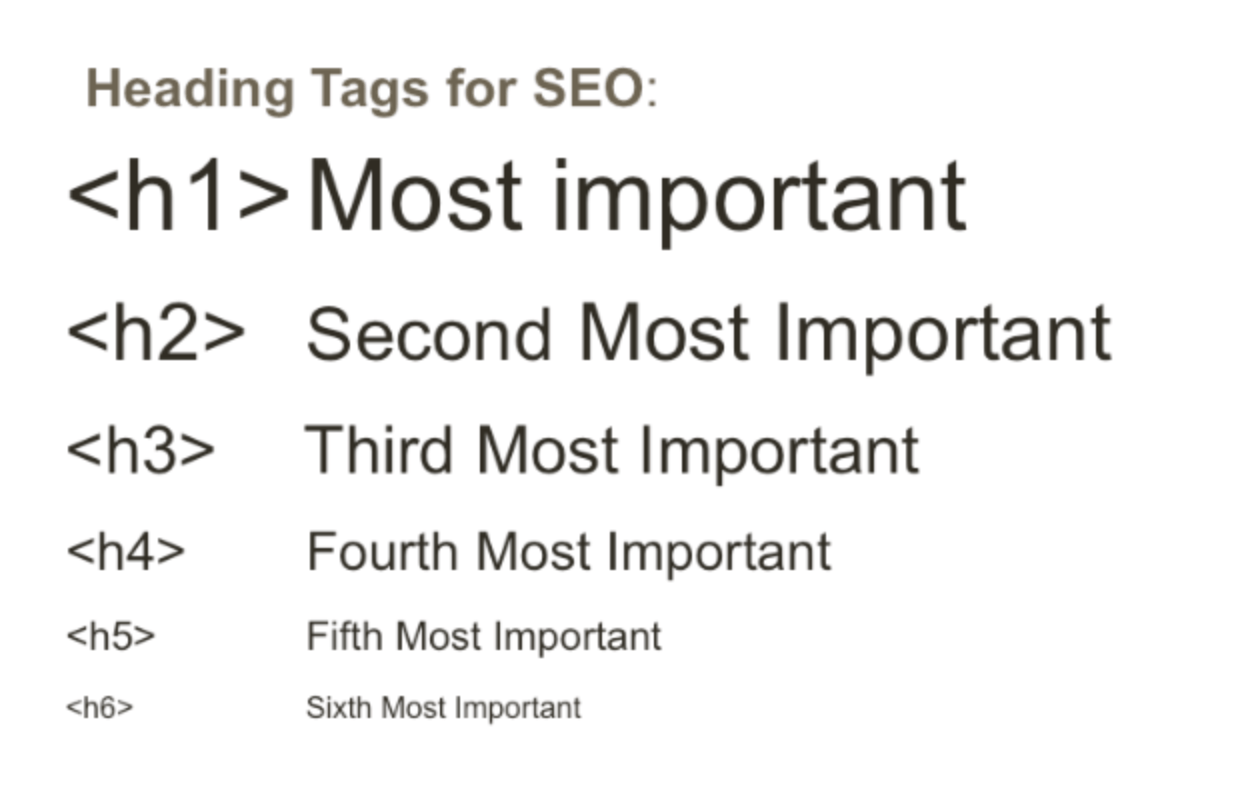
HTML (hypertext markup language) is the language used to create pages on websites. Tags are the code that tells a web browser how the content should be displayed on the page. There are six types of heading tags; H1-H6.

Each tag can be ranked from highest to lowest in the order of significance, which is clearly illustrated by the size.

Heading Tags

You can add these tags to your content before you publish your work.

Here at Quick Sprout, we use WordPress. But I don’t typically write my blogs directly in that platform. I work in Google Docs, just because I think it’s more user-friendly for writing long-form content.

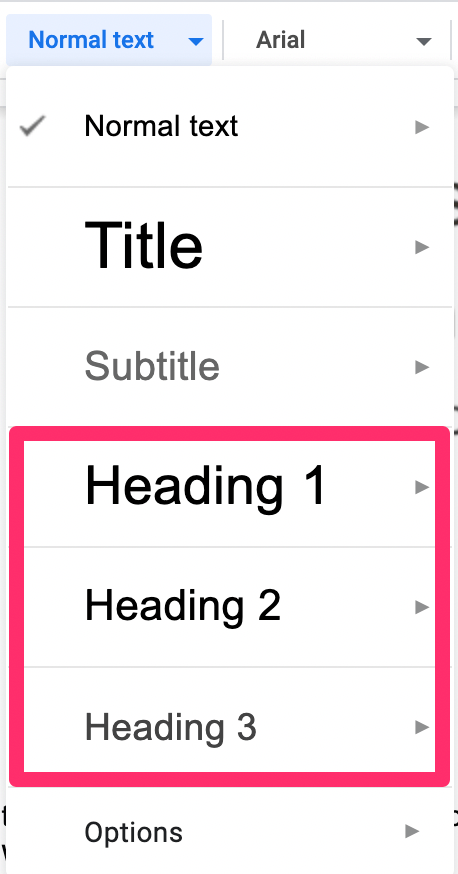
Whether you’re using Docs, Microsoft Word, or another platform to produce content, you’ll be able to find those header options in the menu bar. Here’s what it looks like in Google Docs:

Google Docs Heading Tags

It’s very straightforward.

The options for H4 and higher won’t appear until after you add H3 tags to your content.

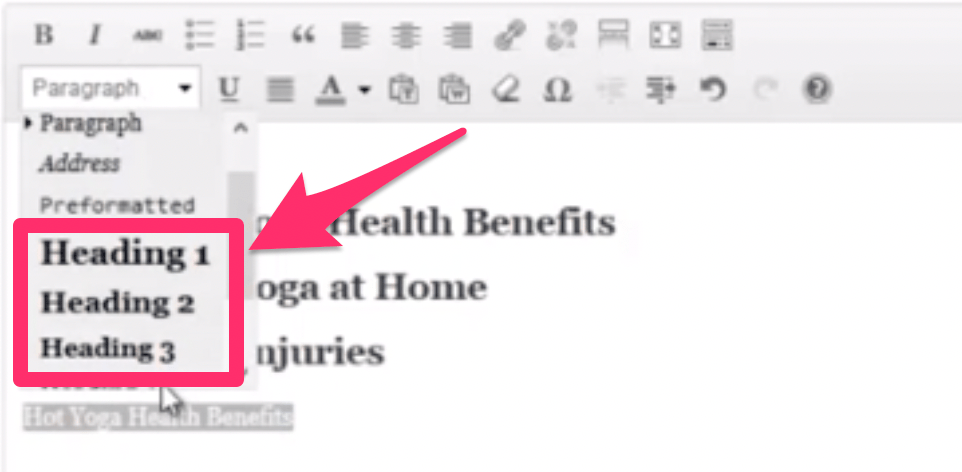
Here’s what the tags look like if you’re working directly in WordPress.

Wordpress Heading Tags

Again, it’s about as straightforward as it gets.

You can verify that the headers are applied properly into your content by viewing the source code of a page. In WordPress, just switch from the visual editor to the text editor to see the HTML code.

You can also view the source code of any page, even after it’s been published.

For example, let’s look at some previously published content here at Quick Sprout. Here is a post I wrote about online marketing for beginners.

Heading Tag Example

I’ve pointed out the different headers above. I’m sure you’re used to seeing content like this (especially on Quick Sprout).

Now, you might look at this and just think the font is larger. All of the main text is written in size 11, the title is size 20, and the subheader is size 16. While this might be the case, it’s not that simple.

Changing the size of the font alone doesn’t equate to a heading tag.

If you check the source code of the page, you’ll see what I mean.

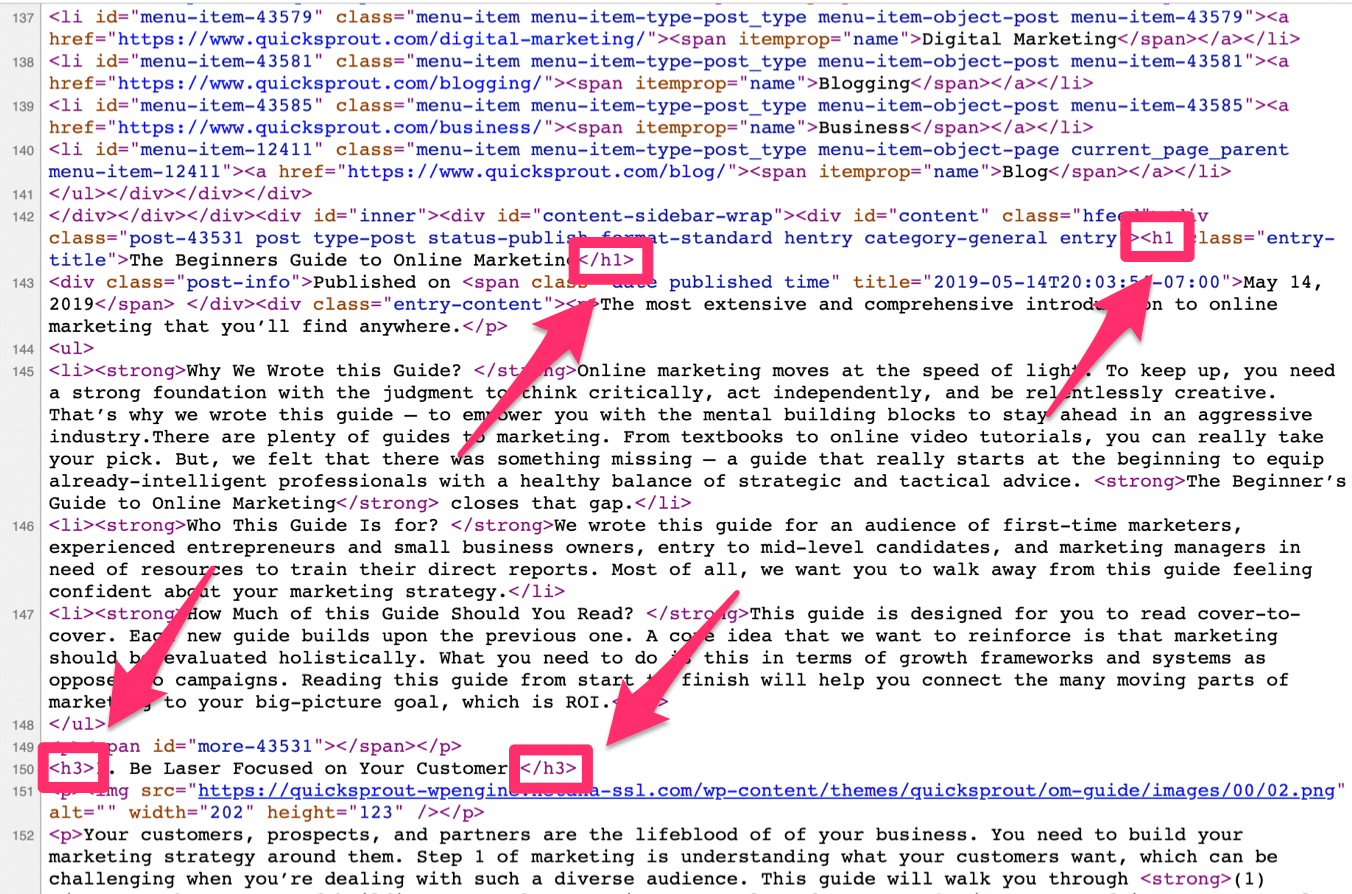
Right click on any web page to see the source code. In fact, you can do it with what you’re reading right now. Then just click “view page source” and it will bring you to the source code. Here’s what that looks like for the Beginners Guide to Online Marketing.

Heading Tag Html Code

Finding those h tags in the source code is like a needle in a haystack. So use “command + f” to your advantage. Then just search for h1, h2, h3, etc…

I pointed out the tags to make it obvious.

As you can see, H1 tags were used for the title, and an H3 tag was used for the first subheader on the page.

SEO value for heading tags

Now let’s get into how heading tags are connected to SEO. By the way, here’s another heading tag (above) that I used for this subsection.

There has been a debate for quite some time amongst SEO experts about how much of an impact heading tags actually have on SEO.

You can’t compare their value to things like domain authority or backlinks, but heading tags still play a factor in your search ranking. That’s because they make it easier for search engines to read and interpret your content.

If you just have big walls of text without subheaders, it’s going to be difficult for bots to know what your page is about.

This can be compared to your overall website architecture as well.

Just like your homepage and top-level content have a hierarchy that makes it easy for crawlers to index pages, the heading tags explain the importance of topics on the page.

Without headers, you’re relying on search engines to take all of your text at the same face value, which won’t help your search ranking.

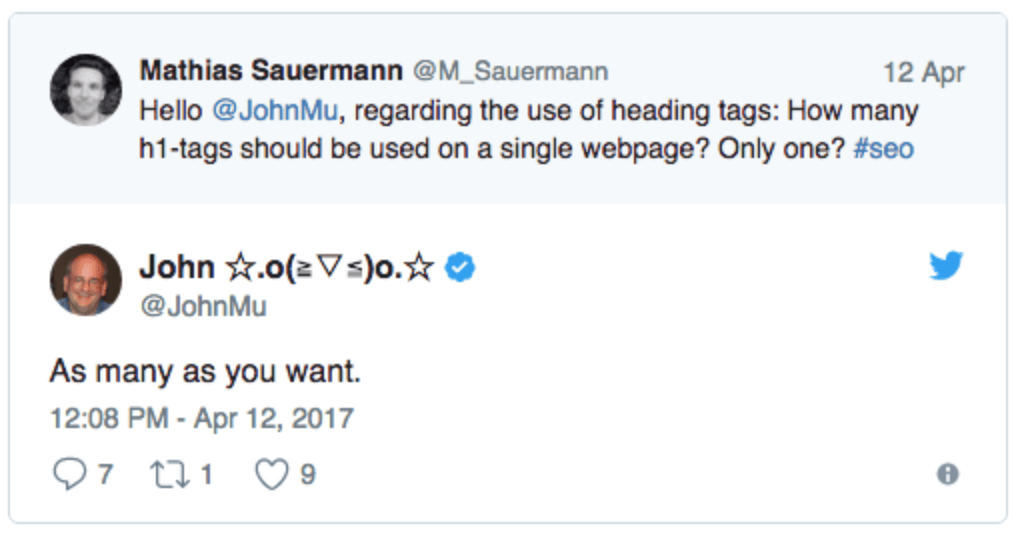
John Mueller, the senior webmaster trends analyst at Google was quoted saying that Google uses H tags to understand the structure of text on a page.

So it’s clear that they provide some SEO value.

Furthermore, research from the Hook Agency shows some of the most important factors of on-page SEO.

Important SEO Factors

Two of the top ten factors are related to your heading tags.

I’ve found some really great case studies on the web that back up this claim as well. Here’s one of my favorites conducted by Search Eccentric.

The study is about a company called Motorcars Ltd.

They’ve been in business for over 40 years, but in the digital era, they struggled to rank in search engines for their keywords. After analyzing the website, it was clear that there was plenty that could be improved upon.

One of the things that they changed was adding H1 and H2 tags to the site.

The purpose of this was to improve the visibility and make the content more SEO friendly; simple, right? Take a look at the results of this tactic.

The changes had a huge impact on their search results.

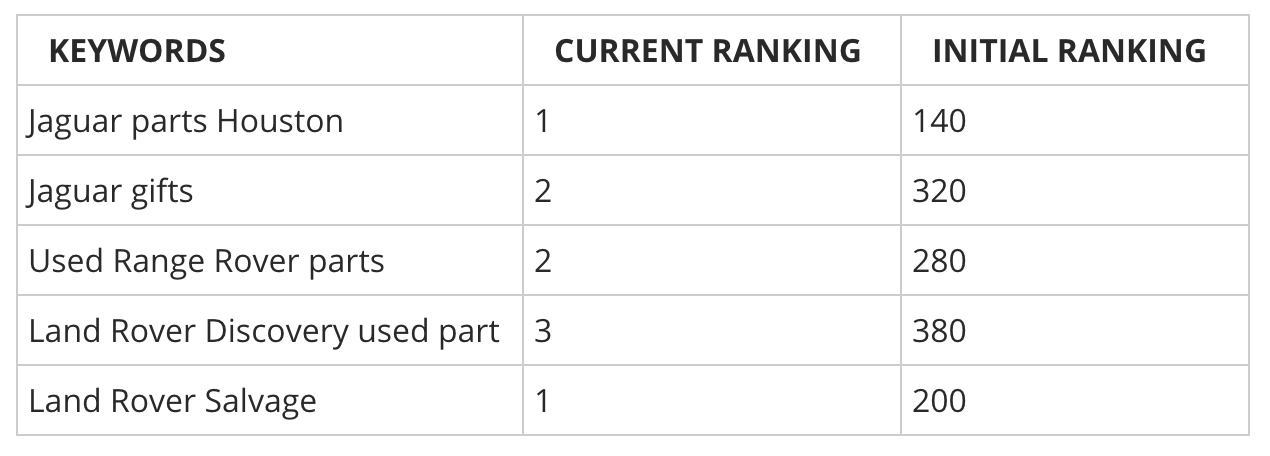
Ranking Improvements

After the heading tags were added, the company held the top ranking spot for two of their targeted keywords. They held a top three position for five of their top keywords.

As you can see from the chart, they jumped hundreds of ranking spots.

Now, all of this can’t be attributed to the header tags alone. They also removed dead links and fixed some navigation issues. But the heading tags definitely played a huge role in their success.

How heading tags impact user experience

In addition to the SEO benefits of heading tags, adding these to your site will also help improve the user experience.

As a result, you’ll get more traffic to your site, frequent repeat visitors, and people will stay on your site for longer stretches of time. This simultaneously adds more SEO value as well.

How can heading tags benefit visitors on your website?

For starters, it just makes your content cleaner and more organized. 43% of people say that they skim blog posts. You need to make your content easy to skim by adding headers.

Take this post you’re reading now as an example.

Let’s say you already knew what heading tags were before you started reading. You may not think it’s necessary to read the first section. It would be very easy for you to skip over it because the tags are clear.

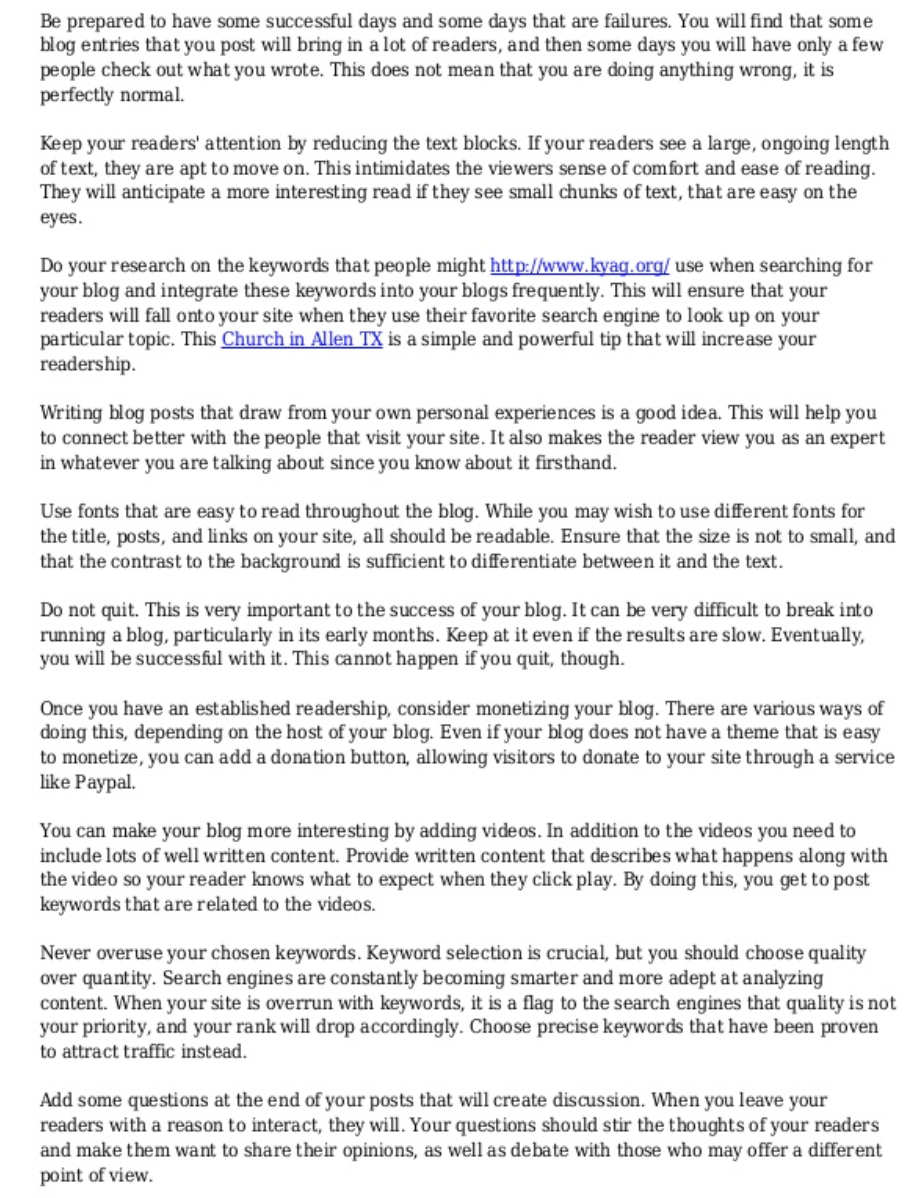
But if I eliminated all heading tags from the post, it would create a large wall of text that is extremely difficult to read. Here’s an example to show you what I mean.

No Heading Tag Example

This content is not scannable, and it’s just one excerpt of several pages in the same format.

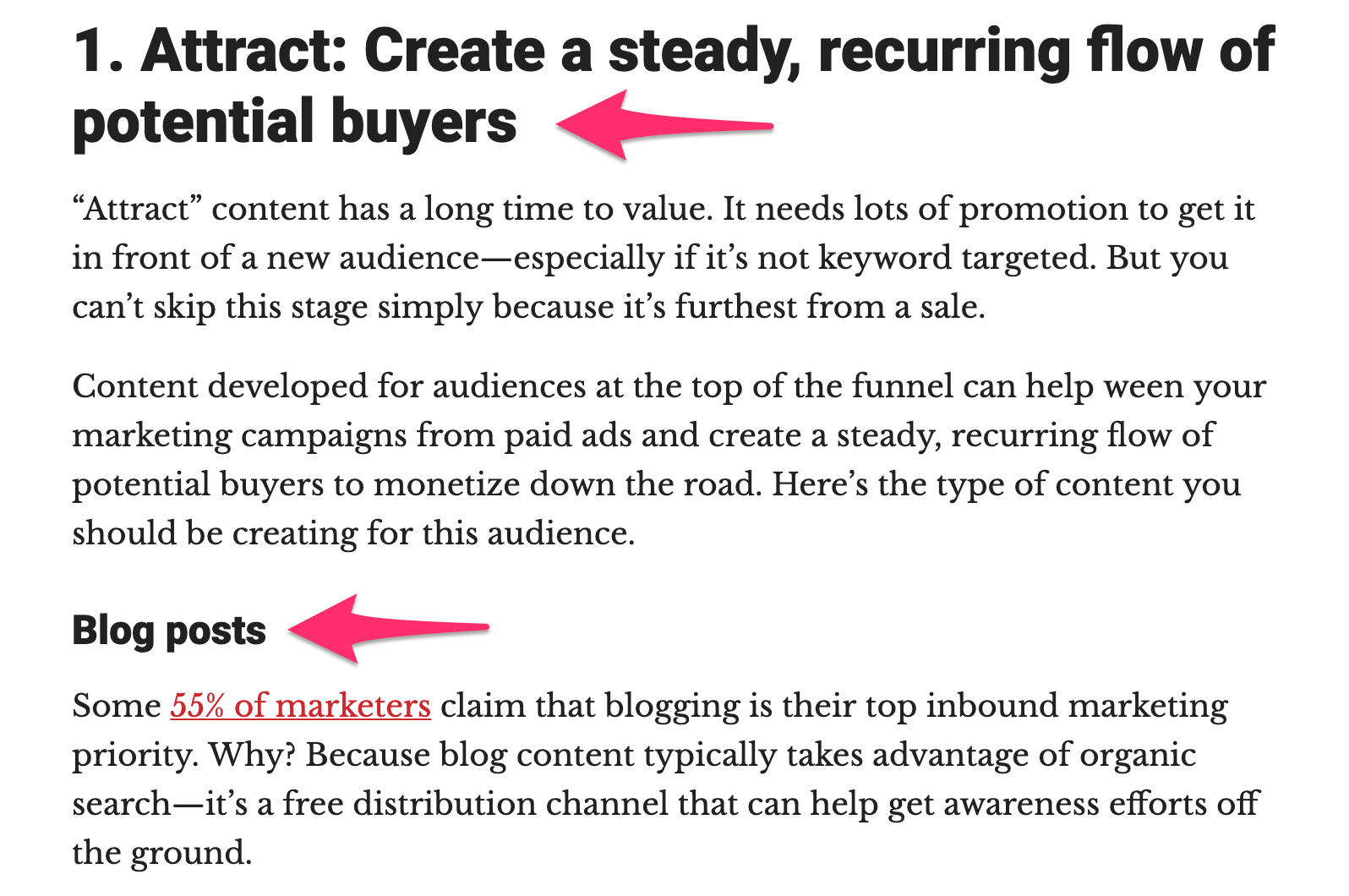
Now, let’s look at another example, only this time with heading tags used by Conversion XL.

Conversion-XL

This is much easier to scan, and it’s visually appealing.

Now, is it possible to get this same effect just by making the font bigger and bolder? Sure, but why wouldn’t you take advantage of the header tags to get the SEO benefits as well?

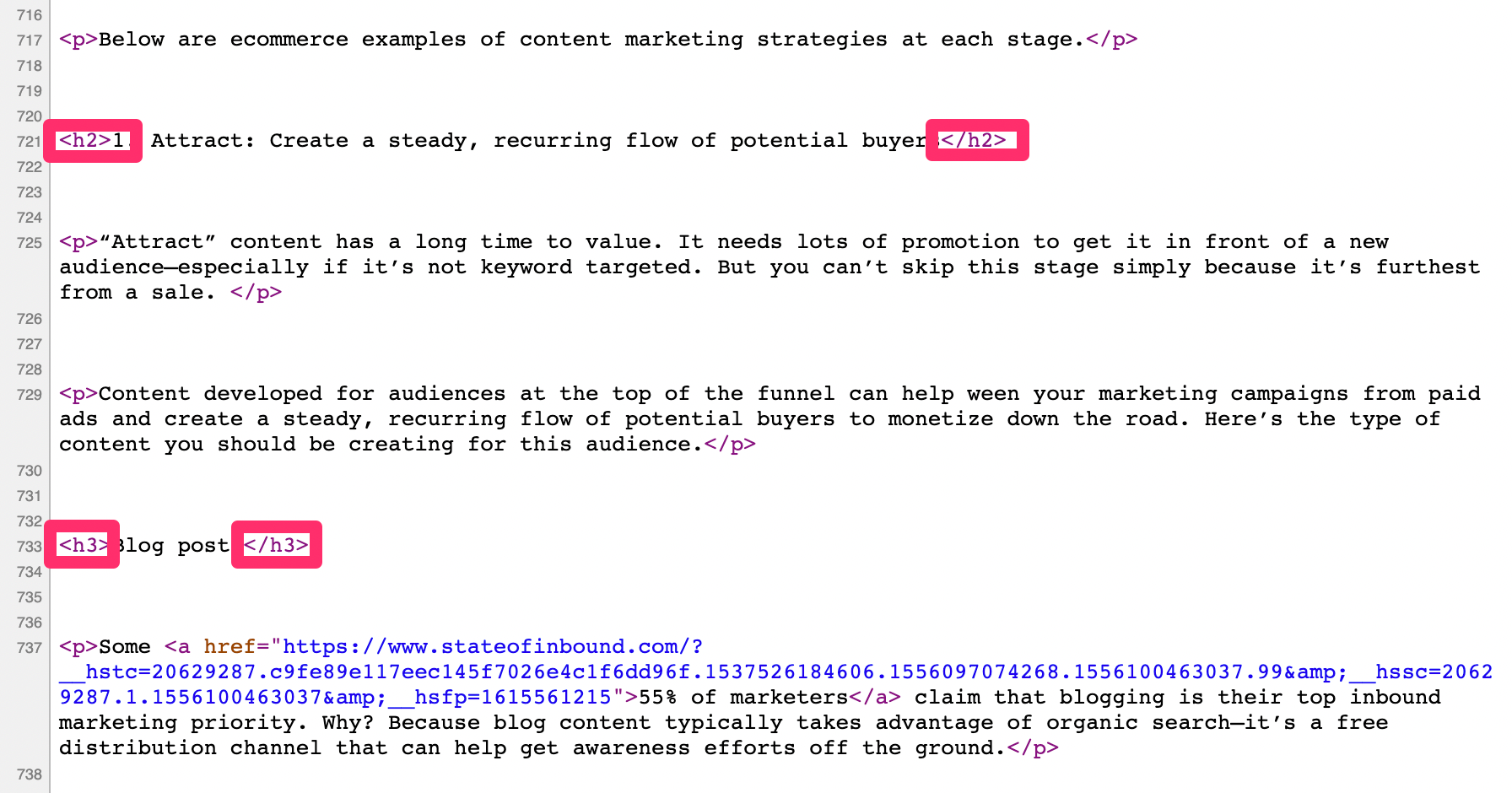
In case you’re wondering if these are actual heading tags or just larger font, I checked the source code to prove it.

Conversion-XL code

As you can see, they used H2s and H3s for this part of the post. Although it’s not pictured in this screenshot, an H1 tag was used for the title.

Heading tags best practices

Now that you know why you need to add heading tags on your website, I’ll go through some of the best practices to follow.

Each best practice on my list is going to have a heading tag as well. You’ll see what I mean as you continue reading.

Only use one H1 tag per page

H1 tags should be saved for the title.

By default, the title of your post should automatically become an H1. But you can view the page source code and the text editor to verify that.

If for some reason that’s not the case, you can always add it in yourself.

The idea here is that the H1 tag is the most important. Adding more than one will not only be less visually appealing, but it could potentially confuse crawlers when they’re indexing your content.

Use natural keywords in headers

When possible, you’ll always want to have keywords in your headers.

However, it’s a common misconception that every heading tag needs to be stuffed with keywords. That’s just not the case.

As with all of the content you create, the text needs to be natural and readable. If you can get some keywords in there, that’s great. If not, don’t try to force it.

A great resource for finding keywords to put in your headers is Google. Just scroll to the bottom of the page and look for related searches.

Let’s say you were writing a blog post about the benefits of yoga. Here’s what those related searches look like.

Search Examples

These keywords could be potential H2s or H3s of your post.

You wouldn’t put “benefits of yoga Wikipedia” in one of your headers, because that’s not natural and doesn’t make sense. But things like yoga benefits for men, benefits of yoga in the morning, or how to maximize yoga benefits would all be appropriate.

Use heading tags generously

Some people will tell you to use heading tags sparingly, but I think that’s another misconception.

I’m not saying you should have them every other line, but use them as you see fit. If a post calls for three, then use three. If it calls for 10 or 20, then use 10 or 20.

In most cases, the longer a post is, the more heading tags you can use.

Google Advice

Here’s another quote from John Mueller at Google. He says you can use as many heading tags as you want.

Again, I’d still stick with just one H1 tag. But for H2, H3 (and so on), use as many as you need.

In most cases, I don’t find it necessary to go beyond H3 or H4. SEO aside, I think that’s too complex for the reader. So find other ways to organize your content instead.

You could always use bold or italics to emphasize something, as opposed to getting all the way to H6.

Conclusion

Heading tags are a subtle, yet powerful, SEO hack.

In addition to showcasing important content to search engine crawlers, they also make it easier for website visitors to consume content on your page.

I highly recommend adding heading tags to your content. As you can see from this blog, I use them all of the time.

So use this post as a reference for implementing heading tags and following the best practices.


Source Quick Sprout http://bit.ly/2EieTIY

12 Simple Money Management Tips You Can Start Today

College Students Become ‘Grandkids on Demand’ with This Side-Gig App

Questions About Child Rearing Costs, Laundry Services, Unused Media, Aldi, and More!

What’s inside? Here are the questions answered in today’s reader mailbag, boiled down to summaries of five or fewer words. Click on the number to jump straight down to the question.
1. $250K to raise a kid?
2. Long term care?
3. $20 bill budgeting
4. Expense of laundry service
5. Backlog of unused media
6. 403(b) risky?
7. Cheap or expensive bag?
8. Thoughts on Aldi
9. Is renters insurance necessary?
10. Appliance repair or replace?
11. Saying no to parent
12. Getting value from self-improvement books

Spring usually begins with a mix of rainy days and dry days, warm days and cold days. Sometimes, it’s a warm, dry day and all I want to do is go outside. Other days are wet and cold and I want to stay in out of the rain.

The hardest part are the beautiful days when I need to stay inside and work. I want to go outside on a long, long walk through the countryside and through the woods, looking for mushrooms and enjoying the fresh air.

Spring is wonderful.

On with the questions.

Q1: $250K to raise a kid?

My husband and I are in our early thirties and were starting to think about having a couple of children in the next few years. We started to look into the costs and the most common figure we found was $250K to raise a child. That can’t even be right as there are families that raise kid that barely bring in that in total in 18 years. What is the actual cost of raising a child in your experience?
– Marion

When you see numbers like $250K, you’re seeing the total long term cost over a period of at least twenty years, and that often includes paying for college and other such large expenses. It’s also an average and includes families who are paying for things like private school.

My experience has been that the cost of raising a child is often connected directly to the financial means of the parent. You can raise a child perfectly well on a low income – my parents were never, ever very well off when I was growing up and they raised three children. My father worked in a factory (when he wasn’t laid off) and had side gigs (most notably commercial fishing) for a living and my mother was a stay-at-home mom. There wasn’t a ton of money there.

We are most certainly spending more per child on our children than my parents did on me, but the truth is that a lot of the extra expense is on optional things like a band instrument or sports fees or an extra ticket to an event that we’re going to as a family. We could not spend those things and our child would be perfectly fine.

In other words, those $250K estimates are numbers that summarize what parents are choosing to spend on children, not what they have to spend. Outside of some basic things like food, shelter, clothing, public education, and medical care, most expenses related to raising a child are very optional, and many of those required expenses can be incredibly low out of pocket.

Q2: Long term care?

Read this article:

https://www.nytimes.com/2019/05/10/health/assisted-living-costs-elderly.html

What are ordinary people supposed to do when they need long term care? The wealthy can pay for insurance or higher care, but that’s not an option for a poor person or even a middle class person. If me or my wife needed long term care I don’t know what we’d do.
– Alex

This is one of many issues that have radically changed in society during the 20th century and that we haven’t really figured out how to handle as a society.

At the start of the 20th century, people who needed this kind of care usually didn’t have the medical care necessary to continue to live. They perished. Thus, it was fairly uncommon for someone to need this kind of care for an extended period of time, and when it did occur, there were typically large families and even whole communities who stepped up to provide that care.

Today, much of that has changed. In many situations, medical advancements enable people to live through things that they would not have survived 100 years ago. This means that more people who are in a long term care situation are surviving when they previously would not have done so. At the same time, nuclear families are smaller and communities are less tight-knit, for various reasons.

The truth is that as a society, we have not figured out how to handle this yet. We haven’t figured out how to handle a lot of the advancements of the 20th century yet as a society. One only needs to look at the cruelty of many internet forums as further evidence of this.

The problem, of course, is that there is no ready-made solution. Long term care insurance is definitely one step many people can take to gain peace of mind about future situations, but it’s expensive for many. The honest truth is that many families, when faced with long term care situations, just have to deal with it moment by moment to the best of their ability. Some families struggle to provide that care at home, particularly when there’s a larger pool of family members that can help, while others go into debt. Many families rely on some form of government assistance to make it work.

If you can easily afford it, long term care insurance is a great idea. If not… well, society doesn’t have a robust solution for you. The “solutions” vary widely from situation to situation.

Q3: $20 bill budgeting

Was reading an internet forum that reminded me of how I used to budget in college. Back then, I used to have an envelope with $10 bills in it. Each month, I’d put $300 in $10s in there and each day I would take one out. Aside from rent, I had to live on that $10 each day. It paid for the bus and for food. Strategy I saw used $20 bills today which would be roughly the same.
– Mary

Let’s spell out this system a little bit.

Aside from scheduled bills like rent, electricity, and so on, a person would aim to live on $20 a day in cash. Each month, a person would withdraw $600 cash from savings in the form of 30 $20 bills and put them in an envelope somewhere secure. Each day, that person would take a $20 bill out of the envelope and put it in their pocket. They would have to live off of that $20 bill and change from the previous months.

This gives you room to splurge if you want to, but to do so would involve eating beans and rice for a while. In other words, lean days would directly help with expensive days. It would also be needed to help you make up front purchases like a bus pass, which would ease daily expenses a little going forward.

I mentioned this idea to a friend and she said that she would probably try to have days where she could get by without pulling a $20 out of the envelope and then at the end of the month there’d be some $20s left over, which she’d use for bigger goals or big expenses or emergencies. That seems like a strong idea to me.

I think this system would work very well for anyone who is trying to make ends meet on a very tight budget.

Q4: Expense of laundry service

There is a service in our town that just started that will take your laundry off of your front step and bring it back within 24 hours washed, dried, and folded. The cost is $2 per pound of clothes (rounded up to nearest pound), paid up front. I am trying to do the math on whether this makes sense or not for us.
– Amy

A typical large load of laundry weighs somewhere between 7 and 10 pounds, but that really varies depending on how much you stuff in your washer with a typical load. I actually weighed a load of laundry that I just pulled out of our dryer on a kitchen scale and it weighed about 9.5 pounds.

So, you’re paying somewhere between $15 and $20 per load of laundry to be done for you.

What is that saving you? The big savings is the time. You aren’t carrying your clothes to the washer and filling it up. You’re not moving clothes to the dryer. You’re not folding those clothes, either. That’s all done for you.

In terms of cost, the cost of a load of laundry at home, including all materials, energy, and equipment depreciation, is around $1.

So, in essence, you’re paying someone between $14 and $19 to put a load of clothes into the washer, transferring them to the dryer when done, then folding them for you when the drying is done. That’s at most half an hour of effort, and probably less than that.

Thus, unless you are very strapped for time and can extract a lot more than $30 of value per hour out of an extra freed-up hour, then this isn’t a cost-effective move. It essentially adds up to paying $15 or a little more for an extra 20 minutes or half an hour of free time.

Q5: Backlog of unused media

What are your thoughts on people who have large unused media collections and keep buying more without using what they have? Why does that happen? Is there a fix?

I noticed this myself with my collection of Kindle books recently. My son is home from college and he piped up and said that he actually has a lot of computer games unplayed as we often buy him Steam gift cards. He has a ton of computer games left unplayed yet he will often seek out new ones.

I want to be less into getting new stuff and more into using what I have.
– Mike

The reason’s actually pretty simple: buying and acquiring and getting and collecting new items for your collection scratches a much different itch than actually enjoying the items in that collection.

I have the same issue in some areas of my life (far fewer than I used to, thankfully). The feeling that acquisition and discovery gives you is much different – and I think more addictive – than the feeling that diving deep gives you. This is particularly true when you don’t have as much time as you’d like to dive deep, but that’s not the sole cause of it.

The only solution I’ve found that works is to put moratoriums on new acquisitions. Give yourself a 30 day or a 90 day challenge to simply not buy any new Kindle books. Suggest the same for your son with his Steam games. If you have the urge, ignore it or, if you must take action, put that item on a wishlist.

This does a great job of strongly curtailing that desire to acquire, but it’s a desire that can easily grow if you’re not being conscious about it. I find that doing these kinds of moratoriums regularly does a pretty good job of slowing down my collecting nature.

As for actually using those backlogs, the best thing I’ve ever done is to consciously block off time in my schedule for that kind of exploration. I block off an hour a day for reading, and that has caused my book backlog to evaporate. I block off time on many weekends to play board games and that means the games in my collection are getting much more play.

Q6: 403(b) risky?

I work at [a public university]. One of my coworkers claims that people shouldn’t put money into a 403(b) because politicians will eventually target that money for extra taxation or reclamation because it is public funds. He thinks that because we are government employees our 403(b) money will eventually get reclaimed by the government so saving in a 403(b) is a waste. Is this even possible?
– Ana

Well, anything’s possible, I suppose. However, if you’re running your life in response to what you think it’s possible that the government might do, you’re walking by a ton of opportunity.

I mean, I think it’s possible that the government might outlaw certain classes of opioids. Does that mean I should start hoarding them, just in case, even though they’re very likely to just sit in my cupboard and go bad? Of course not, and I consider new opioid restrictions to be far more likely than any changes to 403(b) taxation.

Let me put it to you this way: if the United States government starts retroactively taxing the retirement savings of a large class of citizenry in a way that invalidates the entire reason for putting money in there in the first place, we will already be in an extremely ugly situation that will get much uglier. 401(k) and 403(b) plans are already big wins for the federal government because it’s a way to pump tons and tons of money into investments – and thus helping the economy – in exchange for merely delaying taxes for a while. The government makes far more money leaving 401(k) and 403(b) plans just as they are than if they were to tinker with them in a way that would drive people away from them.

It is possible that the government would do something like that, but if they’re doing things like that, then we have much bigger fish to fry, like a rapidly devaluing dollar. In fact, most financial conspiracy theories that people use to justify weird financial choices are ones that, if they came to fruition, would be completely overshadowed by a collapsing economy and a hyperinflated dollar.

In my opinion, a 403(b) is about as safe as you can get, and the risks you are taking by having one are overshadowed by the risk of having your money in the form of American dollars, and I don’t consider that much of a risk either. The only realistic change I can see to a 403(b) is that they might change how the program works in the future, and that would probably involve sunsetting the current 403(b) program and letting the current accounts continue to exist without further contributions while introducing some form of replacement account. They absolutely would not want to risk any mass withdrawals from 403(b) plans – if they abruptly taxed them, Wall Street would lay an egg and the value of the dollar would plummet. The government will bend over backwards to avoid that, not encourage it.

Q7: Cheap or expensive bag?

I need a messenger bag or backpack for work. I have been looking at the options and it seems like you can either get a cheap one for like $20 that will last for a year maybe before the straps start breaking or you can get one for like $200 that will last for several years – maybe five or ten, maybe twenty.

Cheap bag does the job now for only $20 but I will be replacing it before long if I use it every day. Expensive bag will do it practically for life but it’s really expensive right now and I have a hard time justifying spending $200 on a bag.

I know you lean toward buying things for life and I can see that the long term cost might be lower with the expensive bag, but I can’t justify $200 on a bag right now.
– Duane

To me, the deciding factor in these situations is the cost of failure. What exactly happens when a bag fails on you?

In my own experience, that’s usually the moment when it’s time to get a new bag – the old one failed in some way. A strap breaks or the bottom rips out or something like that.

What’s the consequences of that kind of failure? What happens if you’re actively using your bag and suddenly a strap breaks on your or the bottom rips out?

If the consequences aren’t too disastrous, that’s a mark toward a cheaper bag. If the consequences are dire, that’s a mark toward a more expensive bag.

Personally, one of the things I strongly consider when buying an item is the consequence of failure. If it causes a potentially major career or life hardship or an enormous mess, I’m going to get the reliable version. If it’s something small, like an overcooked or undercooked meal, the cheaper version seems much more acceptable to me.

For me, this was what drew me to getting a “buy it for life” kind of bag for daily use.

Q8: Thoughts on Aldi

Aldi just opened up in my community. We shopped there and thought it was okay and that the prices were great but there were weird little annoyances with layout and selection and the carts. Then I saw on CNN about how Aldi is expanding fast. What are your thoughts on Aldi? Good place to shop?
– Alice

I’m guessing that this is the CNN story that Alice is referring to.

That article describes it well: they strip down the shopping experience as much as possible to make the prices low. What I’ve found is that it means that their selection is kind of limited and some of their items aren’t particularly healthy, but their prices on what they do have are amazing.

There are two different Aldi stores within about fifteen minutes of my house. Aldi is probably the cheapest grocer available to me, though Fareway isn’t too far behind them and has a somewhat better selection.

I basically find that the cheaper a grocery store’s prices are, the weaker the selection is and the more bare-bones the shopping experience is. I generally don’t mind the bare-bones shopping experience, but I do find that it restricts what I can cook if I only use Aldi (or, to a much lesser extent, Fareway). I find that if I shop at Aldi, I usually have to make a second stop for some items; occasionally, I have to do the same with Fareway, but not too often. Other grocers, like Hy-Vee, will have everything I need, but the prices are higher.

Thus, it comes down to a convenience thing and a meal planning thing. If I plan very simple meals, I can get everything I need at Aldi, but our meals aren’t very… varied. They’re certainly cheap, but not varied. If I add more variety, I either need to make multiple stops when grocery shopping, adding significant time to my shopping trip, or shop at Fareway or even Hy-Vee.

Honestly, I still mostly shop at Fareway. The prices are very good and they generally have almost everything I need. Aldi is lower on the items that overlap with Fareway, but I usually don’t have to make a second stop if I shop at Fareway, it’s closer to my home, and the prices aren’t really that different for a typical week’s grocery list.

Aldi is great if your list is entirely common food staples, and I do shop there sometimes.

Q9: Is renters insurance necessary?

Is it always necessary to get renters insurance? Just moved out from parents and my apartment has a bunch of Goodwill stuff and family hand me downs. If it’s gone I don’t lose much.
– Matt

First of all, it’s very possible that your landlord requires you to have some sort of renters insurance policy. You’ll need to look carefully at your lease; if you don’t have it, you might be in violation of your lease. Many leases require the renter to have a $100,000 (or more) liability policy.

Honestly, the big reason that many first time renters need renters insurance is for the liability coverage. If you accidentally burn down the building and it’s clear you’re at fault, the landlord’s insurance may cover some of it, but you also have a legal liability too. If you don’t have insurance, that can be a huge problem.

Renters insurance is pretty cheap, though. You can get a policy that includes $30,000 in property coverage (covering your stuff in event of theft or disaster) and $100,000 in liability for around $15 a month.

I think it’s a good idea, even for people without much stuff, to get this kind of insurance if they’re renting, just because the cost is so low compared to the downside.

Q10: Appliance repair or replace?

Our washing machine has broken down twice in the last six months. A family friend has fixed it both times but he says that to really fix the problem will cost about $200 in parts and that we should get someone else to fix it as he’s more of a “handyman.” Time to replace?
– Noelle

Absolutely. I don’t even hesitate to say yes to this. When a repair bill is going to be a large portion of the cost of replacing an older item, it’s time to replace the item, as there are likely other points of failure coming in the future.

There are exceptions to this, of course. If you are familiar with repairing the item yourself or have an interest in figuring it out, then you should by all means give it a shot. If you can find the parts for cheap and want to tackle the repair on your own, maybe with the help of that friend, then it’s probably worth it. My guess is, given the price, that electronic components are involved, but the actual procedure shouldn’t be too difficult.

However, that’s not something that necessarily appeals to everyone or works with everyone’s life. In that situation, I think a replacement is very justified. The nice part is that your current washer should last long enough to allow you to shop around.

Q11: Saying no to parent

I’m 31 years old and single. My father passed away about six years ago. My mom didn’t handle it well and has become an alcoholic and possibly a drug user. She comes to me and my brother regularly to “borrow” money. She does manage to keep her job at a grocery store that she’s had since I was a kid but I have heard that the manager keeps her on out of loyalty and she shows up to work drunk sometimes. She was so wonderful raising me and to see her like this tears me apart but I don’t know how to say no when she asks. She asks frequently enough that it does put some financial strain on my situation, though I am still making progress on my student loans. Do you have any advice for me?
– Megan

If I were you, the absolute first step I would take is to find an Al-Anon group for you. The purpose of Al-Anon is to support people in your exact situation, those that have loved ones with alcohol abuse issues.

It sounds like your mother is a good person who was broken in some way by the death of your father and she doesn’t know what to do so she uses alcohol to self-medicate, and that is causing difficulties in your own life. Al-Anon can help you deal with things on your own end and perhaps help you figure out how to help your mother.

There will probably come a point where you will have to tell her “no,” but I can’t really offer specific advice on that because I don’t know the specific situation. I can simply recommend Al-Anon as a great next step.

Q12: Getting value from self-improvement books

A lot of times when I read a book about personal finance or getting organized, the ideas make a lot of sense but then I close the cover and none of it seems to matter or take hold in my life and before long I’ve forgotten everything other than a few main points. Do you have any tips for making personal finance books or organizing books more “sticky” in my head?
– Mary

There are two key elements that I think make the difference for me.

The first is that I take a lot of notes as I’m reading it. If it’s on the Kindle or a copy I don’t mind abusing, I’ll do a ton of highlighting as I go. If it’s a library book, I’ll put in bookmarks as I go. Then, when I’m done, I wait a few days, then go back through the highlights and take actual handwritten notes on the book. This impresses the ideas into my mind.

The other part is that, from those notes, if I have positive thoughts about the book at all, I try to put some of those notes into practice immediately. I usually do a thirty day challenge with some of the suggestions in the book, meaning I try to apply them as well as I can for thirty days in my life. If it seems like the trial run will actually be a net positive change, I’ll keep going with it, doing a ninety day challenge with perhaps some revisions. The goal here is to try to set those changes as a habit in my life.

Rolling back a bit, I find that I’m more successful with this kind of change if I’m already strongly interested in the type of change that the book is targeting before I ever start reading it. If it’s not a change that’s compelling to you, it’s probably not worth your time to read a book on any self-improvement topic.

Got any questions? The best way to ask is to follow me on Facebook and ask questions directly there. I’ll attempt to answer them in a future mailbag (which, by way of full disclosure, may also get re-posted on other websites that pick up my blog). However, I do receive many, many questions per week, so I may not necessarily be able to answer yours.

The post Questions About Child Rearing Costs, Laundry Services, Unused Media, Aldi, and More! appeared first on The Simple Dollar.


Source The Simple Dollar http://bit.ly/30ys7dZ

Why Renters Insurance Is So Important (Plus It’s Cheaper Than You Think)

When you rent rather than own your home, your landlord most likely has insurance on the property. But that insurance won’t cover anything beyond the physical building if disaster strikes, leaving you vulnerable. That’s why renters insurance is so important.

It can protect you from disaster, and it’s typically very affordable — much more so than homeowners insurance.

But before deciding on a provider for your renters insurance, it’s important to understand the basics.


6 Ways to Save Money on Your Renters Insurance Policy

No matter what company you choose for renters insurance, it’s worth doing some research to see how you can save even more on your monthly premium. Here are a few common ways to save money.

1. Bundle Your Policies

Just as you can save money by bundling internet and TV, you can save by bundling your insurance. Many insurance companies offer discounts when you sign up multiple policies through them. So consider getting renters insurance through your auto insurance company, or get quotes for both types of insurance to see if you can save.

2. Ask for Professional Discounts

Many insurance companies offer discounts for military members, teachers, first responders and nurses. It’s worth asking whether your profession qualifies you for any discounts when you gather insurance quotes.

3. Improve Your Credit Score

Consumers with lower credit scores are more likely to pay higher insurance premiums. If you can get your credit score up to a good or excellent rating, you could see your premiums drop.

4. Set up Auto Pay

You could get a nice discount on your renters insurance by setting up an automatic monthly payments. Insurance companies like auto pay because it pretty much guarantees you will pay your bill, so they are likely to offer you a lower premium.

5. Look for Safety Discounts

Ask prospective renters insurance companies if they offer discounts for safety equipment, like security alarms, deadbolts, fire sprinklers and fire extinguishers. Of course, if your rental doesn’t already have these items, you’ll need to check with your landlord before installing them.

6. Ask About a Claims-Free Discount

Ask your insurer if you’re eligible for a discount after being claim-free for a certain period of time. This could help decrease your overall renters insurance cost.

Ultimately, the best way to find affordable coverage where you live is to do your homework and shop around. You can also ask family and friends for recommendations and get quotes from those companies. The key is to not settle for the first quote you get.

Catherine Hiles lives in Ohio with her husband and their two children. By day she manages a team of writers and graphic designers, and catches up on her own writing in her spare time.

This was originally published on The Penny Hoarder, which helps millions of readers worldwide earn and save money by sharing unique job opportunities, personal stories, freebies and more. The Inc. 5000 ranked The Penny Hoarder as the fastest-growing private media company in the U.S. in 2017.


source The Penny Hoarder http://bit.ly/2QcxUBi

الأحد، 19 مايو 2019

9 Steps to Resign from Your Job with Class

Deciding to leave your place of work is a big decision and seldom an easy one. Regardless of whether you were offered a better role at a different company or you’re starting a work-from-home job, submitting your resignation can be a nerve-wracking moment in your career. But it’s also a moment that reflects your professionalism. […]

The post 9 Steps to Resign from Your Job with Class appeared first on The Work at Home Woman.


Source The Work at Home Woman http://bit.ly/2WSMKPX

Defunct steelmaker's 21-story headquarters imploded

BETHLEHEM, Pa. (AP) — Sixteen thousand tons of Bethlehem Steel collapsed in a matter of seconds Sunday as a demolition crew imploded Martin Tower, the defunct steelmaker's former world headquarters.Crowds gathered to watch the demolition of the area's tallest building, a 21-story monolith that opened at the height of Bethlehem Steel's power and profitability but had stood vacant for a dozen years after America's second-largest steelmaker went out of business.Explosives [...]

Source Business - poconorecord.com http://bit.ly/2HBspIC

Need a Few Extra Quid? Here’s How You Can Earn Money in the U.K.

السبت، 18 مايو 2019

Some Further Thoughts on the One Bag Challenge

Jeremy writes in:

My group of friends has been kicking around an idea and I wanted to get your take on it. Let’s say you had to live out of a suitcase or a big duffel bag permanently. That’s all the possessions you could own. What would be in that bag and why?

I actually wrote about this a few years ago when I discussed a month-long period where I did this as a 30 day challenge. During that challenge, I aimed to live out of a backpack and a duffel bag. I gave a brief list of some of the items I carried in that bag, but I didn’t get into too much detail; instead, I moved quickly on to the things I learned from doing it, which I boiled down to six lessons:

+ Lesson #1: It is far easier to do this if you have living space of some kind.
+ Lesson #2: At the same time, this approach to life makes a very tiny apartment in a city much more reasonable.
+ Lesson #3: ‘One bag’ becomes more of a challenge with children.
+ Lesson #4: My hobbies would need a lot of re-thinking.
+ Lesson #5: There were some huge advantages, too, like reduction in household chores, easy travel, spontaneity, and reduced expenses.
+ Lesson #6: I would quickly start to put a very high premium on high-quality sturdy stuff that just works as well as stuff that takes up less space.

I would really encourage you to read that first article, as I’m going to try to avoid covering the same material again.

I kept a lot of notes during that thirty day challenge, so I have a list of what I originally kept in the bags when I was trying to do this. However, going back through that list with some further reflection, I would change some items. Here’s how I would pack for that kind of “one bag challenge.”

The Bag Itself

If I were to do this, I would want a sturdy and very well made duffel bag that could last for many years. I actually have a duffel bag that I love that I think would be perfect for this – the Best American Duffel #5. It’s incredibly well constructed, holds 85 liters of stuff, and has smartly designed handles and straps. If I were looking at a less expensive option, I would look for a duffel from an army surplus store.

The first thing I would put in this bag is a smaller backpack or large messenger bag. The reason for that is that there are many times when I want to take a small portion of my possessions elsewhere but not carry around the large duffel. For example, if I’m visiting someone but want to spend the day out and about, I’d want a smaller bag to do so, or if I’m going on a short trip, a backpack makes more sense than a huge duffel. I have used a North Face Surge II for many years for this purpose and it works well; I also have a Goruck GR1, which is an incredibly sturdy but overpriced backpack. I will likely never need to buy another one as long as I live, between the two I already have.

Contents of My Bag

So, what goes in the bag? This is a modification of the list I kept when I was doing my thirty day challenge and in much more detail than the earlier post. It’s worth noting that some of these items are in there because I’m not assuming things about where I’ll be staying. If I can assume that I’m always living in a home or apartment or hostel or something like that, many of these items can go away.

Clothes are the foundation of the bag. Not only do I need enough clothes to survive for a number of days between washings, they also provide the padding needed to protect some of the stuff in the middle of the pack.

Five shirts Two t-shirts, one long-sleeved t-shirt, one dressier short sleeved shirt, and one dressier long-sleeved shirt. I would buy items that are extremely wrinkle resistant and store them by rolling them up to minimize space.

Four trousers/pants One fairly dressy pair of pants, two pairs of jeans, and one pair of nice shorts. This would shift a little depending on the climate, but I typically avoid shorts until it’s at least in the upper 80s and I live in Iowa, so this is appropriate. The dressy pants and shorts must be as wrinkle resistant as possible.

Five pairs of socks Two pairs of athletic socks that I can sweat in, one pair of dressier socks, and two pairs of winter appropriate socks (probably thick merino wool socks). Again, this covers the various uses of socks. During the summer, I wear sandals 95% of the time, so these are mostly for workouts where I’m wearing shoes or cold weather.

Five pairs of underwear This is self-explanatory.

Two pairs of long underwear Again, this is more important in colder climates. This serves as an under-layer beneath my pants on cold days.

A hooded sweatshirt Essential for several months out of the year in northern areas.

A cardigan A dressier alternative to the hoodie.

One reasonably dressy fall jacket This will be worn much of the time in the fall and spring and less intense parts of the winter. I want a sturdy jacket I can wear in a variety of temperatures.

One hardy winter coat This will take up some real space, but isn’t needed in warmer climates. On a -20 F day in Iowa, though, I’ll pull out my arctic Carhartt. Keeping warm is far more important than appearance at those temperatures.

Winter accessories, meaning a stocking hat, gloves, and a scarf.

A summer hat, which is less expensive than sunscreen.

A tie for dressier moments.

A pair of dressy shoes These are worn on nice occasions.

A pair of cross training athletic shoes These can be worn for exercise most of the time. I would beat the snot out of these and replace them when they start to fail.

A pair of sturdy sandals My default when it’s warm.

A pair of heavier winter shoes My default when it’s cold and snowy and icy.

My clothing would take up about half of the bag’s volume. The rest of the items would fit in the other half, largely surrounded by clothes.

A couple of reusable bags This would be useful for organizing and carrying laundry and keeping dirty laundry separate, as well as other carrying purposes.

A couple of plastic plates, bowls, forks, spoons, and cups This enables me to eat with some civility in most situations.

A flashlight so that I can see in the dark. This would be a pretty small one.

A very basic tool set or a multi-tool so that I can open packages, make minor repairs, and so on.

A basic sewing kit to repair minor issues with clothing.

A tightly compressed sleeping bag so that I can sleep anywhere.

A pillow to rest my head on at night.

Two towels and two washcloths for bathing.

A bag of toiletries, including a toothbrush, toothpaste, dental floss, deodorant, soap, shampoo, conditioner, hairbrush, comb, a razor and blades, and a nail clipper.

A sturdy nylon rope for all kinds of things, but the big thing would be an impromptu clothesline.

A first aid kit including things like bandages, a bottle of aspirin, antibiotic ointment, tweezers, and so on.

A bottle of sunscreen so I don’t burn myself to a crisp.

A super-sturdy umbrella, something I wouldn’t skimp on. I usually use cheap umbrellas that break frequently, but if I lived out of one bag, an umbrella would be vital and I’d want one that was incredibly sturdy.

Insect repellent to keep bugs at bay.

A loud whistle in case of emergencies, to attract help. Believe it or not, I used to carry a whistle around my neck all the time, something that I did for much of my adult life until recently.

A security pouch that would contain a few vital documents, to be worn under my clothes much of the time. This would include things like my passport, my drivers license, my credit card, my bank card, some cash, and so on. This would be protected with the utmost care, rarely leaving contact with my skin.

A TSA-approved luggage lock to secure my stuff when I travel or when I’m not around my bag.

The remaining space would mostly be filled up with things that I personally would find useful and valuable. These would vary a lot depending on the person.

A sturdy laptop I write for a living, so having a laptop to write on would be vital. I’d probably want a tablet, too, preferably an iPad with an Apple Pencil, but that’s not quite essential. I found room for it last time, though.

A Kindle would provide me with more than ample reading material for a very long time, so there’d be no reason to pack books. I’d load the thing up with books just in case I was away from an internet signal for a while.

A smartphone for communication and navigation as needed.

A GPS device in case my smartphone couldn’t navigate because of no signal or no data plan.

Chargers for those devices, including a solar charger so I can charge devices literally anywhere there’s sunlight.

A notebook and some pens because journaling is a major part of my life. Collecting my thoughts on paper is how I stay sane much of the time.

A deck of playing cards and one or two very small footprint games Tabletop games are a big part of my life. It would be the hardest thing, space wise, for me to give up. I would definitely include a deck of cards and a book on my Kindle with the rules to many card games, but I’d likely find room for a few very small games as well. I’d likely include a small magnetic chess and checkers set. The publishers Button Shy Games, Oink Games, and Jordan Draper Games have some wonderful games with tiny footprints, too.

A water bottle and some water purification tablets Obviously, I need something to drink. The purification tablets are needed if I’m not sure of the water source.

Some nonperishable food items I’d have things like granola bars and protein shakes stowed away in there.

A hot plate and a small pot Ideally, I’d want a hot plate with a magnetic stirrer and a bunch of stir bars, but this will do. This would enable me to make soups, pasta, vegetables, and a lot of other things.

These items would almost perfectly fill up the duffel described at the start of this list. I was able to largely live out of a duffel bag with a list of items very similar to this for thirty days (obviously, I didn’t abandon my home to do it, but I did make every effort to stick to the possessions in the bag).

Why Is This Useful?

While this list might be interesting, how exactly is it useful to real-world personal finances? What application does it have to the financial challenges most of us are facing?

First of all, it clearly shows that we don’t need as much stuff as we like to think that we do. I have far more possessions than I could ever possibly fit into a duffel bag, but the truth is that the vast majority of what I need or want to use in a given day could fit in one. Yes, I would miss some of my other possessions, and it would seriously cut into some of my hobbies (like cooking and playing tabletop games), but the advantages are numerous.

The big advantage is, obviously, you spend far less time managing and organizing and moving stuff when you have far less of it. This is the issue with having more stuff: you have to spend more time organizing, you have to spend more time moving, you have to spend more time cleaning, and that adds up to less time actually enjoying the stuff. Living out of a bag basically deletes that problem – you spend very little time cleaning or moving or organizing. Everything’s just in your bag, and when you want to go, you grab your bag and that’s it.

Thus, when you’re investing less time in cleaning and organizing and moving, you’re able to spend more time doing things. If my experiment with living out of a bag taught me anything, it was that such minimal living gave you a lot of free time for hobbies. The time I would have spent cleaning and organizing and such could be spent reading and hiking and so on – things I actually get deep personal value from.

Such minimalism also leads to incredible savings in terms of living space. If you adopt such minimalism with your possessions, it’s far easier to make do with, say, a tiny efficiency apartment or a tiny home. With the contents of the bag listed above, I would easily be able to live in a small single room, which would keep the rent quite low, and still enjoy most of what I have in my life right now. The less stuff you have, the less space you need, and thus the less housing costs you.

If you want to start down this path, start looking at your life through an 80/20 lens. If you spend some time evaluating your stuff, you’ll find that you spend 80% of your time using 20% of your possessions. The other 80% of your possessions scarcely get used… so why keep them around? They almost entirely take up space, and even if you’re in a situation where you would use one of those items, there’s often a substitute available for you.

Try this for a month: whenever you use an item, put it in a place of commonly used items, maybe a table somewhere or something like that. As the weeks pass, notice that you’re frequently going to that table rather than going around your home for items. By the end of the month, most of your time retrieving items will be centered around grabbing stuff from that table. So, why do you have all of that other stuff? Why not just start selling it off and getting rid of it if you’re scarcely using it? It’ll make some pocket money for you, make your home a lot less cluttered, and not take away anything you use regularly.

While most of us are never going to live out of one bag for an extended period of time, experiments like these do demonstrate that we actually don’t use most of our possessions very much and we use some questionable justifications both to keep those possessions and to buy new ones. Those justifications add up to money lost buying those possessions we rarely use, money lost in larger living space to store those possessions we rarely use, and time lost taking care of and moving around those possessions we rarely use.

Take some time and think about what would be in your own “one bag.” Then, when you’ve got a good sense of that, start being extremely critical about your possessions – and particularly any new purchases – that would be outside of that bag. They’re going to cost you money and time and the likelihood is that you won’t use those new items very much – are they really worth the money you’re spending on them and the cost of storing them?

Good luck.

The post Some Further Thoughts on the One Bag Challenge appeared first on The Simple Dollar.


Source The Simple Dollar http://bit.ly/2W9XCf3

These 8 Strategies Will Help You Pay Down Credit Card Debt When You Retire