Thousands of courses for $10 728x90

الخميس، 6 يونيو 2019

How to Create a Website With Squarespace

Squarespace is one of the most popular website builders available on the market today.

It’s a quick, easy, and legitimate way to get a new website up and running from scratch. Anyone can build a website with Squarespace. You don’t need to be too tech-savvy, know how to code, or have any prior design skills to have success using this resource.

Squarespace is known as an all-in-one solution for creating a website on a singular platform.

The company was originally founded in a University of Maryland dorm room back in 2003. Over the past 15+ years, millions of websites have been created with Squarespace. So it’s safe to say that they have grown exponentially over time.

In terms of their reputation and reliability, there aren’t too many negative things you can say about Squarespace.

So for those of you who are ready to build your first website, using an industry-leading platform is definitely going to be a top option for you to consider.

Even if you’ve created websites in the past on other platforms, it’s worth reviewing this guide since not all website builders are the same. Regardless of your experience level, I’ll walk you through this simple step-by-step process of creating a website with Squarespace.

Step #1: Sign up

Obviously, you can’t use the platform and build a website without creating a profile.

So head on over to the Squarespace homepage and click on one of the many CTAs located on the page. These buttons will redirect you to sign up.
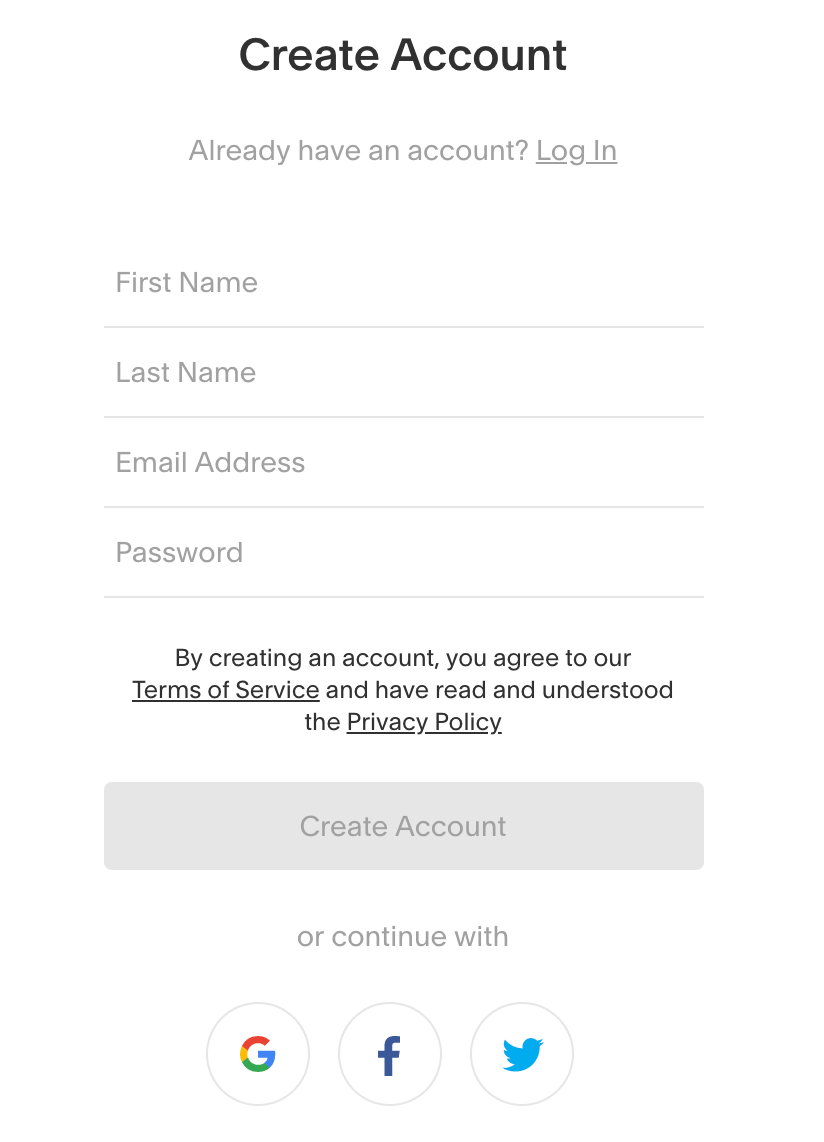
create account

Creating an account doesn’t get much easier. You don’t even need a credit card to join and start building.

All Squarespace requires is your first name, last name, email address, and password. It took me about ten seconds to enter my information into these form fields.

You can also log in with your Google account, Facebook profile, or Twitter account to expedite the process even more.

Once you have an account, you’ll be able to start creating a website immediately. Squarespace gives you a 14-day free trial so you can test out their software without having to commit to anything just yet.

So even if you’re on the fence about using Squarespace and you’re considering one of the other best website builders on the market, it’s worth trying out for free.

Step #2: Choose your plan

Technically, you don’t need to do this just yet.

As I just mentioned, you have two weeks to use Squarespace before they even ask you for billing information. So for those of you who aren’t sold on the platform just yet, you can skip over this. But with that said, you should at least be familiar with the pricing plans.

Look for the “upgrade now” CTA at the bottom of your dashboard if you’re still using the free trial.
choose plan

Squarespace has four plans, segmented into two categories.

  • Websites
  • Online stores

Let’s review the website plans first.
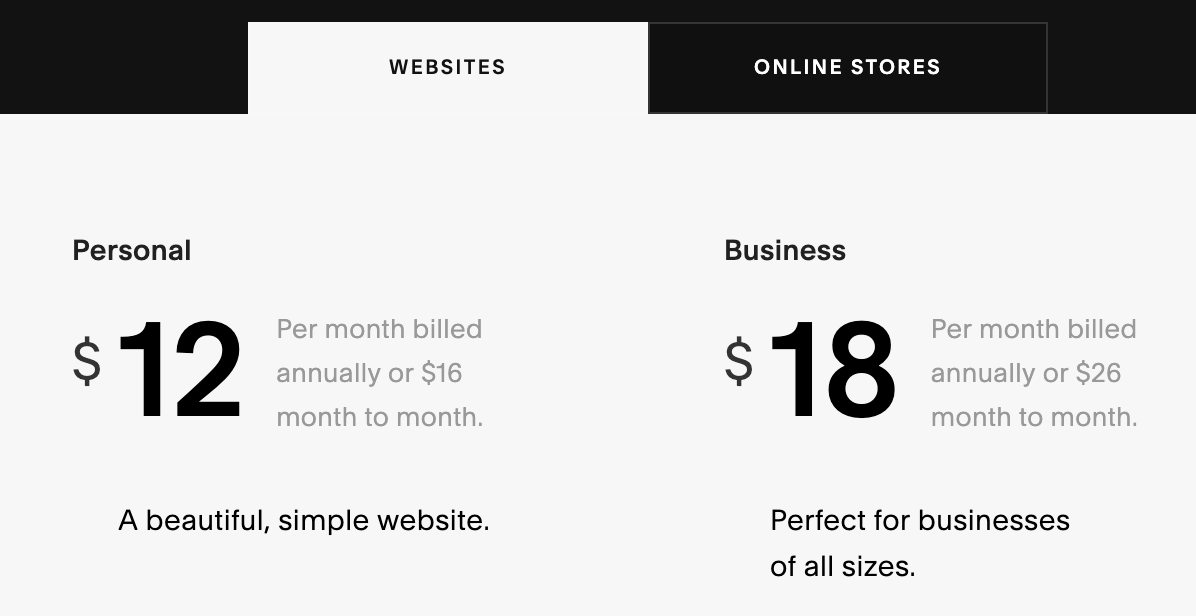
website plan

Pricing starts at $12 per month for a personal website if you sign up for an annual contract. This same plan will cost you $16 per month if you elect to go with a month-to-month plan.

The personal plan comes with features like:

  • Unlimited storage and bandwidth
  • Mobile optimization
  • Metrics and analytics
  • Custom domain
  • SSL
  • 24/7 support

Only two different accounts can contribute to the website if you have a personal plan, which isn’t a problem if you’re running the website on your own.

But if you’re creating a business website and want to grant access to multiple partners, employees, or an agency, the business plan will be more suitable for your needs. This plan comes with unlimited contributors, all of the features in the personal plan, as well as:

  • Free year of G Suite and Professional Gmail account
  • $100 credit for Google Ads
  • Pop-ups
  • Custom options with CSS and JavaScript
  • Premium blocks
  • Announcement bar

The business plan costs $18 per month if you sign up for an annual contract, or $26 per month if you’d rather get billed on a monthly basis.

Now let’s take a look at the plans designated for online stores.
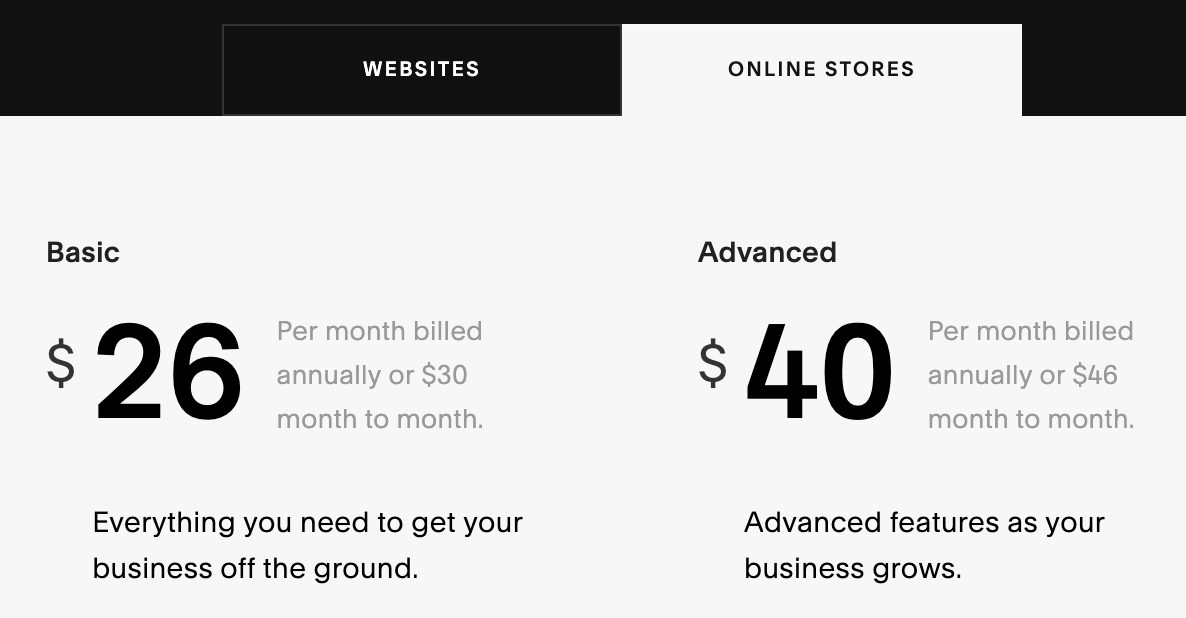
online stores

The ecommerce options are a bit more expensive, but they’re more advanced as well.

Even the basic online store package comes with all of the features from the business plan. It also includes benefits like:

  • Unlimited products
  • No transaction fees
  • Mobile website and mobile checkout process
  • Metrics specifically for ecommerce shops
  • Customer accounts
  • Ability to sell with Instagram shoppable posts
  • Integrated accounting system
  • Manage inventory, orders, coupons, and taxes

This plan sells for $26 or $30 per month, depending on if you go with the annual renewal or month-to-month contract.

The advanced online stores plan is the top-tier package offered by Squarespace. For $40 per month (annual) or $46 per month (month-to-month) you get additional benefits like:

  • Subscriptions
  • Shipping
  • Shopping cart abandonment recovery
  • Discounts
  • Gift cards
  • Ability to integrate your ecommerce shop with third-party services for production and fulfillment

As you can see, all four of these plans are very different. It should be fairly easy for you to decide which one is best for your new Squarespace website.

Step #3: Add a domain

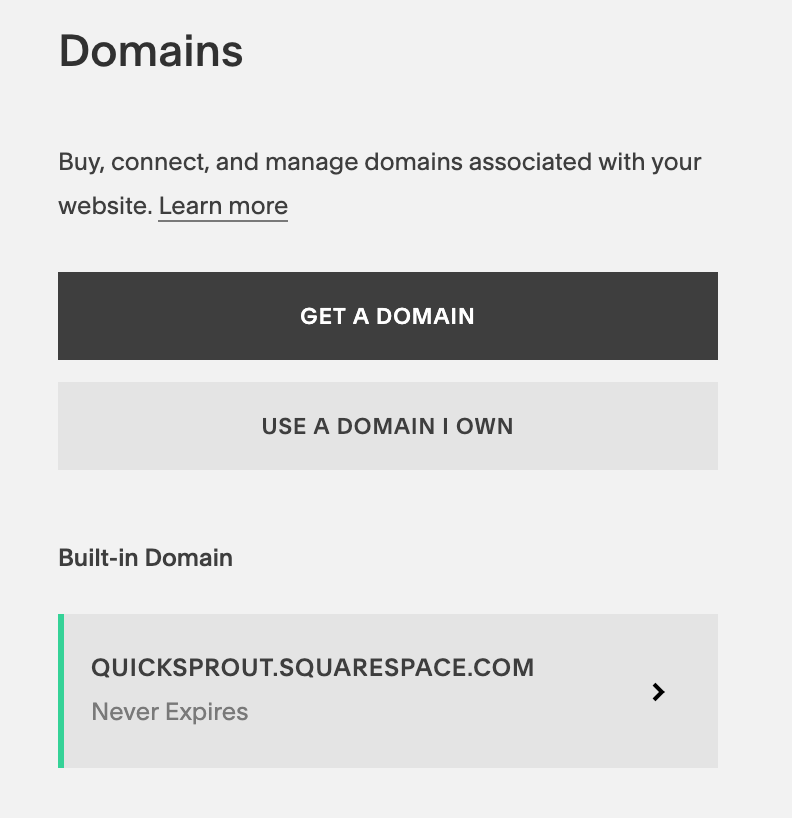
By default, your Squarespace site will have a built-in domain name. This is usually a random combination of words, letters, and numbers.

You can change this domain and keep it for free, but it’s going to have a Squarespace.com URL.
domains

As you can see from the screenshot above, I customized my built-in domain to Quicksprout.squarespace.com. But that’s not very professional.

So you’ll want to use a domain that you already own, or get a new domain through Squarespace.

If you already own a domain, you just need to transfer it to Squarespace. After it’s transferred, you can manage all of your domain settings and website settings in one place.

It’s worth noting that you need to meet certain requirements in order for the transfer to be completed. If you don’t meet those requirements, you’ll have to connect the domain instead of transferring it. Here’s a resource with more information about how to transfer your domain to Squarespace. You can also review this page about connecting a domain if you don’t meet those requirements.

For those of you who still need a domain, I highly recommend you review my guide on how to buy the right domain. This will make the process much easier for you to understand.

Step #4: Customize your style

When you first get started, you’ll be asked some preliminary questions about the goal of your website. This is optional, but it gives Squarespace more information about what you’re trying to accomplish so they can steer you in the right direction.

Examples of goals include:

  • Display my photographs
  • Publish my videos
  • Publicize my brand
  • Promote my business
  • Write a blog
  • Create a portfolio
  • Sell my products
  • Advertise my restaurant

Next, Squarespace will show you some different themes for the design of your website.

themes

You’ll have four different homepage layouts to choose from.

If you’re not crazy about any of them, don’t worry. You’ll be able to completely customize everything later on. So just choose the one that you like the best for now.

This will give you something to work with, as opposed to starting with a blank canvas and building from scratch.

You’ll also be asked to choose your font. Again, this can always be changed down the road.

Step #5: Add pages

So far, you’ve only chosen a layout for your homepage. But now you need to add other pages on your site.

In order to do this, navigate to the “pages” menu on the left side of your Squarespace dashboard.
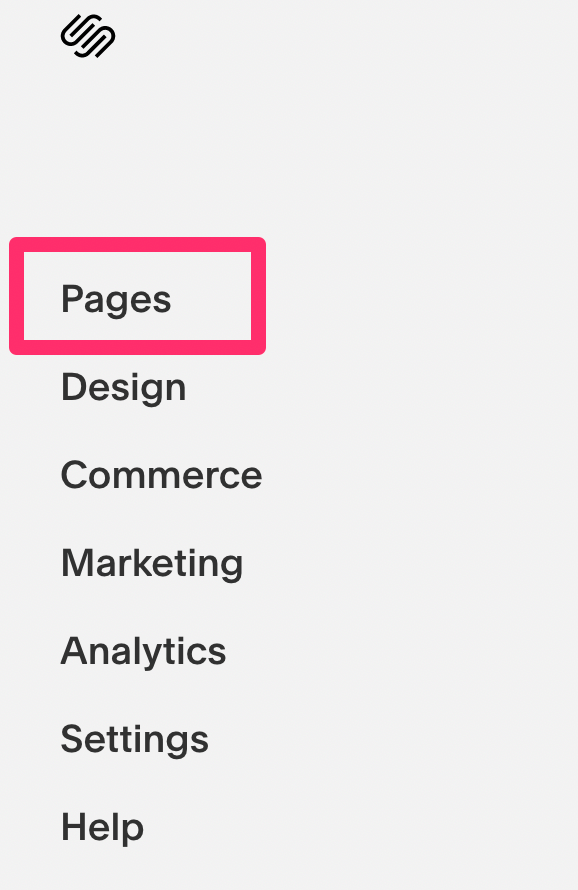
pages

These are some of the options for pages you can add to your site:

  • About
  • Appointments
  • Blog
  • Contact
  • FAQ
  • Gallery
  • Events
  • Location
  • Menu
  • Newsletter
  • Press
  • Registry
  • Reservations
  • RSVP
  • Store
  • Team
  • Terms of service
  • Testimonials

Depending on what you choose, an appropriate template will be provided based on the type of page you’re creating. For example, a gallery page and FAQ page will have different default layouts.

As you add new pages to the builder, they’ll appear on your website preview page.
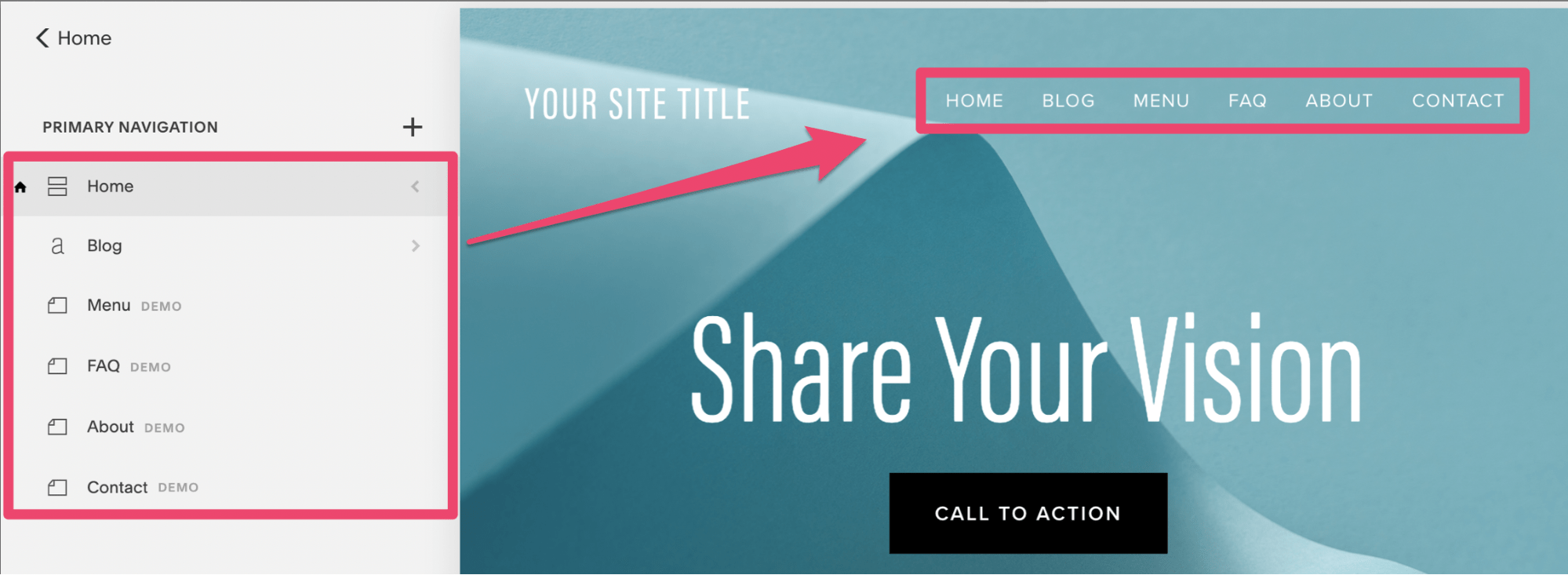
page builder

I just added some basic ones as an example.

They are all primary navigation pages, meaning they’ll show up on the homepage, as you can see from the screenshot above.

Squarespace lets you add secondary navigation pages, as well as footer navigation pages to your website as well.

Step #6: Choose a template

From your main dashboard, navigate to the “design” menu.
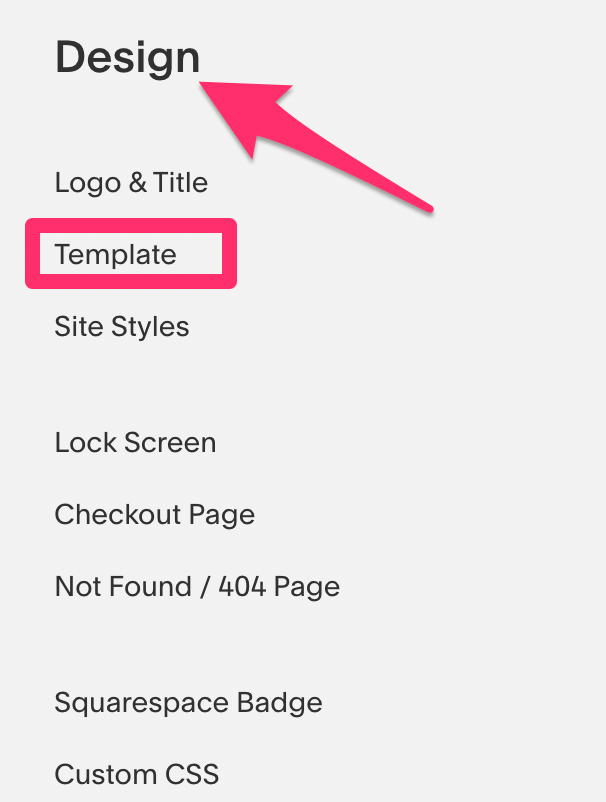
templates

From here you can install a template that flows with the theme that you’re trying to accomplish on your website.

I recommend searching for templates by category:

  • Online store
  • Portfolio
  • Business
  • Professional service
  • Nonprofit
  • Blog
  • Restaurant
  • Event
  • Wedding
  • Photography
  • Music and entertainment
  • Health and fitness
  • Travel and tourism

Obviously, a fitness website and restaurant website should look very different from each other. That’s why it’s much easier to pick a theme based on a category that your website falls under.

You can always customize the templates to make them more personal to your site. So you won’t have to worry about using the same theme as another Squarespace website.

It’s worth noting that certain parameters and special features that have already been built into templates cannot be altered.

No matter what Squarespace plan you choose, you’ll have access to every template on the platform.

Sometimes Squarespace discontinues templates. So it’s important that you don’t uninstall a template after you’ve used it on your site. If you decide down the road that you want to change it, you can always try a new one. But you won’t be able to switch back to a discontinued template after it’s been uninstalled and discontinued.

Step #7: Edit images

By default, your site will have some images on the pages after you pick a style, theme, and template. But since these are just random stock images, you’ll definitely want to get rid of them and use your own.

This is very easy to do. Just hover the cursor over your site preview page and click on the “edit” button.
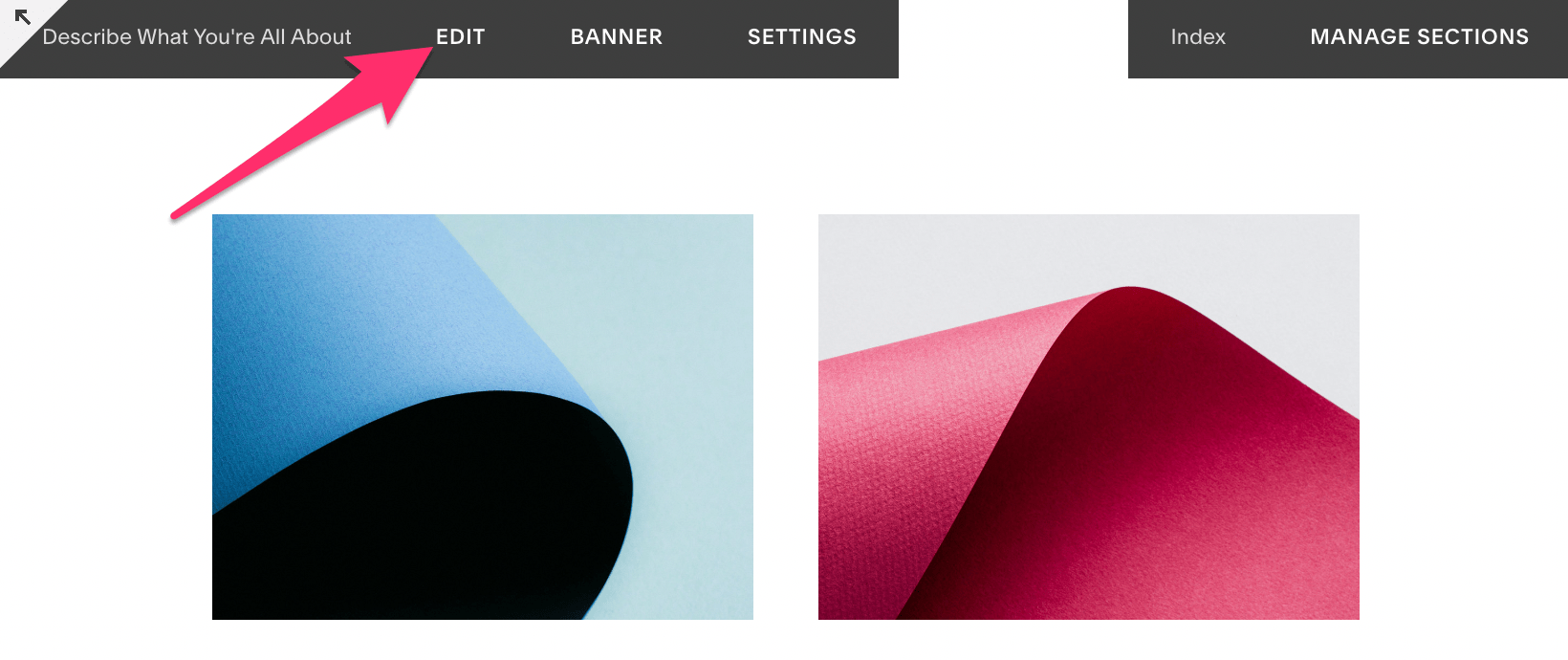
image editor

That’s how you change everything on your Squarespace site.

You’ll take the same approach for editing text, adding or removing blocks, changing the size, and moving the location of a feature. But for now, we’ll just stick with the images.

Hover your cursor over an image that you want to change. Another box will appear above it. You’re going to select “edit” again.

Then delete the image by clicking on the trash can icon. From here, you can upload a new image or search for another stock image.
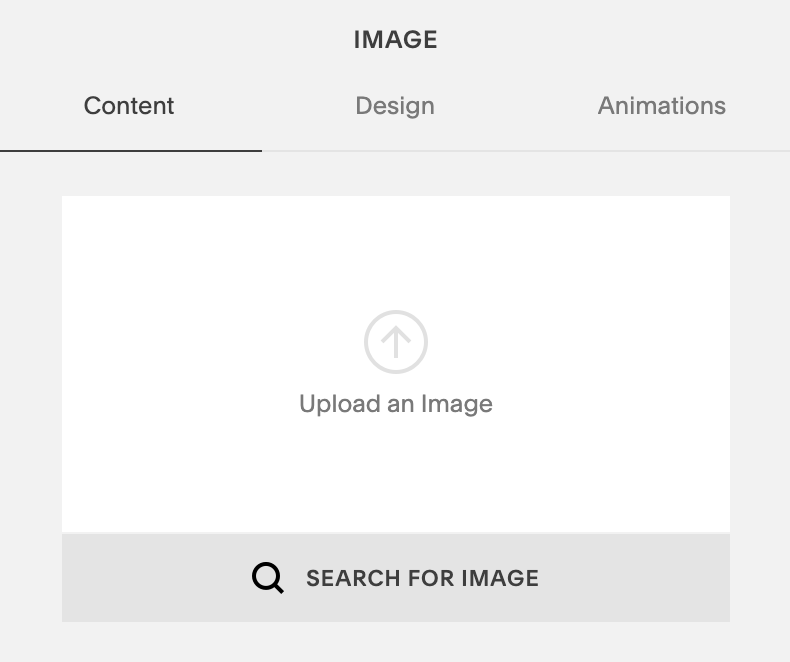
edit image

Continue doing this on all of your pages until you’re satisfied with the layout and have replaced all of the default photos with your own original images.

Step #8: Set up ecommerce features (optional)

You can’t access the ecommerce features if you’re still using the free trial. So if you’re ready to launch your ecommerce shop with Squarespace, then you’ll need to upgrade to a paid plan.

Here are some of the settings that you can control from the Squarespace commerce menu:

  • Orders
  • Inventory
  • Customers
  • Discounts
  • Payments
  • Checkout
  • Customer accounts
  • Notifications
  • Shipping
  • Taxes
  • Accounting
  • Apps

If you just have a blog or personal site, then don’t worry about any of this. But if you’re planning to sell online with Squarespace, you definitely need to get familiar with all of these settings so you can manage and customize them to fit your needs.

Step #9: Promote your site

Take full advantage of the marketing tools offered by Squarespace. Head over to the marketing navigation menu and you’ll see options for:

  • Email marketing campaigns
  • SEO tools
  • Announcements
  • Pop-ups
  • Selling on Instagram
  • Share buttons
  • Ads

One of my favorite features here is the URL builder.
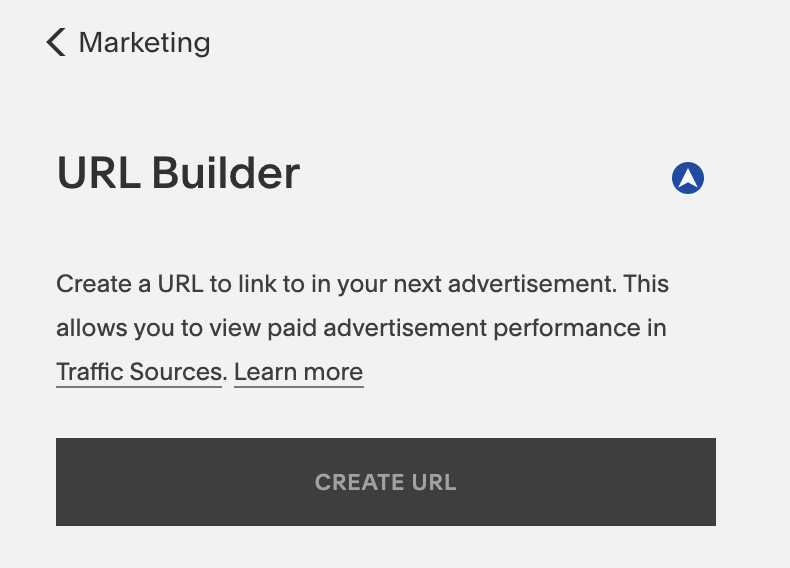
url builder

Use this tool to create custom URLs for keeping track of specific marketing campaigns. That way you can measure the success to repeat what’s been working, and abandon what’s not.

Step #10: Publish your website

When you’re building a website with Squarespace initially, it’s not live.

It’s actually impossible to publish your site on the web while you’re still in the free trial phase. But once you’re ready for it to go live, go to the “settings” menu from your dashboard.

From here, select “site visibility” to continue.
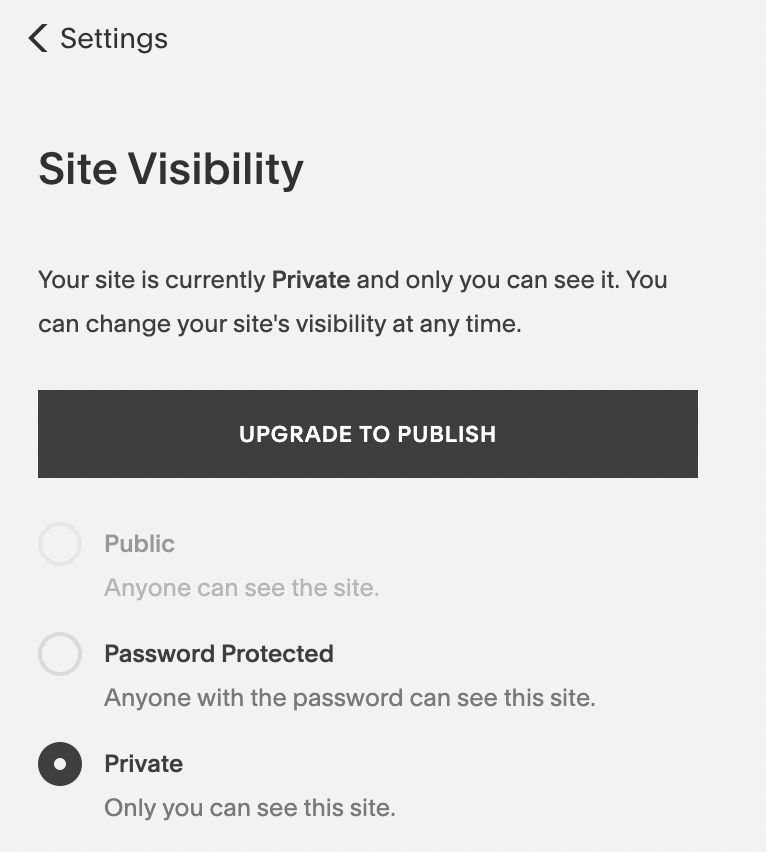
site visibility

Since I’m still using the trial, the public option is unavailable. But for those of you who have started to pay for Squarespace, you just need to pick “public” from the bullet list.

Get familiar with the other options on the settings menu. From here you’ll also be able to manage things like your business information, social media accounts, permissions, billing, G Suite, and domains.

Conclusion

Building a website in 2019 has never been easier. With website builders like Squarespace, you can literally get a website off of the ground in less than an hour.

While I wouldn’t recommend publishing a new site that quickly, the option is available at your disposal.

If you’re a beginner and want to create a website with lots of design options and custom features, Squarespace will definitely be one of your top options.

For those of you who aren’t completely sold on Squarespace just yet, no problem. At the very least, take advantage of the 14-day free trial. Use this guide as a reference and go through the step-by-step process that I’ve outlined above.


Source Quick Sprout http://bit.ly/2KxdL88

Website Builders to Avoid in 2019

So you’re ready to build a website but don’t know how to get started. Don’t worry; we’ve all been there.

One of the first steps is finding the best website builder to meet your needs based on the type of website you’re trying to create. But if you run a Google search for website builders, you’ll quickly realize that there are dozens of options to choose from. This can be a bit intimidating.

If you’ve never built a website before, it might be tough to tell the difference between a good website builder and a platform that’s going to give you nothing but problems.

That’s what inspired me to write this guide. Everyone else out there is telling you what website builders you should be using, but very few people are telling you which ones to avoid.

Before you get started, ask yourself if a website builder, in general, is even your best option.

For those of you who are experts in HTML, CSS, and want complete control and customization from the backend, you might not be happy using a website builder to create your site. This is especially true if you’re trying to create a site that’s intended to become the next Facebook or something like that.

But for everyone else, using a website builder to create your site will likely be your best option.

Website builders are great for small business owners, ecommerce sites, selling services online, photography portfolios, hotels, restaurants, blogs, and personal sites. It’s the perfect way to build a site if you don’t know much about coding, design, HTML, or CSS.

How to evaluate a website builder

Now that you’ve decided that a website builder is your best option, it’s time to figure out which platform to use. Once you start browsing the web, there are specific indicators you should be looking for to determine if a website builder is suitable for you.

At the same time, there are also certain red flags that will tell you if the site builder is one that should be avoided altogether.

These are the factors that need to be taken into consideration when you’re evaluating a website builder.

User experience

In this case, you’re the user who needs to be having a good experience. That’s why you need to pick a website builder that’s very easy to use.

If it has complex navigation, doesn’t offer drag and drop building, and makes it difficult to preview the pages you’re working on, then you’re going to struggle.

On the flip side, you don’t want to go with a website builder that has been simplified to the point where you lose the ability to complete certain functions.

I always recommend starting with a free trial of a website builder before you commit. The week or two that they give you for free will be a good indication of the builder’s ease of use.

If you’re experiencing too much friction, it’s in your best interest to explore other options.

Support

Once you decide on an option, it doesn’t automatically mean that you’re going to become an expert at building websites overnight. There’s a good chance that you’re going to have some questions that require assistance along the way.

So make sure you pick a website builder that offers great customer support.

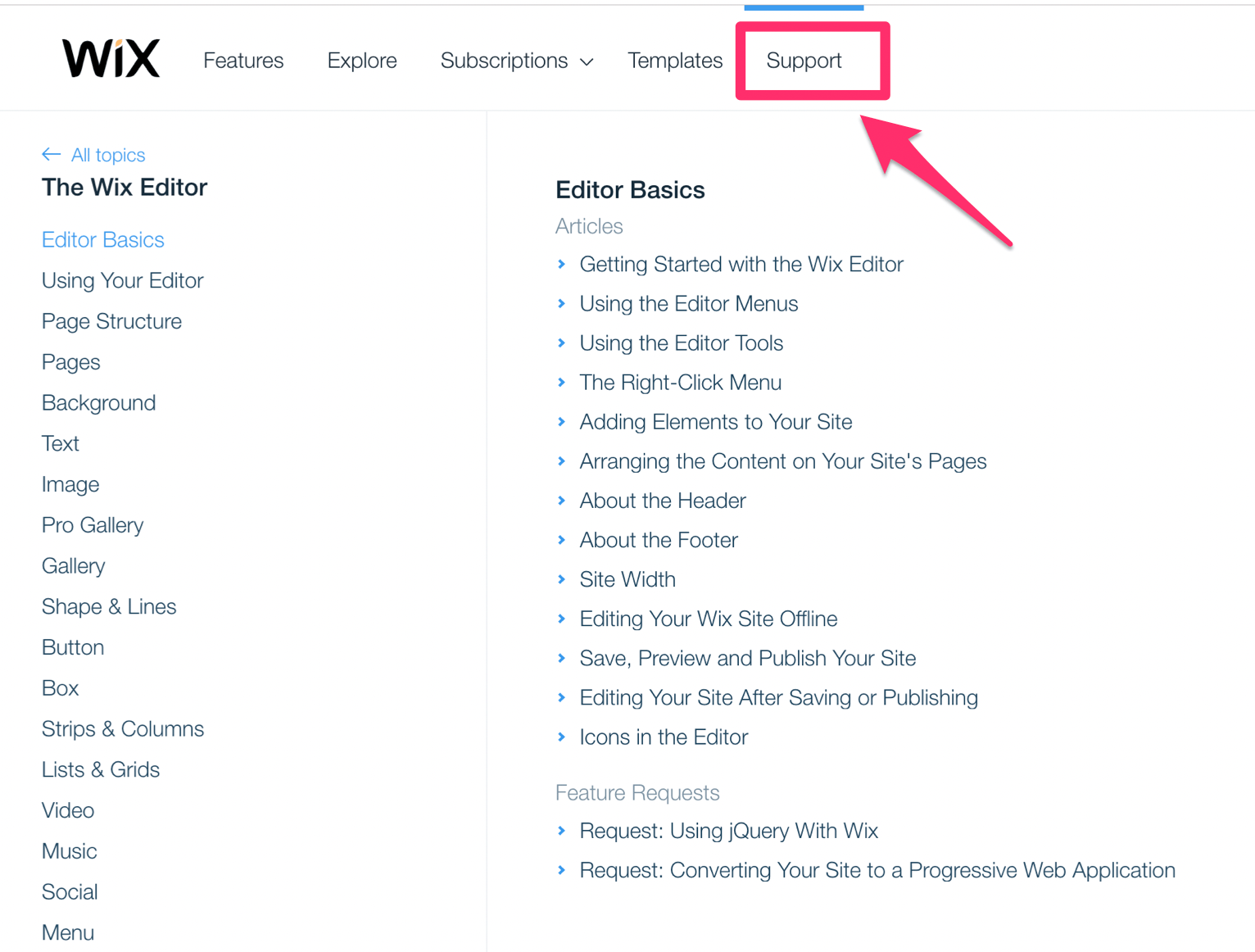
For example, Wix has exceptional support pages.

Wix Support

These are all of the guides and articles they offer related to the editor basics. They also have extensive guides about:

  • Plans
  • Domains
  • Site management
  • Mailboxes
  • Mobile editor
  • Wix stores
  • Technical difficulties
  • Marketing tools
  • SEO

The list goes on and on. Furthermore, Wix offers 24/7 support if you need additional assistance that requires the help of a customer service representative.

As one of the top website builders on the market, you can always refer to Wix support and compare it to the builder that you’re evaluating to see how it stacks up. See if the other option provides tutorials or access to representatives when you’re in a bind and need help right away.

Features

I briefly mentioned this before when we were discussing ease of use. You don’t want to pick a website builder so simple that you end up losing features.

You need to make sure that everything you want to do on your site is available.

Right now your site might be something basic, like a blog. But in the future, you may want to expand and add things like a shopping cart to build an ecommerce website.

  • Mobile-friendly design
  • Image gallery for portfolios
  • Templates
  • SEO checker
  • Profiles for site visitors
  • Password protection for pages and content
  • Connect your domain name (even if you didn’t buy the domain directly from the builder)

For those of you who haven’t purchased a domain yet, you can check out my guide on the best domain registrars.

Quality

At the end of the day, you don’t want the process of building and managing your website to interfere with your final product.

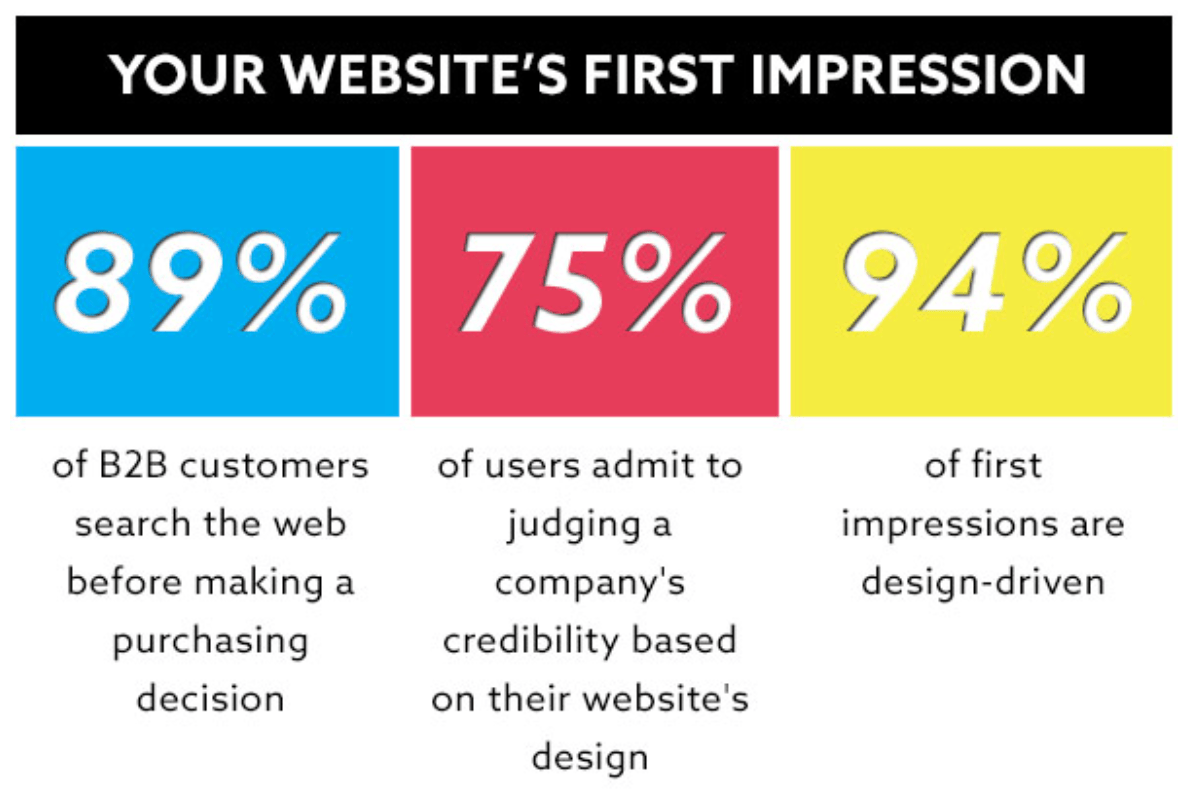
The people who land on your website don’t care what builder you’re using or how difficult it was for you to create it. First impressions matter. All they want to see is a professional site that’s legitimate and user-friendly.

First Impression

You can’t afford to overlook this reality as a new website.

Think about it from the perspective of people landing on your site.

How can get you them to stay on your site and keep coming back in the future? If your website builder is making your site look unprofessional or untrustworthy, you’re going to struggle with this.

Furthermore, you don’t want to have a website that looks basic and cookie-cutter.

Performance

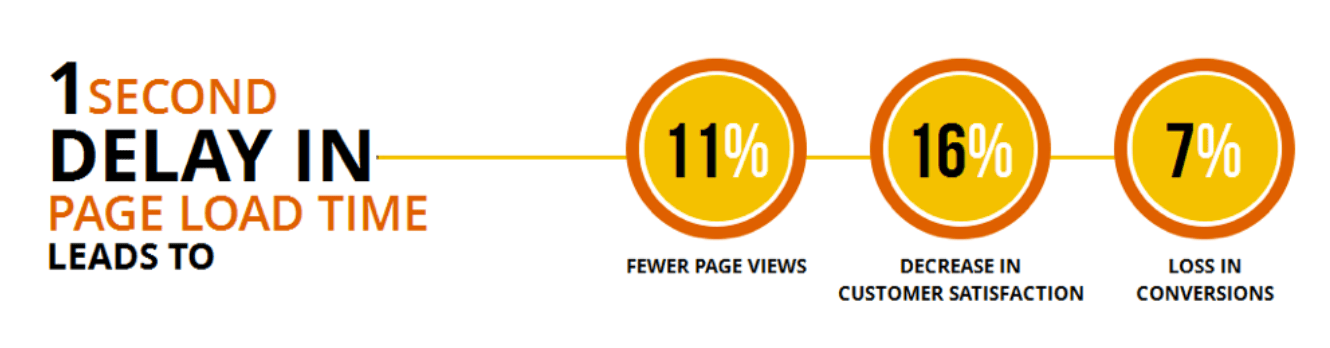
Website speed and uptime are two factors that can’t be overlooked when you’re evaluating a website builder.

load time

83% of people expect a web page to load in three seconds or less.

Most website builders will claim to have 99.9% uptime and lightning fast loading speed. But you can’t always take their word for it.

Like any other product or service you buy online, you should read reviews. See if other website owners are complaining about the website builder and the performance of their sites.

While nearly every website builder will have some negative reviews, it’s definitely a red flag if you see more bad reviews than good ones for a particular builder.

Price

When it comes to picking the best website builder, cheaper isn’t always better. But at the same time, the most expensive options don’t always equate top quality.

It’s all about value.

Find a website builder that has different options based on your specific needs.

Look for transparent pricing. Some builders will try to fool you by signing you up at a promotional rate. Then all of a sudden six months later you’re paying triple the price that you initially agreed to. So make sure you read all of the fine print before you pay for anything.

Webs

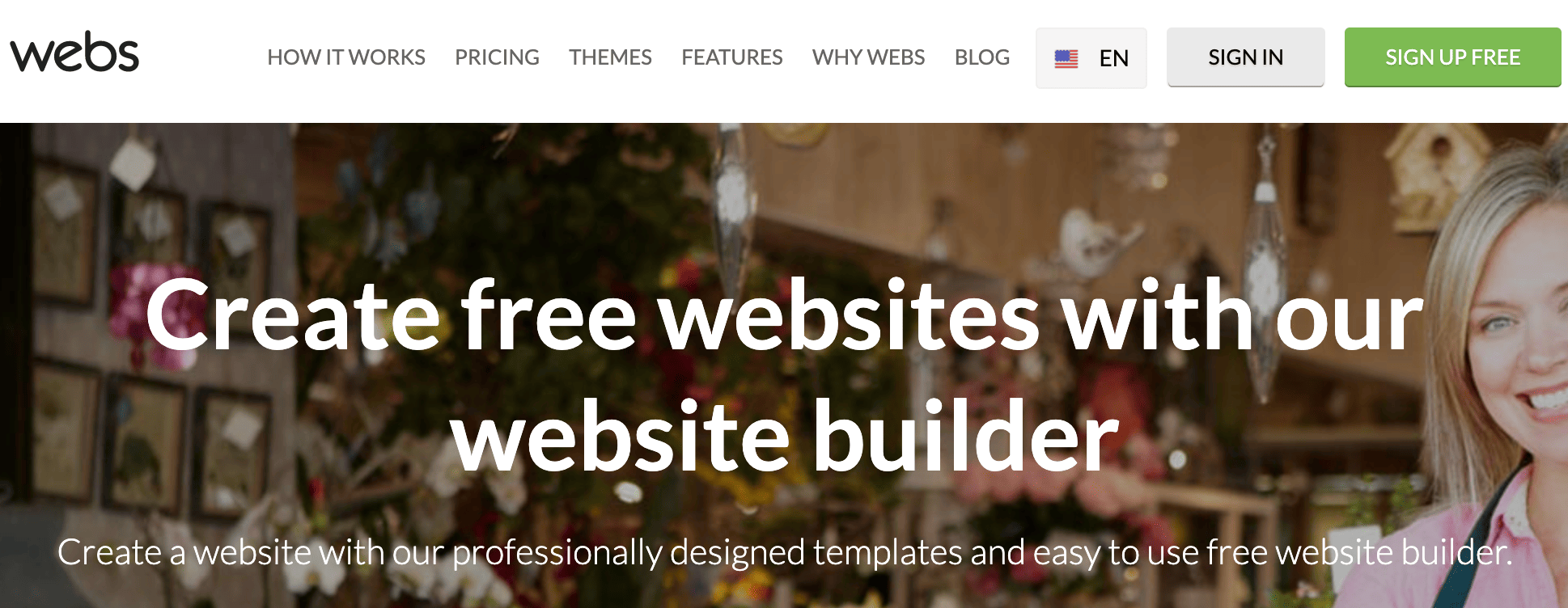
One of the first website builders that I’d avoid is Webs.

Webs

At first glance when you’re browsing through they’re site and what they offer, everything appears to be in order.

They have affordable pricing with plans starting at:

  • $5.99 per month
  • $12.99 per month
  • $22.99 per month

Webs even offers a 30-day money back guarantee. Custom domain names and emails are included in all of their plans.

However, Webs definitely has its fair share of flaws.

The building process is actually pretty simple, but you’re going to be extremely limited in terms of your design options. The builder itself feels outdated, and your final product can end up feeling the same way.

Some browser extensions won’t work with this website builder either. Overall, the interface just feels awkward when you’re using it.

Webs is definitely not ideal for ecommerce websites and can get expensive when you start adding on those features.

For those of you who are considering the cheapest plan starting at $5.99, the only way to reach customer support is via email. That’s not ideal if you need help right away. Their middle-priced plan offers live chat in addition to email, but only the top tier plan comes with phone support.

The response time for email support is slow, according to reviews. You can usually expect an answer in about two days. I couldn’t imagine having to wait two days to get an answer about something important related to my website.

While Webs might be affordable and easy to use, it’s just underwhelming. With outdated themes, you’re going to be pretty limited with the type of website you can build using this platform.

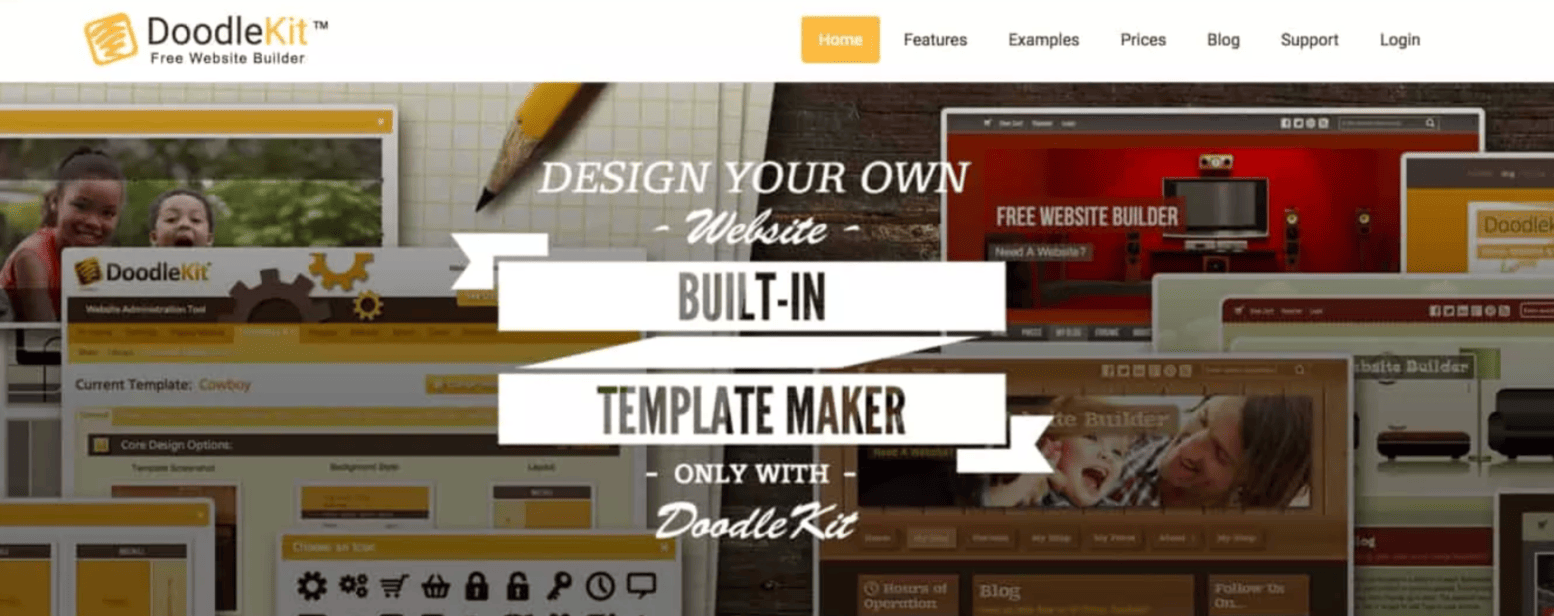
Doodlekit

Doodlekit is another option that I’d avoid at all costs.

DoodleKit

Normally, I don’t like to bash or badmouth websites, products, or services. But truthfully, Doodlekit has more negatives than positives to talk about.

It’s not user-friendly in any stretch of the word. It’s also very difficult to edit their templates.

I have lots of experience using website builders, and I found myself frustrated and confused trying to make what I thought would be simple changes.

Doodlekit has over 100 themes, but quantity doesn’t always translate to quality.

The themes are so outdated that adding them to your website would be a huge mistake. Customizing and making changes to these themes feels impossible.

Doodlekit has a free website builder, which might sound appealing for some of you who are trying to save some money. But I wouldn’t recommend that either. Their other plans range from $10 to $40, assuming you get billed on an annual basis. The month-to-month plans start at $14.

If you don’t want to take my word for it, give the free option a spin. But I’d say you should avoid the hassle altogether and find a better website builder instead.

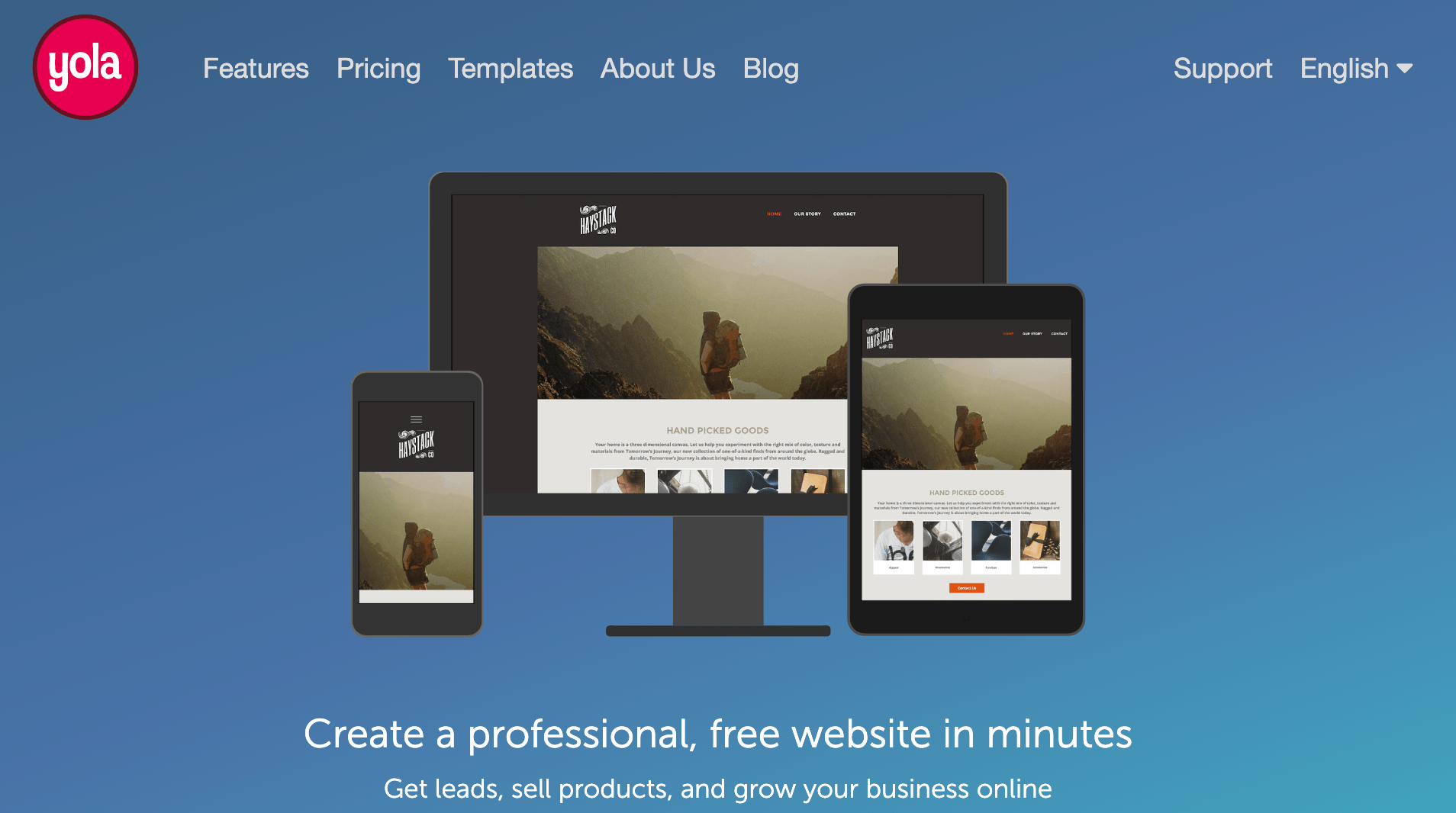
Yola

Similar to Webs, Yola is actually pretty easy to use.

Yola

However, that ease of use comes at the cost of being very limited. While the building process isn’t challenging, it gets tedious after a while.

The templates are outdated and feel rigid.

You end up having to make so many changes to the templates that it pretty much defeats the purpose. They have more than 250 themes, but the themes look like they belong on websites that were being built ten years ago.

That’s definitely not ideal when you’re competing with websites that have responsive designs and videos playing in the background.

Yola has affordable pricing, including a free plan. But the free plan has a Yola subdomain and only lets you create three pages. Obviously, you can’t build a legitimate website like that. The sole benefit of the free plan is that it gives you a chance to sign up and test the builder out before you have to pay.

Pricing ranges from $5 to $20 per month based on annual contracts or $7 to $30 for month-to-month contracts.

All plans, with the exception of the free option, give you a custom domain. You can also add a Yola store for $10 per month to any of the paid plans.

While this sounds appealing, I don’t think you’ll end up being happy with the user experience or final website product. That’s why I have Yola on my avoid list.

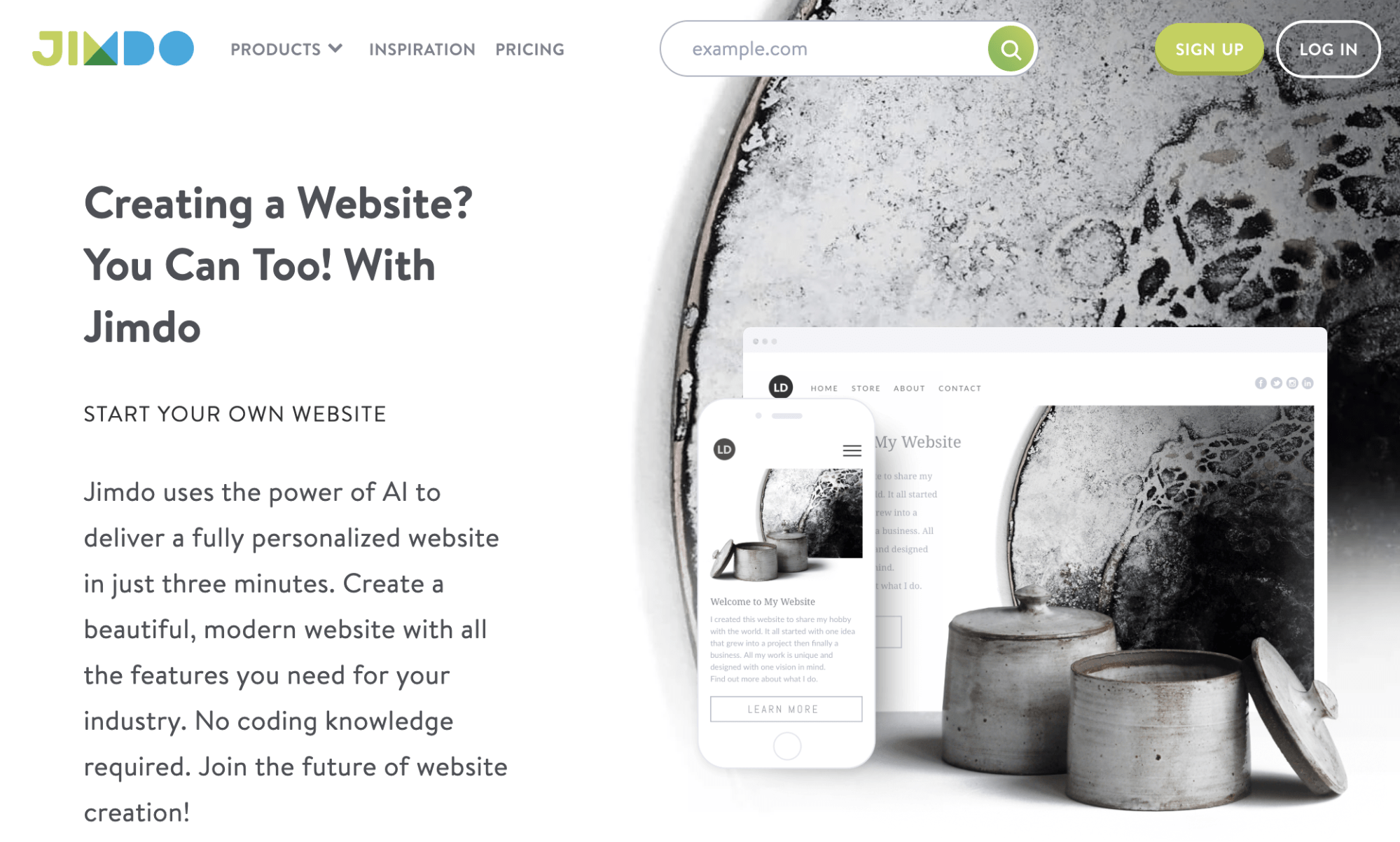
Jimdo

In terms of performance and ease of use, Jimdo is actually pretty decent. You can get your website up and running fairly quickly.

Jimdo

But with that said, Jimdo is very limited.

They have less than 20 themes for you to choose from. You’ll be able to change the color scheme, add text, and add images. But beyond that, building a unique website that’s fully customized with Jimdo will be a challenge.

Your final site will feel very cookie-cutter and basic once you’re done.

Jimdo offers more pricing options than every other site on this list.

  • Free
  • $9 per month
  • $15 per month
  • $19 per month
  • $39 per month

They also have ecommerce options. With Jimdo, you get a free domain for a year, but then it will cost you an additional $20 per year after that promotional rate expires.

While Jimdo isn’t awful, the lack of customization options and themes hurts it in my mind. There are better choices out there for you to consider.

Conclusion

There are lots of website builders on the market today. Like any other product or service, some options are better than others.

That’s why you need to know how to evaluate a website builder.

  • User experience
  • Support
  • Features
  • Quality
  • Performance
  • Price

These are all factors that need to be taken into consideration.

Based on these criteria, there are definitely website builders that you should avoid, like the ones that I mentioned in this guide.

Now that you know what to avoid, check out my list of the best website builders to steer you in the right direction.


Source Quick Sprout http://bit.ly/31cAH2x

Got Credit Card Debt? Paying Biweekly Could Save You Hundreds on Interest

الأربعاء، 5 يونيو 2019

(No heading)

Mount Airy Casino Resort receives AAA’s Four Diamond ratingJust 6.3 percent of more than 27,000 AAA inspected and approved hotels receive the prestigious rating.AAA North Penn recently presented Mount Airy Casino Resort with its ninth Four Diamond Award. In addition to the Four Diamond, Mount Airy was also recognized for the first time with the AAA “Best of Housekeeping” award. This award is presented to the top 25 percent of all hotels, [...]

Source Business - poconorecord.com http://bit.ly/2EUkFkv

This App Helps You Invest Like a Hedge Fund (You Can Start with $500)

Some of the links in this post are from our sponsors. We provide you with accurate, reliable information. Learn more about how we make money and select our advertising partners.

You’ve heard of robo-investing, right? That’s when online financial firms manage your investments with software.

And you’ve heard of robo-advisors. That’s when apps automate your savings and investments for you.

Ah, but have you heard of the app that’s built like a “robo hedge fund?” Have you? It’s an innovative new twist.

You’ve heard of hedge funds — the rich guy’s investment vehicle. Because you have to invest at least $250,000 to join most hedge funds, they act as exclusive clubs for the wealthy, with a velvet rope keeping out everyday investors like you or me. Hedge funds are considered to be elite, aggressive, strategic and sophisticated — and out of reach for most of us.

Titan says you can still get in on the action, even if you don’t have a spare quarter-million dollars sitting around. In fact, all you need to get started is $500.

Titan is a simple, user-friendly investment app that mirrors the financial moves of top hedge funds. Here’s what it does:

  • It analyzes the quarterly regulatory filings of the leading, most prestigious hedge funds as soon as each filing becomes public.
  • Its software mines the data to determine which stocks were most popular among all those funds. These hedge funds use sophisticated strategies to choose stocks and sometimes borrow money to buy more stock.
  • Titan puts its investors’ money into a portfolio of the top 20 stocks, based on what all those hedge funds have been buying. Titan believes these stocks have the best prospects for long-term growth.
  • Portfolios are automatically updated on a quarterly basis.

Titan earns a 1% annual fee on what you invest.

Oh, and there’s this: All three of Titan’s co-founders are former hedge fund guys who are now heavily invested in their Titan portfolios — the same stocks they’d be investing your savings in.

Your Own Money Manager in Your Pocket

On the iPhone’s App Store, users rate Titan’s app at 4.5 out of 5 stars, with users praising the app as intuitive and user-friendly. “It truly feels like your own personal hedge fund in your pocket,” commented one user.

Despite its high reviews, Titan has inevitably drawn some online criticism — like just about every app does. Some naysayers accuse it of relying on outdated data from regulatory filings. Titan’s response is that the stock-trading data it uses is fresh enough to be useful in crafting a long-term investment strategy. Titan believes that it and the hedge funds it’s tracking are all following long-term plans for growth.

And the proof is in the pudding:

As of May 31, 2019, Titan’s portfolio for an aggressive client had increased by 17% so far in 2019, outperforming the S&P 500, which rose 10.7%.*

Built Like a Hedge Fund

When Titan made its debut in 2018, it sometimes got called a hedge fund, or at least it got compared to one.

“Here Come the Robo Hedge Funds,” reads a headline on WealthManagement.com. And the website TechCrunch announced that Titan “isn’t technically a hedge fund, but it’s built like one.”

Just to be clear, Titan isn’t actually a hedge fund. Investors in a hedge fund pool their money together into a fund, while with Titan, your money is kept in your own separate account.

Seeking to set itself apart, Titan also posts lots of educational videos aimed at beginning investors. Sometimes these videos will take a deep dive on particular stocks, like Amazon, that are in Titan’s portfolio. Basically, they’ll tell you why they’re investing your money in it.

Mike Brassfield (mike@thepennyhoarder.com) is a senior writer at The Penny Hoarder. He really needs to invest more.

*This article is a paid partnership with Titan Invest (“Titan”). All opinions are our own. This is for informational purposes only and does not constitute a comprehensive description of Titan’s investment advisory services. Titan uses a proprietary algorithmic strategy in selecting recommendations to advisory clients. Please see Titan’s website (http://bit.ly/2E4pciE) and the Program Brochure (available on the website) for more information. Certain investments are not suitable for all investors. Before investing, consider your investment objectives and Titan’s fees. The rate of return on investments can vary widely over time, especially for long term investments. Investment losses are possible, including the potential loss of all amounts invested. Titan’s registration as an SEC registered investment adviser does not imply a certain level of skill or training and no inference to the contrary should be made. Nothing here should be considered as an offer, solicitation of an offer, or advice to buy or sell securities. The above content is for illustrative purposes only to demonstrate products, services and information available from Titan. Past performance is no guarantee of future results. Any historical returns, expected returns, or probability projections, are hypothetical in nature and may not reflect actual future performance. All Titan performance results include the use of a personalized hedge for a hypothetical client with an “Aggressive” risk profile; clients with “Moderate” or “Conservative” risk profiles would have experienced lower returns. Please visit http://bit.ly/2HWuXlP for full disclosures on our hedging process. 2019 YTD results are from 1/1/19 through 5/31/19 and represent performance of a hypothetical account created on Titan’s inception date of 2/20/18 using Titan’s investment process for an aggressive portfolio, not an actual account. Performance results are net of fees and include dividends and other adjustments. See Titan’s website for full performance disclosures.

This was originally published on The Penny Hoarder, which helps millions of readers worldwide earn and save money by sharing unique job opportunities, personal stories, freebies and more. The Inc. 5000 ranked The Penny Hoarder as the fastest-growing private media company in the U.S. in 2017.


source The Penny Hoarder http://bit.ly/2IlsfFH

The Easiest Way to Meal Prep That I’ve Found

Over the last few years, I’ve done a lot of experimentation with meal prepping, with the goal of having lots of home-cooked meals in the freezer that I can pull out at a moment’s notice. I’ve tried all kinds of different things, sometimes successful and sometimes a complete failure and often in between. When something works, I take note of it and try to reuse that strategy going forward.

What follows is the single most efficient and successful meal prepping strategy I’ve yet tried. It makes a bunch of lunches and family meals quite easily and they’re all quite tasty, even right from the freezer.

Wait, what is it you’re doing, and why? Meal prepping is simply the practice of making meals in advance and freezing them late in the preparation process so that they can be pulled from the freezer and very quickly finished when time is tight. This helps keep meal costs low, since making meals at home is less expensive than eating out and meal prepping usually lets you take big advantage of bulk purchasing, and it also saves time over the long run, though there is some up-front time investment.

This article focuses on the absolute easiest meal prep I’ve ever done that managed to have really successful results. This isn’t going to be a complex gourmet meal; rather, I’m just aiming for a very quick meal prep that results in pretty tasty individual meals for future lunches.

So, here’s what I do. Note that you will need quite a bit of freezer space to pull this off well, but I account somewhat for different freezer sizes in the article.

Start off by getting your stuff ready. You’ll want a pound of dry pasta, a jar of your favorite pasta sauce, and about two cups of shredded mozzarella for every four lunches or one family meal you want to prep. This whole procedure can be multiplied by the amount you want to make with ease. For this example, let’s say you’re just making four individual meals, so you’ll want a pound of pasta, a jar of your preferred pasta sauce, and two cups of shredded mozzarella. You can get your favorite type and brand of each – I just snagged store brand versions of each kind and I think that rotini turns out very well when you make this. You can add additional ingredients if you wish, like frozen vegetables or cooked ground beef, but I’ll leave that up to you.

You’ll also want some meal prep containers. By “meal prep container,” I mean any container with a lid that’s dishwasher safe, freezer safe, microwave safe for individual meals, and oven safe for family meals. I want it to be safe in all of those environments so that I can use it in a multitude of ways. These are wonderful meal prep containers for individual meals that are well worth the investment if you plan on doing a lot of meal prepping. If you’re just starting out, you can (and probably should) get inexpensive plastic individual meal prep containers like these; they’ll last for about ten to twenty uses before cracking and becoming problematic, in my experience. That’s plenty long enough to figure out if meal prepping is right for you.

If you’re interested in doing family-sized meals, I haven’t yet found a reasonably priced freezer-to-fridge-to-oven casserole-sized dish that’s reasonably priced. Basically, choose two of these features – cheap, highly reusable, won’t break – and that’s what you get. Because of that, I stick with these, which work really well for about twenty or so uses until the lid starts cracking. I have had cracks form in somewhat more expensive glass reusable dishes when I moved them from cold areas to hot areas, so I don’t view them as reliable; I’ve seen very expensive earthenware and enameled cast iron dishes work well but they’re very pricy and unlikely to recoup the investment in any reasonable amount of time.

The actual procedure is really easy. Just boil the pasta according to your package directions. When it’s done, strain it thoroughly, then toss it with the pasta sauce until all of the pasta is coated evenly. If you have other ingredients you want to add, toss them in now – things like cooked ground beef or frozen chopped vegetables. Then separate the pasta equally into each of the containers – in this example, with one pound of pasta and one jar of sauce, just divide it equally among four individual meal prep containers or put it all into one family sized container.

Then – and here’s the trick – put the containers in the freezer open for about three hours or so. You can certainly leave the containers in there for longer if you wish, but don’t leave them in there for much longer than a single overnight period if you did this in the evening.

After the basic meal is frozen, put half a cup of shredded mozzarella on top of each individual container or two cups on top of a family-sized container, put a lid on each container, label it with some masking tape, and pop it back in the freezer. It’s good to go whenever you want it!

The individual containers of this recipe reheat really well in the microwave straight from the freezer and, in my opinion, even better from the fridge if you move a container to the fridge to let it thaw. I find I don’t even need to defrost it for it to turn out pretty well, though I think a short period on defrost mode if it came straight from the freezer helps. The cheese melts into the pasta and when you pull it from the microwave, just toss it around with a fork to distribute the cheese and sauce evenly. It makes for a really great lunch.

The thing is, if I buy the ingredients for this at my regular local store prices (and don’t buy an overly expensive sauce), this makes super-filling, super-tasty, and super-convenient lunches that cost less than a dollar each. If I happen to hit on a sale, the price goes down even further – this can often be made for about $0.70 per individual meal, or even less, with a regular sale.

What’s next? I’ve found that this basic procedure works really well with most one-pot meal (meals that you would serve out of a single dish); I simply used this very simple pasta dish as an example of how easy it is.

If you want to try this with other one-pot meals, follow the basic structure above. Make your one-pot meal, serve enough for an individual person’s full meal into an individual container or a full family meal into a family-sized container, then freeze it with the lid off for just long enough for the meal to freeze – three hours usually does it. If you tend to put on a topping at the very end of the actual meal preparation, like some cheese or seasoning on top, put that on after the initial freeze. Once the meals are frozen, put a lid on each one and return them to the freezer.

This basic strategy scales well. It’s not too labor intensive. It enables quite a lot of variety – there are a lot of one-pot meals out there – here’s a bunch from Food Network – and most of them work well with this basic framework.

This pasta recipe, though, is incredibly easy and it just works like a charm for loading your freezer up with very easy, tasty, fast, and incredibly inexpensive meals. If you ever wanted to dabble your toes in meal prepping, it doesn’t get much easier than this.

The post The Easiest Way to Meal Prep That I’ve Found appeared first on The Simple Dollar.


Source The Simple Dollar http://bit.ly/2K2LhDY

A 5-Step Guide to Planning for Retirement… Even if It’s Decades Away

3 Steps to Take If You Want to Buy a House in the Next 3 Years

Fund Briefing: Bonds

Fund Briefing: Bonds

Billions of pounds are invested in bonds. They are a core holding in many people’s portfolios and are relied upon to deliver stable income. However, they are also one of the most misunderstood assets and remain something of a mystery to many investors

Perhaps the simplest way to describe a bond is as an IOU that’s issued by either governments or public companies that need to raise money.

Buying one means you’re lending money to an issuer in exchange for a fixed rate of interest over an agreed period – and the return of your original investment.

Bonds are assessed on the likelihood of the company or government meeting its repayments by specialist agencies such as Standard & Poor’s, which awards the most trusted ones with AAA ratings.

According to Adrian Lowcock, head of personal investing at Willis Owen, bonds don’t behave like shares, and this means they can help diversify your portfolio.

“The price of bonds is generally less volatile, so investors get a more stable income, with less risk to their capital,” says Mr Lowcock.

However, investing in fixed income can seem more complicated than equities as companies generally issue one type of share but many different bonds.

“These will have different interest rates attached to them, different maturity dates (when the loan needs to be repaid) and different terms,” he explains.

A proper assessment of a bond requires an understanding of how it sits in relation to a company’s liabilities – and how sensitive it is to interest rates and inflation.

“Bonds are very technical and complex, so buying a bond issued by Tesco is not the same as buying shares in the retailer,” he adds.

According to Patrick Connolly, a chartered financial planner at Chase de Vere, buying individual bonds can be risky. “We’ve seen supposedly strong and secure companies, such as high street banks, get into financial difficulties – and these risks are greater with smaller companies,” he says.

Being heavily invested in one company that ends up getting into trouble, therefore, could hit your finances hard.

“This is especially so with individual bonds as they aren’t protected by the Financial Services Compensation Scheme,” he adds.

A less risky option is bond funds, whose managers will make the call on which bonds to buy and sell.

Such products, suggests Connolly, should feature in most investment portfolios.

“Investors should spread the risks by investing in bond funds, so if one of their underlying holdings has problems, then this won’t have a huge effect on their overall returns,” he says.

Quick guide: Are bond funds right for me?

Consider investing if…

  • You are looking to diversify your overall portfolio
  • You want a manager deciding what bonds to buy
  • You are looking for less volatile investments

Bond funds are particularly well suited to cautious investors, such as those near or in retirement, or those who want protection against stock market falls.

“Fixed interest has historically paid a steady level of income and isn’t usually subject to significant falls in value, meaning that investors’ capital should be well protected,” he says.

The good news is there’s a wide range of such funds available – but they are likely to differ enormously, so investors need to do their homework before committing their cash.

“Bond funds can vary in terms of the amount of freedom given to the fund manager, the types of bonds they invest in, where they invest geographically, the number of holdings they have, and the term remaining on individual holdings (duration),” explains Mr Connolly.

He suggests it’s worth holding a range of bond types in order to spread your risk.

“Diversification can be achieved by investing in a number of specialist bond funds or alternatively selecting funds with a broad investment remit,” he adds.

As bond funds obviously can’t promise you a fixed rate of interest, they will usually state the target return they are aiming at, although the actual figure may vary.

The level of bond exposure you should go for depends on your attitude and capacity for risk, as well as your financial goals, according to financial adviser Martin Bamford, managing director of Informed Choice.

“More cautious investors have typically opted for higher bond allocations, as high as, say, 60% of the portfolio,” he says.

Bond funds are well suited to cautious investors

Mr Bamford also insists any bond allocation should be spread across different bond sectors, such as government debt and overseas corporate bonds, to manage risks.

“Higher-risk investors are likely to allocate more of their portfolios to domestic and global equities, so bond allocations could fall to, say, 10%-20%,” he says.

Mr Bamford’s current preference, taking into account rising interest rates, is for higher yielding and overseas bond instruments.

“There’s still a place for UK government debt, including index linked gilts, but these have become a smaller part of portfolios in the past few years,” he adds.

However, whether or not putting your money into smaller businesses is a sensible option will largely depend on your investment goals and attitude to risk.

MARLBOROUGH GLOBAL BOND

Value of £100 invested in the fund over five years

Year 2014 2015 2016 2017 2018
Fund movement in year (%) 10.48 1.2 16.62 3.99 -0.21
Value of £100* 110.48 111.81 130.39 135.6 135.3

* The £100 was invested on 1 January 2014. Source: Moneywise.co.uk

Lead Manager Geoff Hitchin
Launch date 05-Aug-87
Total fund size £383.6 million
Minimum initial investment £1,000
Minimum additional investment £1,000
Initial charge 5%
Ongoing charge 1.18%
Annual management fee 1.13%
Contact details for retail investors 0808 145 2500

Fund to watch: Marlborough Global Bond

The aim of the fund is to provide income and capital growth by investing in mainly fixed interest securities.

The managers are free to invest in bonds issued by governments and companies around the world as the fund is genuinely unconstrained in its allocations to countries and regions.

It has a cautious approach that combines a macro view with bottom-up company research and is designed to capture upside while limiting the effect of falling markets.

The portfolio has more than 470 holdings, which helps to spread risk.

International bonds account for 57.9% of the fund, with 28% in UK bonds and less than 1% each in UK equity, UK gilts and alternative trading strategies.

In addition to this, around 12% is currently held in cash/equivalents, according to the most recent fund fact sheet.

Company bond holdings include household names such as Sainsbury’s, McDonald’s, Barclays, Beazley and BHP Billiton.

As far as the credit quality is concerned, 42.4% of the fund is in bonds rated BBB, with 12.6% in BB and 12.5% in non-rated bonds.

It’s a fund that’s currently recommended to clients for their portfolios by financial adviser Martin Bamford, managing director of Informed Choice.

“This fund invests in a mix of investment and sub-investment grade bonds, with around a third in the UK and the rest overseas,” he says.

“It yields a respectable 3.74% and has a low ongoing charge of 0.43%.”

Rob Griffin writes for the Independent, Sunday Telegraph and Daily Express.

Section

Free Tag

Twitter

Workflow

Published


Source Moneywise http://bit.ly/2Z2nPtU

الثلاثاء، 4 يونيو 2019

New Year's Resolutions Not Going So Well? 6 Tips To Revive Your 2019 Personal Finance Goals

Achieving your lofty personal finance goals is tough, but it doesn't have to be impossible. Follow these strategies to hit your financial targets.

Source CBNNews.com http://bit.ly/318sFaZ

Want to Get Paid to Deliver Food? Here’s How to Get Started in 3 Minutes

Some of the links in this post are from our sponsors. We provide you with accurate, reliable information. Learn more about how we make money and select our advertising partners.

The workplace as we know it is changing… and now I’ll tell you the sky is blue!

Seriously, though, as you’re well aware, the gig economy is booming. That means earning a paycheck doesn’t have to happen within the walls of your 9-to-5. In fact, some people do away with it altogether and take up several side jobs, instead.

One of our favorite options? You could get paid to deliver food with Postmates, one of the few app-based side gigs that will pay you 100% of your earnings.

That means there are no annoying service fees, booking fees or transaction fees to deduct from your pay — the money you worked for goes directly into your pocket. All of it.

And because there will always be someone who wants a milkshake but doesn’t want to drive to go get it (ahem… me), your money might add up faster than you think.

Getting started only takes a few minutes.

Land Your Next Side Gig In Only 3 Minutes

It took us about three minutes to sign up when we tried it. But it could be less, honestly, if you happen to speed through it.

What’s great about signing up to join Postmates’ fleet is how simple the process is. You don’t need to stress about the hassle of scanning in forms of identification, and you can forget about finding the right lighting to get a photo of your license verified.

So what do you need?

Just your driver’s license and Social Security card nearby — unless you already have both those numbers memorized, in which case you’re a God-tier human.

After that, you’re all set to provide this basic information and authorize a (free!) background check:

  1. Email address
  2. First and last name
  3. Full address and phone number
  4. Vehicle type and drivers license number
  5. Social Security number and date of birth

Then, you upload a selfie, and you’re done. Fini. Terminado.

Once you complete the sign-up process, Postmates will ship you a welcome kit (a free delivery bag and a prepaid card to make your purchases) to help get you set up for deliveries. Link the card to the Postmates Fleet app, and you’re off to earning extra money.

Postmates lets you decide how much or little you want to drive, and when. So in a way, you’re your own boss.

And because this is so epic, I’ll say it again: you get to keep 100% of your earnings, tips included. (That’s where it differs from other apps.)

Pro Tip

To maximize your earnings, deliver during Postmates’ recommended weekday peak hours of 11 a.m. to 2 p.m. and 5:30 to 9:30 p.m. Demand is always high on weekends, so log some hours then, too!

Whether you’re on two wheels or four, you’re welcome to deliver takeout, groceries or alcohol. Just, you know, make sure you have enough room to hold the requested items.

So, Cliffs Notes: You can get started in three minutes or less; you get to keep 100% of your money; and no one even has to get in your car. No awkward small talk, for the win!

The Postmates Fleet app is free, and it’s available on iOS and Android. Creating an account is easy, so you’ll be making extra money before you know it.

Beep beep!

Farrah Daniel is an editorial assistant at The Penny Hoarder. She tested the sign-up process for this article and is excited to receive her welcome kit.

This was originally published on The Penny Hoarder, which helps millions of readers worldwide earn and save money by sharing unique job opportunities, personal stories, freebies and more. The Inc. 5000 ranked The Penny Hoarder as the fastest-growing private media company in the U.S. in 2017.


source The Penny Hoarder https://www.thepennyhoarder.com/make-money/get-paid-to-deliver-food/?aff_id=178&aff_sub3=MainFeed__make-money/get-paid-to-deliver-food/

Financial Goals and the Arrival Fallacy

When I was an undergraduate, I had a dream of getting a job doing the kind of data mining that I was really interested in. I had a wonderful mentor that lit a deep interest in the subject under me and I wanted to do it for the rest of my life. Things will be good then, I thought. Then I got a data mining job.

For the first year or so of our financial turnaround, Sarah and I were focused on a pretty singular goal: paying off our debts and achieving debt freedom. Things will be good then, I thought. Then we got there.

As I started to build The Simple Dollar into something more than a way to figure out my own finances and into something that I hoped could earn money, I had a pretty singular goal: turn The Simple Dollar into my full time gig. Things will be good then, I thought. Then I got there.

Later, Sarah and I decided to buy a small home for our burgeoning family, taking out a mortgage to do so. We were scared to be back under that debt load, but it provided us with a pretty clear goal: get rid of that debt. Things will be good then, I thought. Then we got there.

Each time, I thought that when I achieved my big goal that I had set for myself, lasting happiness would be the inevitable result.

Each time, when I actually managed to achieve that goal, it felt great… but lasting happiness was elusive.

Getting a job in the field of study I enjoyed didn’t bring lasting happiness.

Paying off all of our debts didn’t bring lasting happiness.

Turning The Simple Dollar into a full time gig didn’t bring lasting happiness.

Paying off our mortgage didn’t bring lasting happiness.

Each time, I thought that achieving the goal would bring lasting happiness. It never did.

This phenomenon of believing a goal will bring lasting happiness only to find that it didn’t bring lasting happiness when you finally achieved it is called “arrival fallacy,” and it’s covered wonderfully in this recent New York Times article by A.C. Shilton, discussing the work of Dr. Tal Ben-Shahar, who studied and coined the term.

This pretty much sums it up:

The problem is that achievement doesn’t equal happiness — at least not over the long term. But this isn’t a message that most of us are familiar with. In fact, it’s almost antithetical to the American dream, which tells us that hard work and achievement deliver a happy life. And so we push our children to become captain of the travel soccer squad, a first-chair player in the orchestra and student body president, because we want them to be successful. We want them to be happy.

And then, when they’re 34, fresh off a big achievement and so deeply unhappy that they find themselves sobbing in their truck in a Walmart parking lot (hello again, it’s me), they could end up feeling as though something is inherently broken within them.

Part of the problem is that we’re good at predicting how events will make us feel, but bad at predicting how long that feeling will last and how strong that feeling will be:

“Affective forecasting is our ability to predict how events will make us feel,” Dr. [Jamie] Gruman [, a professor and senior research fellow at the University of Guelph in Canada,] said. He pointed to a study from 2000 that showed that college sports fans overestimated how happy they would be a few days after their team won a big game.

“We tend to be pretty good at knowing what things are going to make us happy and unhappy,” he said, “but we’re not very good at predicting the intensity and the duration of the effect of events.” That can leave us feeling let down after the fact.

In each of those situations in my own life, I knew that achieving that particular financial and career goal would make me happy, and I was absolutely right. Each achievement did make me happy.

Where I was wrong was that I thought the happiness would persist for a very long time, that it would make me feel like a better and more complete person. It didn’t last.

Rather, what happened is that my life just settled into a somewhat different but still pretty familiar routine – and sometimes the routine didn’t really change much at all. It was a better routine, sure, but it quickly became the new baseline in my life.

Rather than being Trent, the college student with no prospects, I was now Trent, the data miner. Still Trent.

Rather than being Trent, the person with a lot of debt, I was now Trent, the person with no debt. Still Trent.

Rather than being Trent, the data miner, I was now Trent, the writer. Still Trent.

Rather than being Trent, the guy with a big mortgage, I was now Trent, the guy without a mortgage. Still Trent.

I still woke up in the morning and stretched my same old body. I still had a pretty similar pile of responsibilities. I still had really similar hobbies. I still ate the same foods and hung out with many of the same people.

Sure, I had achieved a big goal, and it was great, but that lasting happiness and transformative change that I thought such a big goal would bring simply wasn’t there. It was the same old me with one new achievement, one that didn’t really alter as much of my life as I thought it would.

Before you think that this is an argument against setting and achieving goals, it’s not:

To be clear, acknowledging the power of arrival fallacy does not mean we should settle for a life of mediocrity.

“We need to have goals,” Dr. Ben-Shahar said. “We need to think about the future.” And, he noted, we are also a “future-oriented” species. In fact, studies have shown that the mortality rate rises by 2 percentamong men who retire right when they become eligible to collect Social Security, and that retiring early may lead to early death, even among those who are healthy when they do so. Purpose and meaning can generate satisfaction, which is part of the happiness equation, Dr. Gruman said.

So, let’s look at the big picture here. Setting goals and working toward them brings us purpose and meaning, which generates satisfaction, which is a key component of overall life happiness. Yet achieving goals doesn’t bring happiness. How does that add up?

Well, the article offers several suggestions for finding happiness outside of achieving goals.

Their Suggestions for Bridging Goals and Happiness

The first suggestion the article offers is to give our life relationships real time and focus, because good strong relationships are a very strong indicator of personal happiness. People often think that having friendships and a social life and good familial relationships is easy until they wake up one day and realize that they’ve not actually fed those relationships or built any new ones in a long while and they no longer have any good friends or strong family ties, and that’s a serious punch in the gut that many people feel after a decade or two in adult life.

Don’t let that happen to you. Intentionally put aside time and energy and attention in your life to shoring up friendships and good family connections. Have people over for dinner. Contact people out of the blue to ask how they’re doing. Invite people to do all manner of ordinary things with you, things like meal prepping or going on walks. Go out in the community and check out groups of interest – start by reviewing the community calendar and Meetup. If you find it hard to socialize and connect, use Dale Carnegie’s advice, for starters. Build and feed those relationships, and make such effort into a normal routine for you. This doesn’t mean daily posting on social media, as that does very little to build lasting relationships. This means one-on-one contact at a bare minimum, and ideally face-to-face time, particularly time spent doing things together that is of mutual interest.

Another vital suggestion from the article is that income matters, but only up to a rather low point, then additional income ceases to impact happiness very much. Once you have your basic needs covered – basic food, clothing, basic shelter, and things like that – additional income is all about buying things you want, and that really doesn’t bring any additional happiness. That minimum income threshold varies a lot from area to area and from family size to family size, but it’s not nearly as high as you think and the average American family is definitely above that level. Most of the time, more income won’t make you happier – it might buy things that make you happy for a while, but it comes with things that suppress joy and it doesn’t change what’s going on inside of you.

A third suggestion – and I think this one is the best one from the article – is to have lots of big goals spread across all of the areas of your life. This is something that I’ve personally found to be incredibly impactful over the last few years. Having a major goal or two for each area of your life gives you that constant feeling of purpose and progress that makes each day feel important and worthwhile. I have some big many-year life goals, like full financial independence, and some multi-year goals like getting a black belt in taekwondo, and some shorter-term goals that center around things like reading or dietary experimentation or building relationships. At any given moment, I’ve got somewhere around seven to ten ongoing goals of various timeframes, and the feeling that I’m moving forward on multiple goals each day fills me with a deep sense of purpose and progress.

Start setting some good goals for yourself – short term ones, long term ones, goals in different parts of your life. Aim to read five challenging books by the end of summer. Aim to lose 20 pounds by year’s end. Aim to pay off your credit card by next February 1. Aim to develop a plan for earning a promotion or raise at work, then complete that plan by your next performance review. Then simply check in on those goals each day and do something to move forward with each of them while avoiding, to the best of your ability, any backtracking on each of them. You’ll feel a strong sense of purpose coursing through each day when you start doing this, and it feels good.

A Few Additional Suggestions from Me

A few additional tricks work well for me to help myself avoid the arrival fallacy.

First of all, when I achieve a goal, I don’t bask in the success for very long; rather, I set a new goal in that area pretty quickly. In fact, I’m usually thinking about that new goal before the old one is even completed.

Why don’t I relish in a success? It’s because of the arrival fallacy – while a success does bring a burst of happiness, it doesn’t last very long at all. What brings lasting happiness, I’ve found, is the journey and the very gradual improvement in your life that comes from achieving lots of goals. Individual goals don’t radically shift your life, but each individual goal nudges it a little, and completing lots of goals ends up changing the course of things quite a bit.

There’s always a new mountain to climb.

Second, I recognize that achieving a goal, even a monumental one like financial independence, isn’t going to radically change how my life feels. All it’s going to do is remove an obstacle or two from my environment, giving me more potential paths to consider going forward. It’s still up to me to find a meaningful path forward – achieving the goal itself isn’t going to do it.

What will actually change in my day to day life if I achieve this goal? Usually, the changes are pretty minor, and even if the changes seem like they’ll be big, they usually won’t be as big as they seem.

Rather, what I’m looking for is the slight improvement in every single day, rather than the big transformation. I’ve found that, over the years, little improvements in your daily routine that repeat day in and day out end up being the real thing that makes your life better. There’s almost no goal that completely transforms your life; rather, a better life is built by achieving lots of little goals, each of which nudge your daily life a little.

Finally, if you’re still struggling to find happiness in your life, make sure that you’re in a physically and mentally healthy place. Make sure that you’re getting plenty of sleep at night, eating a healthy diet with plenty of vegetables and fruits, practicing good hygiene, and getting at least some exercise and getting outside at least a little. Also, make sure that you have some blocked-off room in your life for leisure activities, meaning that you’re doing something beyond just sitting there staring at a television or at your phone or at a computer screen, whatever that might be.

If you’re doing those things and you still can’t seem to shake the blues, talk to a doctor. There may be physical or psychological issues going on that merit some investigation.

Final Thoughts

Achieving your financial goal – or any other big life goal – won’t bring you lasting happiness. It won’t transform a life that you feel is miserable into one filled with wonder and joy.

What it will do is unlock some doors in your life that were previously closed. You still have to walk through them.

It will make bigger goals that once seemed absurdly impossible now seem within reach. You’ll have new exciting mountains to climb.

What you will find, though, is that the journey itself is the deeply fulfilling part, and the reward, while not transformative, is just another step in building a daily life that you really value.

Good luck!

The post Financial Goals and the Arrival Fallacy appeared first on The Simple Dollar.


Source The Simple Dollar http://bit.ly/2XoNcWo

Class-Action Settlements: ‘Natural’ Mislabeling and Shattering Sunroofs

How Car Insurance Can Save Your Retirement

Your auto insurance does more than safeguard you while you drive. It can also protect some (or all) of your savings, including your retirement.

But only if you have enough coverage. If not, you could lose a big chunk of your retirement in the event of a serious at-fault accident. Up to 25% of your paycheck could also be garnished, maybe for years, should a court judgment exceed your maximum liability.

The Employee Retirement Income Security Act prohibits creditors from accessing some “qualified” plans, such as pensions and employer-sponsored IRAs. However, not all retirement plans have that protection.

Whether your individually established and funded retirement plans are protected depends on where you live. In the following eight states, laws protect a traditional IRA but not a Roth IRA: Alabama, California, Georgia, Hawaii, Idaho, Indiana, West Virginia, and Wyoming.

The other 42 states and the District of Columbia generally protect both types of IRAs – but even so, exceptions may apply. For example, in Ohio there’s no protection for either SEP or SIMPLE IRAs.

In states like Georgia, California, Maine, and Missouri, part of an IRA can be withdrawn to cover a legal judgment against the owner. While it’s stipulated that enough be left to support the owner’s household, “enough” is determined on a case-by-case basis. According to Nolo.com, this could become an issue if your IRA balance is high, have another income source, or are fairly young (and thus have more time to contribute to retirement).

Planning the right insurance level

Some drivers carry only the state-required minimum, which can be as little as $50,000 total for injuries and property damage. Talk to your agent about the pros and cons of going with the bare minimum coverage. After all, if you get sued you’ll be required to pay for anything that remains after your insurance is tapped out.

How much could that be? According to the Insurance Information Institute, the median personal injury award for vehicular liability in 2016 was $42,089. But there must have some spectacularly high judgments or settlements that year, since the average award was $722,614.

For this reason, you should protect your assets by getting automobile liability coverage that’s at least as high or higher than your net worth. However, insurance companies do limit the amount of coverage you can buy; typically that’s $500,000.

‘Rainy day’ coverage?

As your net worth rises, an “umbrella” policy could be the way to go. This coverage adds more liability coverage, to be accessed if regular coverage were exhausted.

It isn’t prohibitively expensive. According to the Insurance Information Institute, a $1 million umbrella policy will cost between $150 and $300 a year. Learn more by reading, “What Is Umbrella Insurance – and Do You Need It?

Here’s one scenario: Suppose you caused a serious accident resulting in a lawsuit and a legal judgment of $1.2 million. However, your regular auto insurance policy covers only up to $300,000.

What’s next? Possible payment sources would include sale of assets, garnishing of wages, most or all of your ready cash, and, in an unprotected state, possibly withdrawals from your self-funded IRA.

In other words: You stand to lose everything you worked so hard to get. Compared to this kind of risk, that annual $150 to $300 for an umbrella policy sounds like chump change.

Unacceptable risks

What’s the likelihood of being in an accident with a judgment that high? No one can say. To avoid losing everything you’ve worked for, however, it’s smart to carry enough insurance to cover at least your net worth.

In fact, some experts suggest insuring from two to five times your net worth. Doing this would help protect you in the event of a judgment like the one noted above. It would also shield future earnings, i.e., you wouldn’t have up to 25% of your wages garnished for years to make up the difference. Think of the opportunity cost of those dollars, especially since you might have to rebuild your finances from scratch.

Social Security is not enough to retire on. It’s vital to save or invest for retirement as well – and to protect those savings in order to live in comfort and safety when you’re too old to work.

If you live in a state where IRAs are not protected, talk with your insurance agent about getting sufficient vehicle coverage. Your financial future could be at stake.

Award-winning journalist and veteran personal finance writer Donna Freedman is the author of “Your Playbook for Tough Times: Living Large on Small Change, for the Short Term or the Long Haul” and “Your Playbook for Tough Times, Vol. 2: Needs AND Wants Edition.”

Read more:

The post How Car Insurance Can Save Your Retirement appeared first on The Simple Dollar.


Source The Simple Dollar http://bit.ly/2Z0ykxQ

Long-term care: how will you fund it?

Long-term care: how will you fund it?

Moneywise reviews the ways that you can pay for care in old age and the recently proposed national insurance increase for the over-50s, which is intended to help fund a fairer system

The care system is currently in crisis, with many people forced to sell their homes to pay for care in later life.

As the population ages, more of us will need care support when we are older.

Even though many people save into a pension to cover the cost of living in retirement, many are not prepared for the expensive fees they may face if they need care.

There are currently more than 400,000 people in care homes in the UK and this is expected to rise to 1.2 million by 2040.

Most people who need care will end up paying something toward the costs, but this will largely depend on individual circumstances.

Paying for residential care can be expensive, especially for those who have to sell their property in order to fund it.

Fees are around £600 a week for a care-home place and more than £800 a week for a place in a nursing home, depending on where you live.

According to charity Age UK, in 2016/17 London was the most expensive area to fund a care-home place, at £741 a week, while the North West was the least expensive, at £511 a week.

Funding for care is means-tested by local authorities and could be the biggest cost you face in retirement if your capital and income exceeds the threshold.

When assessing your finances, the council will look at your assets such as your property, savings and income.

Currently, if your assets are more than £23,250 (£28,000 in Scotland and £50,000 in Wales), you will have to pay for your own care, which may not leave you with much left in the pot to pass on to family members.

If your assets are below this figure, you will be eligible for help from your council.

However, your house will not be included in the assessment if you arrange care and support at home or if you live with a partner, child, or a relative who is disabled or over the age of 60.

While it may be tempting to sell, or even give, your house to a relative in order to avoid the full cost of care, this might not be such a good idea.

It could be seen as a deliberate deprivation of assets, and the council could calculate your fees as if you still owned the home, reclaiming the care costs from the person to whom you transferred the property.

Lucy Harmer, director of services at the charity Independent Age, says: “We hear a lot from older people who find it hard to understand the care funding system.

“Combined with the chronic underfunding from government, you can see how people find it difficult to navigate. Investment in the care system is not high enough to provide the quality of care for the number of people that need it, and therefore a radical solution is necessary.

“That is why we are calling for free personal care to eliminate the costs people face, as it will allow them to plan ahead.”

Other options for funding care

Equity release

If you plan to receive care at home and do not qualify for local authority support, you can use an equity release scheme to fund your care.

A lifetime mortgage allows you to take out a loan that is secured against your property.

You can extract cash in a single lump sum or in smaller amounts over time through what is known as drawdown.

Unlike conventional mortgages, you don’t make monthly repayments – instead, interest rolls up and the loan plus interest is repaid when the property is eventually sold.

Downsizing

Many pensioners are asset-rich but cash poor, and because of this downsizing provides another way to raise funds.

While you may not be able to raise as much this way as with equity release, it is sometimes more cost effective because you won’t have to pay interest. You may also want to live in a smaller home more suited to your needs.

Deferred payment

If you don’t want to sell your home immediately, another option is a deferred payment scheme that allows you to delay paying the costs of your care.

Your local authority will pay for your care, which you can repay when you sell your home.

To be eligible the value of your savings and capital – not including your home – must be less than £23,250.

Annuity

A care annuity, which is also known as an immediate needs annuity, is an insurance policy that provides a regular income to pay for care in exchange for an upfront lump sum.

It is bought at the point of need and designed to cover the shortfall between your income and the cost of care. It is paid tax free directly to the care provider.

The amount you pay is based on your health and life expectancy, and annuities provide an income for life.

However, your heirs won’t be able to claim back any of the money you spent on the annuity.

Start saving young

With no guarantee as to what social-care funding will look like in the future, it makes sense for younger people to start planning for their care early.

Boosting pension contributions can help you to build a savings pot you may need for care later on.

However, the minimum auto-enrolment rate of 8% is unlikely to be enough, warns Steve Cameron, pensions director at Aegon.

He says: “It is very difficult to plan ahead when you just don’t know how much you will need.

“By saving into your pension, once you get near to retirement age and you understand your needs, you can then allocate any savings accordingly.”

Care funding alternatives

With adult social care in the UK currently at crisis point, radical solutions are needed to fund the system sustainably.

Former Conservative cabinet minister Damian Green MP recently proposed a 1% national insurance (NI) hike for the over-50s costing around £300 a year to help fund social care. The winter fuel allowance would also be taxed.

Mr Green argues that the care system should adopt a similar model to the state pension system. Everyone would be entitled to a similar level of support, but individuals would be encouraged to top this up from their own savings or housing wealth.

This would be boosted by the care supplement – a new form of insurance that would pay for “larger rooms, better food and more trips”.

Mr Cameron says: “A 1% increase in NI would be palatable for most people if they thought that in return for that their core care costs would be paid for.

“With the increasing number of people facing social care in later life, the government needs to put in place a stable and sustainable way of sharing costs between the state and individuals, based on their wealth.

“The government’s share needs to be adequately funded, ensuring good quality care across the country, with an end to the current geographical lottery. As our society increasingly enjoys longer lives, this inevitably comes at a cost.”

He says that individuals need to have a clear understanding of what they will be expected to pay if they need care, with a cap on care costs.

“Under the plan, it would effectively be setting a cap on care costs without having to pay anything unless you want to upgrade.

“There needs to be incentives for people to plan ahead for an event that could be 20 or more years into the future.”

Joel Lewis, policy manager at Age UK, says: “It is an opt-in system, so it does not require you to pay in, but will members of the public be willing to pay for care they may or may not need in the future? It is a tough one to predict whether people will do it.

“It is a bit of a strange one to plan for if you are in good health. It would probably be simpler to have savings and a pension pot built up to pay for eventualities later in life.”

Social care green paper

The government is expected to propose a cap to prevent rising care costs in its upcoming green paper. This would limit how much people pay for social care.

Policy ideas it will consult on include more means-testing for care charges, an insurance contribution model, a ‘Care Isa’ and tax-free withdrawals from pension pots.

Rachael Griffin, tax and financial planning expert at Quilter, comments: “One of the many problems with the current social care system is the complexity and uncertainty around the provision from the state.

“Worryingly, people sometimes bank on the public purse to pay for their care or at least part of it. Even those who don’t are left scratching their heads as to how much they need to pay in before state funding kicks in. The whole thing leaves people confused and vulnerable.

“This is nothing new and is something the government has committed to tackling for years. However, to shift the current structure we need the social care green paper, which continues to be talked about as some sort of mythical being that never reveals itself.”

The social care green paper was originally due to be published last year but it has faced numerous delays and remains unpublished at the time of writing.


Section

Free Tag

Twitter

Workflow

Published


Source Moneywise http://bit.ly/2WMntdi