Thousands of courses for $10 728x90

الاثنين، 28 أكتوبر 2019

Questions About Bill Priorities, Adult Children, Rice Cookers, Pension Plans, and More!

What’s inside? Here are the questions answered in today’s reader mailbag, boiled down to summaries of five or fewer words. Click on the number to jump straight down to the question.
1. Prioritizing bills in emergency
2. Pantry clean-out advice
3. Furthering education without eating weekends?
4. Adult children still taking
5. “No buy” November
6. Water bottle smell
7. Rice cooker recommendation?
8. Pension plan frozen; now what?
9. Millennials save half of paycheck?
10. Board game boxes
11. Extra 529 money
12. Why so serious?

As I’ve mentioned before, April, May, September, and October are the busiest months of the year for us. The reason? Those months are soccer seasons here and all three of our children play in various leagues. Our oldest takes it very seriously and works on his skills all the time.

As October winds down, so does fall soccer (there isn’t really winter soccer here in Iowa unless you play an indoor game), which means our schedules get a bit of a breather for a few months. In terms of flexibility of schedule, winter and summer are far easier for us than spring and fall.

On with the questions!

Q1: Prioritizing bills in emergency

In April my husband lost his job. His unemployment recently ran out. He has been looking for work all the way along but there aren’t many positions in this area that use his skill set so he has started to apply for more entry level positions that pay less so we’re going to have to get used to less income even when he does find work. Right now our income is low enough that we are having to choose which bills to pay. We have already cut almost everything extra like Netflix and cable and we only have internet because he needs it for job searching. Next month we are going to have to skip some bills. I’m realistic and know that families go through this some times but it is an emergency for us. I am trying to find advice on how to decide what bills to prioritize after sudden income loss but I can’t find good resources. Can you help?
– Amy

Prioritize your rent or mortgage, your utility bills, food, insurance, and medical expenses. Those should come before any debts, period. Everything else can wait in comparison. You should dump any and all bills related to entertainment and cut your cellular plan back to the bare essentials.

If your income covers all of that and you can still afford bills, start by paying off debts with collateral, like your car loan. You can’t really afford repossession at this point.

Credit cards (and other uncollateralized debt) should be the absolute last thing you pay. They should be paid, of course, but not paying those debts has the least negative impact on your life.

If he has student loans, he should contact them immediately about forbearance and put them on pause for a while. Yeah, you’ll accumulate interest, but at least you won’t be doing further damage to your credit while you find a job.

Q2: Pantry clean-out advice

We recently cleaned out our pantry as per your suggestion and found a lot of “forgotten” food items in the back. We put everything we want to keep back in the pantry and threw away a bunch of stuff, but we tried to put that forgotten stuff near the front so we wouldn’t forget it again. How do you keep that forgotten stuff from accumulating in the back of the pantry?
– Marilyn

I don’t think there’s a magic way to do it. We have that same problem sometimes, where some ingredients we bought for a meal end up getting pushed to the back because our plans abruptly changed.

What we usually do is that when we clean out the pantry, we keep all of that “found” stuff actually out of the pantry for a day or two and we make about two weeks of meal plans using all of that stuff. I don’t even really worry about matching that stuff to on-sale items from the flyer, although I do check the flyer when doing this.

My advice? Pull out all of that strange stuff and make a big long meal plan using most of it. Identify what you’ll eat each day that uses some of those found items as ingredients, then get what groceries you need to supplement the next several days of meals.

Q3: Furthering education without eating weekends?

Do you have any suggestions as to how I can bolster my education without eating up every weekend for years? I would love to get a masters degree in my field but to do so seems to require devoting a lot of weekday evenings and many weekends for years and that’s a commitment I just don’t want to give. I value my weekends with my family. Not sure if there is another way to do this.
– Adam

You may want to start by talking to your boss at work and the HR department if there is one. Some employers are very supportive of their employees seeking higher education and may be willing to financially help you to do so, even allowing you to go to classes during the workday (with some adjustments). Your employer may ask that, in return, you agree to continue to work there for a while after getting your degree, as they want some return on their investment in you.

Another approach is to go at it slow, taking a single class at a time on a weekday evening. You’d basically be taking classes with other working adults aiming for a higher degree, but you’d be going at a bit of a slower pace, so you may find that over time the faces you saw in your first class or two are different than the classmates you have later on. That way, you’ll mostly only be burning a few evenings a week and your weekends will be free.

My wife earned her masters degree several years ago by taking evening classes a couple of nights a week couples with a full Friday evening and a full Saturday about once every month. It worked well for us and didn’t take her away from too much time with the kids.

Q4: Adult children still taking

I read an article you wrote that I found when I googled “how to get back what you give”. Anyway I agree with everything you said. My question is, when the taker is your child how does one not have hurt feelings? I don’t want anything really from her except maybe appreciation for all the things I happily do for her and her family. It’s making me a little bitter.
– Amanda

I think the article Amanda is referring to is this one.

Here’s my perspective: I look at the things I give my children as just that, gifts. They don’t have to give me anything in return. This isn’t an exchange or a quid pro quo. It’s a gift, and a gift given doesn’t need anything given in return, not even appreciation. I may, in the future, feel like that with my grandchildren.

Having said that, I would like them to show appreciation for it, but what I really want from them is steps toward mature and independent adulthood. Again, they don’t have to do that. I look at the things I give them as laying down rails along that path, but that doesn’t mean the train is obligated to roll down that path.

When they’re fully independent adults, that relationship will likely change, and if it does, we’ll probably talk about it. I know I had a few conversations like that with my parents where we both acknowledged I had grown up and was now independent and my relationship with them going forward was more of a mutual one rather than a parent-child one. They’re still my mom and dad, but they don’t take care of me any more and haven’t for two decades; at this point, I’m probably closer to taking care of them, though they have been a wonderful source of advice throughout my adult life.

If your child is too young to be able to be fully independent of you, I strongly encourage you to reconsider what you give them to be a gift, one that doesn’t need anything in return, ever.

However, it sounds like in your case that your children are old enough that they can start becoming fully independent of you and you’re beginning to resent what you’re giving and they’re taking. If that’s the case, and it sounds like it is, then you need to nudge them down that path toward independence pretty hard, and that starts with a very clear conversation. Sit down and let them know that they’re fully independent adults now and you need to have your own independent life, too, and start dialing back the giving. If it means that they’re going to struggle a bit to adjust, so be it.

Also, know that most adult relationships aren’t strictly tit-for-tat. If you sit down and make up a balance sheet for every relationship in your life, you’ll find that almost all of them aren’t perfectly balanced, and you’ll also find that the ones where you expect equal exchange aren’t going to go well. Most of the relationships in my life, of close friends and family, are ones that I view as ongoing gift giving (time, stuff, energy, etc.) that they sometimes reciprocate or mutually beneficial activities (we do stuff together). That’s what my relationship with my parents is like now – they drastically dialed back the giving and I give them more now than I did when I was a kid, and it’s all okay. I would expect the relationship would fade if one of us stopped giving at all, as adult relationships do, but accept that you may sometimes give more than you get, as you do in other human relationships.

A final note: you really need to completely forgive and forget regarding your children taking what you give. They’ve done this their entire life, so it feels natural to them. That’s what a parent-child relationship is – you almost always give more than they give in return, particularly when they’re young. You are their giving tree, to refer to the Shel Silverstein book. If you no longer wish to be that giving tree, then you need to make that clear to them, but you shouldn’t begrudge that earlier relationship. Begrudging the resources your children consumed before you transitioned into a relationship between adults is nothing but poison for you and for them.

Q5: “No buy” November

Have you heard abut “No buy” November? Some of my friends have been talking about it on social media. Basically it is a pledge to not buy anything that isn’t absolutely essential for the month of November, so anything outside of basic food, emergencies, transportation, and paying the bills is something you can’t spend money on. Thought you might want to share it with your readers.
– Adam

This is essentially a 30 day no spending challenge, which is something I can definitely get behind.

My only concern is the choice of the month. With Thanksgiving, many people often wind up with a few extra expenses, particularly if they’re involved with planning a big holiday meal for friends and family. While this is a challenge I’d definitely take on in some months, November (and December) are months when I’d probably skip it.

This would be a great challenge for any month that didn’t have a holiday in it that might nudge you toward extra expenses. For some, November might be that month, but give a bit of thought to what you’re doing for Thanksgiving first.

Q6: Water bottle smell

We drink a lot of bottled water because it’s so much colder and appealing coming out of the fridge than out of the faucet where it’s always kind of lukewarm. We followed your advice of switching to reusable water bottles and washing and refilling them and this works really well for the most part. We have a lot less trash to deal with. But there is a problem. After a few weeks the bottles started to have a funny smell to them, and it was all the bottles, not just one. It’s hard to describe, my husband calls it “plastic musty” and that’s not bad. Is there any way to get rid of that funky odor?
– Amy

Sure is, because I’ve experienced it too and I figured out how to get rid of it.

Just put a few teaspoons of white vinegar in the water bottle and slosh it around thoroughly, then just let it sit for a while. You may want to rub down the outside with white vinegar, too. Then, after a few hours of sitting, just run it through the dishwasher. Odor gone!

As soon as I saw the phrase “plastic musty,” I knew exactly what you guys were smelling, because that smell will sometimes appear in my Nalgene bottles. I don’t think there’s anything wrong or unsafe with them if you smell that odor, but white vinegar kills it, at least in my experience.

Q7: Rice cooker recommendation?

Do you have a recommendation for a rice cooker? I’ve started making a lot of meals served over rice and I am getting tired of cooking it on the stovetop as it takes forever and I seem to mess up the timing sometimes. I want something where I can add a certain amount of dry rice and a certain amount of water and hit a button or two and it beeps and the rice is done, so basically a rice cooker.
– Nadine

If you’ve never used a rice cooker before, I’d check out the secondhand stores in your area. Hit Goodwill, Salvation Army, and the like and see if they have a rice cooker on their shelves. A rice cooker is an item that people often buy, use a few times, jam in the pack of the pantry, and forget about it until they’re clearing things out and then they just donate it. I would strongly encourage you to start secondhand.

We started with a secondhand rice cooker, picked up at a Goodwill in the early 2000s, which we used for a good decade. Eventually, we began to really desire a few specific features and it seemed like the heating element in the old rice cooker was beginning to fail, so we decided to invest in a good one since we used it frequently.

We ended up buying a Zojirushi NP-HCC18, which we found at about 50% off after several months of shopping around. It has been wonderful for us, but even though we use it probably once or twice a week, it’s still almost feature overkill. I have taken to making oatmeal in it in the mornings, too; not just rice. The “porridge” setting is perfect for that.

I absolutely would not spend the money to buy that rice cooker, however, until you’ve bought a secondhand one, used it a lot, and been able to clearly identify what features you would want in an upgrade. If you find that you don’t really use the secondhand rice cooker that often, then you will have saved yourself hundreds of dollars.

Q8: Pension plan frozen; now what?

I have worked at the same company for about 25 years. Recently the company announced that they were freezing our pension plan meaning that it will no longer get any benefit. Instead they are offering us a 401(k) plan where we have to contribute out of our paycheck. This feels like a ripoff. What should I do?
– Adam

From what I can tell, Adam must be an employee of GE, who recently froze their pension plan and replaced it with a 401(k). It’s worth noting that it’s a pretty good 401(k), as GE is matching contributions almost one-for-one up to 8% contributions. If you put in 8% of your salary, they’ll match it with 7%, adding up to 15%.

From what I can see from the outside, Adam, it looks as though your pension plan is frozen, not dead. It just won’t keep growing in the future and the benefits are locked in place. Instead, if you want to keep growing your retirement, you need to contribute to the 401(k) instead, which is what I’d do in your shoes.

It’s worth noting here that the 7% they’re offering to match really isn’t that different than the amount they were putting into your pension plan on your behalf. They’re switching to this because now it’s optional and they believe that many employees won’t bother to sign up or won’t want to sign up for this new plan, thus saving the company money in the long run.

Trust me, you’re better off signing up. If you don’t, you’re leaving that 7% on the table.

Q9: Millennials save half of paycheck?

Do you think this article is true? CNBC article Do millennials need to save half of their paycheck to retire?
– Brandy

My sense is that this article is a pitch for buying deferred annuities. If you go down to the bottom of the article, you’ll find that the person making these predictions about retirement savings is actually selling deferred annuities, thus they are financially motivated to point out the upsides of those investments and the downsides to other investments. Thus, the rest of the article, which focuses on downsides to investing in a 401(k) that’s heavily invested in stocks, is pretty negative.

Here’s the truth: no one knows what the future holds for certain. The best thing you can do is to save as much as you can for retirement and invest as diversely as possible. For most people, that’s done pretty effectively by contributing a lot to their 401(k) at work and simply choosing the Target Retirement Fund option that’s offered. Most Target Retirement funds offer some mix of domestic stocks, international stocks, bonds, and other items to diversify your investment as much as possible.

I think that saying things like “millennials need to save half of their paycheck” does no one any favors. Most people are just going to react with a “it’s hopeless” attitude after reading something like that.

Is it accurate? I think it’s overinflated by people who want you to invest in whatever their pet investment is. I think there are some points that are made that are probably correct. I think that everyone should save as much as they possibly can for retirement. I don’t think that millennials have to save 50% of their paycheck.

Q10: Board game boxes

Do you keep board games in their original boxes or combine them to save space?
– Joe

I understand the desire to do this. If you have quite a few games, it can be tempting to combine them to save space, or to find more efficient ways to store them.

Most of the time, a game box is pretty efficient for storing a game, meaning it’s easy to identify what the game is from the outside of the box and the pieces fill up the box. Thus, for the most part, I keep them in their original boxes, with a few exceptions.

If a game has an expansion (meaning more pieces and cards for the game), I’ll usually combine it into the main game box if at all possible.

If a game uses up only a fraction of the box size and there are other similar games to it, I may combine them in the same box. I have several different abstract games (think games like chess or checkers) in two boxes.

Q11: Extra 529 money

I am 24 years old. I graduated from college in 2017 with an engineering degree and have a good job. Thanks to some good planning and some scholarships and a lot of gifts along the way from my parents and grandparents, I managed to graduate with no debt and with some money remaining in my 529 college savings account. What should I do with it? I could withdraw it for other purposes and take the tax hit. What benefits are there in just leaving it there?
– Kelly

If you don’t have any immediate strong reason to take the money out, I’d leave it there.

For starters, if you leave it there, you leave the door open to someday being able to use that money for graduate school or to go back to school for a different degree entirely. There’s no taxes on withdrawals for that purpose.

Another thing you may want to do with it is hold onto it for your own kids. If you have a child, you can change the beneficiary on the account to your child with no tax implications in most cases. There’s a good chance that if you’re several years from having a child and the account has much money in it at all that the account will grow enough to pay for a significant part of your child’s college education.

Basically, unless you have a really strong reason to get that money, I’d let it sit for now. Use it as “funds of last resort;” otherwise, sit on it for future educational opportunities for yourself or for a child.

Q12: Why so serious?

You seem very serious all the time. Do you ever lighten up and laugh?
– Mark

In real life, I laugh a lot. Life is an incredibly funny experience.

On The Simple Dollar, I’ve learned over the years that a lot of people find their way here because they’re in a real financial jam, and I try to be careful to not make light of that situation. Sometimes I’ll add a bit of humor to a post and then later decide that it might be seen as ridiculing someone genuinely seeking a helping hand, so I delete it.

I do slip a little humor in here and there, but I don’t want this to be a personal finance comedy site. As a result, my writing does come off as serious at times, but I’d rather err on that side than err on the side of making people feel like their problems are trivial sources of humor.

Got any questions? The best way to ask is to follow me on Facebook and ask questions directly there. I’ll attempt to answer them in a future mailbag (which, by way of full disclosure, may also get re-posted on other websites that pick up my blog). However, I do receive many, many questions per week, so I may not necessarily be able to answer yours.

The post Questions About Bill Priorities, Adult Children, Rice Cookers, Pension Plans, and More! appeared first on The Simple Dollar.


Source The Simple Dollar https://ift.tt/2WoXYfB

Here’s How to Lower Some of the Costs of Raising School-Aged Kids

The first few years of parenthood can be a sleep-deprived, money-sucking blur. You’re constantly counting down to the next stage of child-rearing when you anticipate expenses to ease up.

Like when you’re done with formula and diapers, and you don’t have to buy a new set of clothes every three months. Or when your kid’s in school and you can finally stop paying for full-time child care.

But as you reach what you think is the light at the end of the tunnel, you come to realize that raising a school-aged kid doesn’t exactly come cheap either.

These 13 money-saving strategies can provide some financial relief when it comes to your children’s expenses.

1. Don’t Overspend During Back-to-School Season

According to the National Retail Federation, shopping for school expenses is the second-highest annual consumer event (only falling behind winter holiday spending). Save money by comparing prices, shopping at discount stores, buying in bulk and taking advantage of back-to-school sales tax holidays. 

It’s also imperative to budget for back-to-school expenses ahead of time. Take inventory of what you have, make a list of the essentials and price items to establish a spending limit. 

Pro Tip

Set up a sinking fund to save money over several months. Temporary side gigs, picking up extra shifts or participating in a no-spend challenge can help you pad your savings.

2. Buy Zero-Waste Alternatives for Disposable Goods You Frequently Purchase

If you’re buying hundreds of plastic sandwich bags and juice boxes that your kids just throw away at the end of lunch, try going zero-waste. You’ll save money in the long run purchasing reusable products — like a couple of washable containers and a Thermos — once and using them all year.

3. Throw Affordable Birthday Parties

Celebrate your child’s birthday on a budget by sending out free electronic invites, choosing a cheap venue like a park and making your own cake and goodies. Streamlining your guest list will also help reduce costs.

4. Save Money on Extracurricular Activities

Your kid might want to sign up for piano lessons, gymnastics and basketball, but the cost of after-school activities can take a chunk out of a parent’s budget. 

Nail down your child’s interests to one or two activities and see if any local government or nonprofit agencies — like your school system or the Police Athletic League — offer programs at a lower rate than private organizations. See if you can get discounts for enrolling more than one child or referring your neighbors to enroll their kids. Cut travel costs by carpooling and equipment expenses by buying secondhand. 

5. Get Swim Lessons for Less

Over 1,000 YMCA locations across the nation offer a program called Safety Around Water, which teaches kids about water safety and basic swimming instruction. Many branches have been able to offer these YMCA swim lessons program for free or reduced cost due to funding from the national organization or community fundraising efforts. Contact your local YMCA branch for more information.

6. DIY Your Kid’s Summer Camp Experience

Paying weekly summer camp costs can be brutal. An alternate option? Form your own summer camp co-op

Gather a bunch of parents together who can take turns playing camp counselor and watching the kids each week. Brainstorm low-cost activities to fill up the day, and collectively chip in for snacks and lunches.

7. Save Money on Your Next Trip to Disney

For many parents, Disney is the big vacation mecca, but visiting Mickey and Minnie isn’t cheap. To save money at Disney World or visit Disneyland on a budget, find accommodations not associated with the park, make your own food and arrive at the park at least 30 minutes before gates open to avoid long lines and make the most of your day.

Pro Tip

Want to score a cheap Disney souvenir? Look for pressed penny machines, which turn your coins into theme-park memorabilia — usually for less than a dollar.

8. Don’t Blow Through Cash Entertaining the Kids

The refrain of “I’m bored” grows old fast. This list of 100 free things to do — most of which are family friendly — is clutch when you need to fill time with something fun but don’t want to spend a bunch of money. 

Host a game night or put on a talent show. Attend a local festival or pitch a tent at a free campsite.

9. Find Inexpensive Tutoring

Two teachers help a student code

No one wants their child struggling in school, but tutors that charge upwards of $80 an hour can be tough for families to shoulder financially. Get low-cost or free tutoring online through sites like Khan Academy or by watching educational YouTube channels.

Other ways to cut costs are asking your child’s teacher for help, seeing if there’s a peer tutoring program at school, checking for tutoring programs at your library or tapping into your social network for subject matter experts.

10. Eliminate Post-Holiday Gift-Giving Remorse

Heed the four-gift rule. It conveniently rhymes so you’ll remember: Get one thing they want, one thing they need, one thing they’ll wear and something to read. Other tips to save money on Christmas shopping are shopping online, using money-saving apps like Stash or Acorns and snagging deals year round.

Pro Tip

Set up a Christmas savings plan months before Dec. 25. Figure out how much you plan to spend and divide that amount by how many weeks you have left to shop to come up with your weekly savings goal.

11. Learn How to Take Professional-Quality Photos

Go the DIY approach to avoid paying for pricy photo packages. Some professional photo tips one photographer (and mom of two) shared with us are to take advantage of the best natural light, find a good outdoor location and get multiple shots. 

12. Be Frugal About Buying Clothes

Host clothing swaps with other families in your neighborhood, repurpose old clothes as pajamas, shop at consignment stores and borrow one-time-use outfits. You can also ask family and friends to give clothes rather than toys as birthday gifts to save money on kids’ clothing.

13. Just Say No to Your Kids

Sometimes you’ve got to lay down the hammer. Maybe after denying their requests a couple dozen times, they’ll stop bugging you to buy candy and toys at the register. According to psychologists, saying no to your kids can actually benefit your children by helping them grow to be better money managers.

Nicole Dow is a senior writer at The Penny Hoarder.

This was originally published on The Penny Hoarder, which helps millions of readers worldwide earn and save money by sharing unique job opportunities, personal stories, freebies and more. The Inc. 5000 ranked The Penny Hoarder as the fastest-growing private media company in the U.S. in 2017.


source The Penny Hoarder https://ift.tt/2Ni0oIN

Consumers should be able to compare banks by IT failures after "shocking" outages

Consumers should be able to compare banks by IT failures after "shocking" outages

Customers will be given more information on the frequency of bank IT outages so they are better able to compare and choose a reliable provider

Laura Miller Mon, 10/28/2019 - 09:33
Image

Banks would be expected to report publicly and prominently the number of technology 'incidents' to prospective and existing customers, in the same way they display wait times and complaints procedures in-branch, say MPs.

The move is part of a crackdown by MPs on banks as punishment for a series of technology failures, including at TSB, Visa and Barclays, that have left millions of customers stranded without access to their cash.

The report by the Treasury Select Committee states: “Prolonged IT failures should not be tolerated. The current level and frequency of disruption and consumer harm is unacceptable.”

High-profile banking outages have led to huge numbers of complaints, leaving customers struggling to make contact with their financial services providers, and in some cases waiting months for their requests for compensation to be resolved, a situation MPs call “shocking and unacceptable.”

MPs on the committee are calling on banks and other firms to act faster to improve their capability to deal with complaints in the event of a widespread failure or face enforcement action by the regulator, the Financial Conduct Authority (FCA). 

Steve Baker MP, the Treasury Committee’s lead member on the inquiry, says: “The number of IT failures that have occurred in the financial services sector and the harm caused to consumers is unacceptable.

“For too long, financial institutions issue hollow words after their systems have failed, which is of no help to customers left cashless and cut-off.”

Regulatory intervention

The report compares the need for finance companies to overhaul how they prevent IT failures, and deal with their fallout, to protections put in place in the wake of the 2008 financial crisis.

The report says: “Further regulatory intervention is needed to improve the operational resilience of the financial services sector, as was required over the past decade for its financial resilience.”

Beefed up staff levels at industry regulators to monitor and enforce bank standards for lowering the number and extent of IT problems was also advocated by the MPs.

“Regulators must maintain a very low tolerance for service disruption by providing guidance on what level of impact should be tolerated,” the report states, adding, “regulators cannot allow firms to set their own tolerance for disruption too high, to avoid lax operational resilience.”

MPs have sought to clampdown on financial companies’ failure to act to improve flagging IT systems, and to better manage upgrades, both of which have caused customer problems.

If improvements in firms’ management of legacy IT systems are not forthcoming, the regulators must intervene to ensure that firms are not exposing customers to risks, the report adds.

“As time and cost pressures may cause firms to cut corners when implementing change programmes, the regulators must adopt a proactive approach to ensure that customers are protected.”

Ongoing inquiries 

The Treasury Select Committee, the FCA and law firm Slaughter and May are all conducting various inquiries into the months long IT disruption at TSB.

The bank has said the problems cost it £300m and led to 80,000 customers switching.

All customers are increasingly expected to reply on online banking services as high-street branches and cash machines disappear, leaving millions vulnerable to being left without access to cash and other financial services during IT failures.

Responding to the Treasury Committee's report, banking trade body UK Finance chief executive Stephen Jones says: "Operational resilience is crucial in a modern financial system and the industry continues to invest billions to ensure systems, human and digital, are robust and secure. 

“When incidents do occur, firms work around the clock to minimise disruption and get services back up and running as quickly as possible.”


Source Moneywise - 29 years of helping you with your finances https://ift.tt/2MRi8fg

الأحد، 27 أكتوبر 2019

How To Use Your Natural Organizational Skills To Earn Income

If you are a person who is organized, detailed, and motivated, there are many types of organizing jobs that will give you the opportunity to change your life for the better. In many cases, these positions don't even require to leave your home to make an income. Take a look at these tips and ideas […]

The post How To Use Your Natural Organizational Skills To Earn Income appeared first on The Work at Home Woman | Legit Work From Home Jobs.


Source The Work at Home Woman | Legit Work From Home Jobs https://ift.tt/32SxPs9

How to Host a Website in 5 Easy Steps

Every website needs to be hosted. So if you’re building a new website for the first time, learning how to host it is the only way your site will be published on the web.

The concept of web hosting is pretty straightforward.

Your website lives on a server. A web hosting provider maintains the server and technology needed to connect your site to the Internet.

When an Internet user wants to visit your website, they simply type your domain or web address into their browser. Their device connects with the server and your pages are delivered to the user.

How Web Hosting Works

Hosting a website isn’t complicated. But you want to make sure you get it right the first time. Otherwise, it can cause you big headaches and problems down the road.

So how do you host a website?

There’s an overwhelming amount of information on the Internet about web hosting. The answer depends on multiple factors, such as your technical experience, type of website, and size of your website.

That was my inspiration for creating this guide. I’ve simplified the web hosting process into just five easy steps.

No matter what type of website you’re creating, you’ll be able to host it with ease if you follow the steps below.

Step #1: Research Web Hosting Providers

Web hosting is just like any other consumer product or service. If you wanted to buy a new car, you wouldn’t just walk up to a dealer and purchase the first one on the lot. You’d research different types of cars, makes, models, and dealerships to help you make an informed decision.

The same concept can be applied to web hosting.

All web hosting providers are not the same. Some are undoubtedly better than others.

Here’s the thing. There are dozens, if not hundreds of different web hosting providers on the market today. Your research process can help narrow your search. You’ll be able to eliminate certain hosts right away.

There are web hosting providers out there that specialize in speed, while others prioritize customer service. Some providers are best for small business websites and others are best for agencies or enterprises.

So where should you start your research?

Don’t just blindly start clicking through different web hosts on Google. That’s way too time-consuming and it won’t be very productive. Plus, you won’t know what to look for to see if the company is legit or not.

Web Hosting Providers

Nobody is going to search through all of those results. Instead, I’d recommend finding a third-party guide of reviews.

As an expert in web hosting, I’ve written one of these guides myself. After personally checking the features and performance of nearly every web host in existence, I was able to narrow down the top options. So check out my list of the best web hosting providers.

You don’t need to pick a provider just yet. But the research process will guide you in the right direction as you continue through each step in this guide.

Step #2: Determine Your Budget

This step can be tricky because it involves more than picking a price point. Your budget will also depend on the features you need and the type of hosting that you want (which we’ll get to in the next step).

How much does web hosting cost?

You can find hosting providers that offer plans for less than $1 per month, and other providers offering plans for $2,000 per month.

Having a rough idea of what you’re willing and able to spend will at least help you narrow down your options.

For example, if you’re starting a small personal blog and not expecting tons of traffic, you can get away with paying less than $5 or $10 per month for a cheap web hosting provider. Small business owners and ecommerce sites would likely want to look towards a higher pricing tier.

Web hosting is like any other type of product or service. In most instances, you get what you pay for. So don’t expect to pay $2 per month for the best web hosting experience on the planet.

While price doesn’t automatically equate to quality, it’s usually a good indication of how many additional features and benefits you’ll get with the plan.

If you want dedicated resources, lightning-fast loading speeds, cPanel, freebies, and 24/7 customer support, you can expect to pay a bit more for those hosting services.

Step #3: Choose a Hosting Type

Now that you’ve had a chance to research some providers and get an idea of how much you want to spend, it’s time to determine the type of hosting that’s best for your website.

You have four main options to choose from:

  • Shared hosting
  • VPS hosting
  • Dedicated hosting
  • Cloud hosting

I’ll give you a brief overview of each so you can figure out which one to use.

Compare Types of Hosting

Shared Hosting

Shared web hosting is a popular choice for new or entry-level websites. It’s the most affordable type of web hosting and doesn’t require a ton of technical knowledge.

A shared plan is ideal for websites that won’t be getting high volumes of traffic.

As the name implies, your website will be sharing server resources with other sites as well. This can impact the performance of your website. If another site on the same server has a traffic spike, it can cause the server to crash and bring down your website with it.

Take a look at my guide and reviews of the best shared hosting plans if you’re interested in this type of hosting option.

VPS Hosting

VPS stands for virtual private servers. With this type of hosting, you’ll be using a single server that’s been separated into multiple virtual machines.

VPS hosting is a step above shared hosting. Since you won’t be sharing your resources with other websites, it will improve the performance of your site. Expect to have more disk space, bandwidth, higher uptimes, and faster loading speeds with a VPS plan.

This is a great option for websites that will be expecting higher volumes of traffic and need enough resources to accommodate those users. VPS plans give you more control over your server settings as well.

If you’re interested in a virtual private server, check out my reviews of the best VPS providers in the web hosting industry.

Dedicated Hosting

The majority of new websites do not need a dedicated server. This hosting type is reserved for large websites that need enterprise-level hosting capabilities.

With that said, for those of you who are more tech-savvy and want complete control over your server settings and hosting environment, a dedicated server plan is the best way to get that.

A dedicated server gives you the most resources and therefore delivers the highest performance.

The biggest downside of a dedicated server is the price. This is the most expensive type of web hosting, which is another reason why it’s not ideal for new or small websites.

Cloud Hosting

Cloud web hosting is new compared to the other three options. But it’s definitely becoming a popular choice for website owners.

A cloud plan is ideal for websites that are growing and need to scale server resources as their site gets bigger. If your site is going to surpass 50,000 monthly visitors, it’s time for you to consider cloud hosting.

Cloud hosting is a step above shared hosting, yet it’s usually cheaper than a VPS plan.

If you choose this option, your site will be run on multiple cloud servers, which decreases your chances of having unexpected downtimes due to traffic surges or server issues.

I’d recommend a cloud hosting plan to new website owners who plan on growing their site as fast as possible in the coming years. By going with a cloud plan from the beginning, you won’t have to change your hosting type down the road as you outgrow a shared plan. Check out my list of the best cloud hosting companies to help you find the best plan for your needs.

Step #4: Select Your Hosting Plan

Using the information you’ve gathered in the first three steps, it’s time for you to choose a hosting plan.

Find a provider that offers the type of web hosting option you need at a price point that’s within your budget. You’ll likely have at least a couple of choices that fit this description. So here are some other factors that you should keep in mind when you’re evaluating a hosting plan.

Uptime

Uptime is the most important feature in web hosting. If your hosting provider isn’t offering a minimum of 99.9% uptime, then look elsewhere. Most web hosts will offer an uptime guarantee in their plans, and compensate you if they fail to meet that promise.

Resources

You need to make sure that your plan has enough resources to accommodate your website content and traffic.

The first thing to look at is RAM, which is your storage. 4 GB of RAM is enough for an average website. That’s the minimum I would recommend for you.

Next, you’ll have to consider the bandwidth offered in the plan. 120 GB of bandwidth is enough for 2,000 daily page loads of a 4 GB website. So if you are expecting more traffic or plan to have a larger website, you need to get more bandwidth.

Customer Support

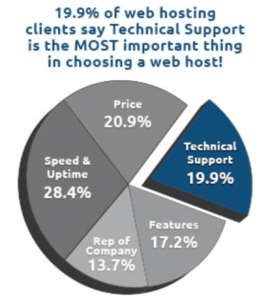
You may not think so right now, but aside from the performance of your hosting plan, customer service should be your next priority. Roughly 20% of web hosting customers agree with this.

Web Hosting Support

In a perfect world, nothing will ever go wrong with your website or servers. But realistically, something is bound to go wrong at some point. That’s just the nature of the web hosting world. It happens to everyone, and your site probably won’t be immune from it.

During a time of trouble, you want to be able to get in contact with your web host immediately. So look for a plan that offers 24/7 support via phone and live chat.

Aside from that, you should also look for providers that have a knowledge base and resource center that will teach you how to do certain tasks on their platform. This type of customer support can really help you get the most out of your web hosting plan.

Renewal Rates

You need to look beyond the introductory rate of your web hosting plan to make sure that it will continue to fit within your budget in the coming years.

It’s common practice in the web hosting industry for providers to heavily discount new contracts, and then increase the fees when it’s time to renew. Normally, you can lock in the best possible rate by committing to the longest term length, which is usually up to 36 months.

But make sure you know how much your plan will cost you at the end of that period.

Freebies, Add-ons, and Additional Features

You should also be looking for plans that give you the best value for your money. Most hosting providers will include some extras in their plans as an incentive for you to sign up.

Here are some common features to look for:

  • Free domain (usually for the first year)
  • Free SSL certificate
  • Free cPanel license
  • Google Ads credit
  • Free site builder
  • Free site migration
  • Unlimited email accounts
  • Automatic backups

Most plans come with a money-back guarantee as well. 30 days seems to be the industry standard for this, but I’ve seen plans offer up to 97 days for you to change your mind.

Step #5: Register Your Domain Name

The domain name is your digital address. Ours is www.quicksprout.com.

I included this step last because you can potentially register your domain name from your hosting provider when you sign up for a hosting plan. Sometimes this will even come free depending on the plan and provider you go with.

But with that said, you can register your domain name elsewhere before you settle on a plan.

Personally, I like to keep my domain registration services and web hosting services separate. So I’d recommend using a domain registrar for this step. If you’re lost and don’t know where to do this, take a look at my guide on the best domain registrars.

Getting your domain from a web host isn’t necessarily wrong. So it’s fine if that’s what you prefer.

Regardless of where you get it from, this step needs to be completed in order for your website to be live on the web.

Alternative Option: Self Hosting (Not Recommend)

It’s possible to host your website without using a web hosting provider, although I would not recommend this option.

Self-hosting can be accomplished by using your computer or a Linux machine as a server. It requires lots of technical experience and a full understanding of how websites and servers work.

In many cases, self-hosting is slow, unstable, and unreliable. Plus, you’ll be responsible for all of the server maintenance, backups, software updates, and security on your own.

Overall, self-hosting is a bad idea, especially for beginners. So I don’t want to spend too much time talking about it. But I wouldn’t be doing my job properly if I didn’t at least mention it as an option.

Conclusion

Hosting a website isn’t as complicated as you might think. In fact, the whole process can be accomplished in just five simple steps.

  1. Research web hosting providers.
  2. Determine your budget.
  3. Choose a hosting type.
  4. Select your hosting plan.
  5. Register your domain name.

If you follow the steps in this exact order, it will give you enough information to make an informed decision. This is the most ideal way to host any website.


Source Quick Sprout https://ift.tt/2MQdVs3

Starting Your First Job? 8 Tips to Save Money Until You Get Paid

In the nervous excitement leading up to starting your first job, there’s one thing you might overlook. That salary you were promised — the one you’ve already imagined spending — well, you won’t see any of that money until two weeks or so after your start date.

Plus, let’s be honest: Most first jobs don’t pay all that well. You’ve got lots of rungs above you on the ladder.

In the meantime, you’ve still got work attire, downtown parking and lunches to pay for — not to mention, you’re probably already low on cash.

To keep costs low on your entry-level salary, take note of these eight ideas for how to save money on work-related expenses in your first job.

1. Choose Second-Hand Work Attire

You don’t have to buy new clothes to make a fashionable first impression. Thrift stores and consignment shops have all kinds of interesting finds. Or organize a clothing swap with friends. Trade that strappy summer dress you rarely wear for your bestie’s gently worn job-interview outfit.

2. Skip the Pricy Makeup

If the cost of your go-to beauty products doesn’t fit your budget, consider switching to drugstore makeup. Freelance writer Jamie Cattanach saved over $40 when she decided to ditch her Sephora and MAC finds for makeup she bought at Walmart.

3. Do Your Own Hair

It feels nice to treat yourself to the salon for a new haircut or style, but that can wait until after a few paydays have come and gone. Former Penny Hoarder writer Desiree Stennett saved $200 by turning to YouTube to learn how to twist her hair with extensions rather than paying a stylist to do it. Freelancer Catherine Hiles has become a pro at dying her hair at home.

If going the DIY route just isn’t for you, spend less by getting a cheap haircut or style at a beauty school or a low-cost chain, like Great Clips.

4. Consider a Cheaper Commute

A young woman uses public transportation to get to work.

Sure, driving your own car to work is convenient, but choosing another commuting option may be better for your budget. See if biking to work or taking public transportation would be viable. Or if your new job is a 45-minute drive across town, consider carpooling with a friend or neighbor who has a similar route. Ask your employer about existing carpool arrangements among coworkers.

5. Pack Your Own Lunches and Snacks

Spending $10 for lunch doesn’t seem expensive when you think of it in terms of one day. But if it’s a regular occurrence, you’re looking at $50 a week or over $200 a month for lunch alone. Save money by bringing lunches, snacks and beverages from home. Meal prep on the weekends so you aren’t stressing out about what to pack for the next day’s lunch after a long day at the office.

6. Take Advantage of Work Benefits

If you’ve got a job that offers employee benefits, carefully review your compensation package to take advantage of all you’re entitled to. You may be pleasantly surprised to learn your health plan includes gym membership discounts or that your employer will help you pay back student loans. Even perks like free coffee and snacks in the breakroom can save you a little dough.

7. Find Affordable Child Care

Several children are babysat in an at-home daycare.

If you’ve got young children, finding someone to watch them while you’re working can present a major financial hurdle. Check if your employer offers on-site day care or tuition discounts at local centers. Depending on your household size and income, you could qualify for child care assistance in the form of government subsidies. Consider nanny sharing or child care programs run by your school system for other options to reduce child care costs.

8. Save Money — Literally — by Starting a Retirement Fund

Even if you feel like your first-job earnings leave very little left over after bills, now is the time to start saving for your later years. When it is deducted right out of your paycheck, you won’t even miss that money. And the earlier you start planning for retirement, the better chance your money has to grow. It’s a move your future self will thank you for.

Nicole Dow is a senior writer at The Penny Hoarder.

This was originally published on The Penny Hoarder, which helps millions of readers worldwide earn and save money by sharing unique job opportunities, personal stories, freebies and more. The Inc. 5000 ranked The Penny Hoarder as the fastest-growing private media company in the U.S. in 2017.


source The Penny Hoarder https://ift.tt/2pTFurw

السبت، 26 أكتوبر 2019

Your Money AND Your Life

This article is going to start out pretty far astray from money issues, so bear with me for a bit. Don’t worry, we’ll come back to dollars and cents.

Think about a time in your life where you did something that you quickly realized was the wrong thing to do. Perhaps it really hurt someone else. Perhaps it was something that just feels wrong to you to think about it. Maybe you did it just to impress someone that you shouldn’t have bothered to try to impress (at least not in that way), or maybe it was just a bad choice in the moment.

You probably felt awful about it afterwards, probably for quite a while. You likely regret it even now.

Now, on the other hand, think about a moment in your life where you did something that was just dead-on the right thing to do. It was completely in line with your values, it made things better, it was just the best thing to do in that moment. Maybe you really helped someone out. Maybe it was a culmination of a lot of positive effort on your part that resulted in just a great outcome for a lot of people.

Whatever it was, you probably felt great in that moment and shortly thereafter, and you probably still feel good about it to this day.

The big picture here is simple: it feels really good to live as close as possible to our ideals, and it feels pretty awful to live in opposition to those ideals.

Want an easy recipe for a good life? Try to frequently do the things that leave you feeling good both in the moment and perhaps even more importantly when you look back on with good feelings and pride, while trying to do things that leave you feeling bad and perhaps even more importantly that you look back on with regret and shape as infrequently as possible.

Do that and you’ll wind up with a pretty good life.

Great, so what does that have to do with finances?

The above recipe for a good life comes down to how you’re using your time and energy and focus, but the same idea applies when it comes to how you’re using your money.

In other words, if you want a recipe for a financially successful life, try to frequently do things with your money that are in line with your values and build to the big thing you want in life, and try to avoid doing things with your money that aren’t in line with your values and move you away from the big things you want in life. Better yet, figure out things on the “good side” of that equation that are also personally enjoyable for you in the moment.

Let’s jump into how that works in practice, using some small and some big examples.

Example 1 – Books

I’m an avid reader and have been since I was a little kid. I pretty much constantly had my nose in a book back then and you’ll still find me doing the same, even today, when I get a chance. Few things seem like a more pleasant use of a lazy Saturday afternoon than digging into a really good thought provoking book or getting lost in the pages of a suitably rich fictitious world.

Why do I read, though?

Do I enjoy getting lost in the pages of a good book as a way to escape? Do I use it as a way to learn about the world? Do I use it to explore scenarios and ideas and to develop a sense of right and wrong?

Even more to the point, am I a book collector? Do I value having a ton of books jammed in my house? Or am I more of a book reader who values having a long list of books that I’ve read?

What gives me value out of those things? What do I really care about? Furthermore, which of those things, done now, will I care about in ten or twenty years?

I think I’ll value having read most of the books I read, as long as they made me think and made me question the world. I’ll value having a few of my most-loved books on my shelf, but the rest that were more forgettable? I’ll be glad to not own them and not have to deal with them taking up space.

So, in the moment, I enjoy reading, but in the long run, I’ll value having read things that make me grow. So, I try to choose to read books that I believe will make me think and grow that simultaneously encourage me to turn the page.

I think I’ll value having a long healthy list of books I’ve read, but I can tell you I won’t value having a ton of books on my shelf that I have to deal with if I move or that my kids will have to deal with if I die. I just want to have a few favorites around that I’m sure to reread.

All of that ends up informing how I spend my book money. I basically only buy books if I’m going to reread them. For a first read, I almost always turn to the library; it’s only if that first read really strikes a chord with me that I’ll consider buying it. Some books are fun to read but forgettable; other books have one or two memorable scenes or good ideas but I won’t need to revisit them. It’s the latter group, the ones that really click with me and I know I’ll reread in the future, that I want on my shelf, and that’s honestly not that big of a shelf.

So, basically, reading challenging books from the library and occasionally buying ones that really resonate with me is the path forward that really reflects how I want to spend my time, energy, focus, and money. The closer I live to that principle in all dimensions, the better.

Example 2 – Housing

Right now, I live in a family house on the edge of a small town in Iowa. I like living here, for the most part. I have good relationships with all of my neighbors, have some of them over for dinner and cookouts on occasion, and my children are friends with several children that live nearby. I like our house for the most part, though I wish the kitchen was a bit larger and arranged differently.

Am I happy living here? Sure. It has plenty of space for our family and is nice enough that we often have people over for all kinds of events, plus it’s comfortable in the evenings with a really nice family room. I like it.

Do I want to live here in ten years? Probably, with a few changes. I want to redo the kitchen as several aspects of it frustrate me as someone who often prepares meals at home. Other than that… I think I’m pretty happy here.

What do I conclude from that?

One, there’s real value in me putting time, money, and energy into doing quality maintenance on this house, as I intend to live here for quite a few more years. It’s far easier and much more cost-effective to maintain the house and the large appliances in it than to just not bother and have disaster strike. You can get away with ignoring it for a little while, but then you’ll suddenly be hit with a conflux of expensive and time-consuming problems that could have been easily prevented.

Two, it’s going to be worthwhile to eventually redo the kitchen. We just need to decide how we want to redo it and how much of the labor we want to do ourselves. The sooner we start thinking about it, the longer we’ll have to enjoy the finished product.

So, it appears as though a continued focus on home maintenance and gradual planning for a kitchen renovation is the path forward that really reflects how I want to spend my time, energy, focus, and money with regards to housing going forward. The closer I live to that ideal in all dimensions, the better.

Example 3 – Parenting

While it is certainly enjoyable to do fun things with my family, the most important thing I can be doing as a parent is to teach them how to be successfully independent. What skills do they need to have so that they can survive and thrive on their own without the constant support of mom and dad?

That’s pretty much the constant thread in my parenting style. I try to consistently offer them advice on how to handle a lot of common things that I know they’re facing in life or that I know they’ll be facing in the near future. I ask them what ideas are on their mind and encourage them to talk about them in a general sense, so that I can talk through the issues without them having to feel that they’re going to self-incriminate a bad decision or snitch on a sibling.

I try to aim for unconditional love and if there does need to be some sort of penalty for a bad choice, I try to make that as clear as I can. They’re not perfect, but they can be good.

So, what does that translate into in terms of action, particularly regarding money?

Sarah and I are very careful with the money we buy our children and the things we buy them outside of holidays. We use an allowance system, but the allowance is small. We occasionally reward exceptional performance in schoolwork, but we don’t reward most of their good moves with anything financial.

For gift giving occasions, we try to aim for a very small number of nicer gifts rather than a lot of inexpensive stuff.

We talk a lot about our financial decisions with them. We discuss financial decisions pretty openly in front of them and we also involve them in spending decisions, even sometimes including their input. We aim to not have them feeling like money is mysterious, and we’re extremely clear about the dangers of debt and how it restricts your choices.

We’re also open already about how we’re saving for them for college and they know quite clearly what their responsibilities will be for paying for college.

These specific actions define the path forward that really reflects how I want to spend my time, energy, focus, and money with my children. The closer I live to those principles in all dimensions, the better.

The Overall Picture

All of these ideas boil down to one core principle.

We aim to spend our money, time, and other resources toward building the life we want to live while also enjoying today, but not spend those resources excessively.

In other words, we know where we want to go, so what’s the most efficient path to get there so that we have money left over for our other goals and our other areas of life.

I love to visit bookstores and buy books, but I’ve learned that buying books beyond what’s actually in line with what I want from my life (meaning anything beyond stuff I intend to re-read and usually stuff I’ve already read) doesn’t really add value to my life and in fact detracts from it.

I love living in a nice house and I intend to live here for a while, and I’ve learned that the best way to keep living here at minimal cost in the way that I like it is to keep doing maintenance on it and to plan for a low cost kitchen refresh.

I love being a parent and I want to raise kids that are functionally independent, and I’ve learned that the best way to do that is to not buy them everything they want along the way and be thoughtful about how we save for their future.

In each of those cases, that’s how we use money to achieve what we want today and what we want in the long term while minimizing our spending so that we have space for the other things we want in our life.

It’s your money AND your life.

The thing is, when you consistently make money and time and energy choices along with what you actually value, your life feels pretty good. If you make efficient money and time and energy choices along those lines, you have plenty of space for the other things you want out of life.

Making Mistakes

The thing is, we all make mistakes, usually because some goal or value we have in our life comes in conflict with another goal or value and we have to choose one or the other on the spur of the moment. We don’t always choose correctly and that often results in mixed or even negative feelings about the outcome.

Another way to look at this is “opportunity cost” – every time you choose to spend your money or time or energy on something, you’re also choosing NOT to use it on all of the things you could be using it for.

How can you solve that? You can’t.

As far as I’ve been able to tell, the best thing you can do to avoid such mistakes is to give some of your spare thoughts to thinking about such choices. Think about what you value, and how it ranks in comparison to other things you value. Envision situations where they might come into conflict, think about the best way to resolve them, and then visualize yourself doing just that.

You still won’t be perfect. You’ll still make mistakes. However, over time, you’ll find yourself hewing closer and closer to what it is you really want out of life, and if you seek to do that with minimal use of your resources, all the better.

Final Thoughts

One of the few things I don’t like about the book Your Money or Your Life is how the title makes it seem like it has to be a choice of some kind. You either have to choose “your money” or you have to choose “your life.”

I think a better title would be “your money and your life.” The core idea in the book is to spend your money in line with your values as efficiently as you can, a good idea that expands to all of life’s resources. However, that’s not a choice between your money and your life, it’s a path to having both.

If you’re unsure, trust in what feels right, not in the moment, but in terms of decisions you once made that resonate as being moments where you made the right decision or where you clearly made the wrong decision, and let that guide you. While it might not be perfect with numbers, your gut will often guide you to the right place if you listen to it beyond the heat of the moment and live by the principles and values that actually matter to you.

Good luck!

The post Your Money AND Your Life appeared first on The Simple Dollar.


Source The Simple Dollar https://ift.tt/2pjBCjF

2 Education Tax Credits That Can Make College More Affordable

This just in: College is expensive. And whether you’re a student yourself or supporting your spouse or dependent child through school, any break you can get helps.

Fortunately, the IRS offers a couple of education tax credits that can ease the financial burdens of college. In other words, these are incentives specifically for students and their parents that can lower the amount of taxes you owe for the year. 

Here’s what you need to know about the American Opportunity Tax Credit and the Lifetime Learning Credit, as well as how to determine whether you or your family is eligible.

What Is the American Opportunity Tax Credit (AOTC)?

The American Opportunity Tax Credit, or AOTC, is a tax incentive designed to help offset the cost of undergraduate degrees. Qualified students, their spouses or parents who claim their child as a as dependent can earn a maximum annual credit of up to $2,500 per year, per student. Here’s how it breaks down:

  • 100% of the first $2,000 of qualified educational expenses, including tuition and fees as well as books, supplies, and equipment needed to complete courses.
  • Up to 25% of the next $2,000. 

That comes out to a total possible credit of $2,500.

However, if the credit brings down the total amount of tax you owe the government to $0, you can only have 40% of the remaining credit, or up to $1,000, issued to you as a refund. And it’s only available to those in their first four years of college — sorry, super seniors.

To be eligible for the AOTC, the student must:

  • Be pursuing a degree or a credential — that is, auditing classes or taking a few courses for your plain old edification won’t cut it.
  • Be enrolled at least half time for at least one academic period, be it a semester, quarter or even a summer session. 
  • Not yet have finished a four-year degree.
  • Not have claimed the AOTC — or the Hope credit, as it used to be called — for four tax years already.
  • Not have a felony drug conviction.

You must also have a valid taxpayer identification number on or before the date of filing, and earn less than the specified modified adjusted gross income limits. For 2019, these limits are:

  • $80,000 or less for single filers to get the full credit.
  • $160,000 or less for those married and filing jointly to get the full credit. 
  • If you earn up to $90,000 or $180,000, respectively, you may still be eligible for a reduced credit.

To claim the AOTC, you’ll need to get a Form 1098-T Tuition Statement from your school. You’ll then need to fill out Form 8863 and include it with your return at tax time. 

What Is the Lifetime Learning Credit (LLC)?

Like the AOTC, the Lifetime Learning Credit, or LLC, is a tax credit you can earn to help offset the cost of qualified higher educational expenses. Unlike the AOTC, the Lifetime Learning Credit only covers tuition, fees and other enrollment-related costs; books and supplies are excluded.

But this one’s available not only for the first four years of undergrad, but also for graduate and professional degree courses — supporting a lifetime of learning, just as its name implies. There’s no limit to how many years you can file for the credit, which makes it a great option for those considering a midlife career change or taking courses to increase and improve their skills. 

That said, this credit can only be claimed once per year per family or individual taxpayer, whereas the AOTC can be claimed per student. (More on that below.)

The Lifetime Learning Credit provides eligible students a credit of up to $2,000 per tax return. (Again, the tax-speak specifics: It’s up to 20% of the first $10,000 of qualified educational expenses.) 

However, if the Lifetime Learning Credit brings your tax bill to $0, you won’t receive a refund for the remaining amount.

Here are the eligibility requirements for the credit:

  • You must be paying for qualified expenses related to higher education, like tuition.
  • Those educational expenses must be paid for a student who’s enrolled at an eligible institution.
  • That student must be you, your spouse or your dependent.

The Lifetime Learning Credit is subject to the following income limits in 2019:

  • $58,000 or less for single filers to get the full credit. 
  • $116,000 or less for joint filers to get the full credit. 
  • If you earn between $58,000 an $68,000 as a singleton or up to $136,000 as a married couple, you may qualify for a partial credit.

Just as with the AOTC, you’ll need to get a tuition statement from your school and file Form 8863 at tax time. 

Am I Eligible for One of These Education Tax Credits — or Both?

A college student smiles.

Still not sure you’re eligible for either of these education tax credits? What if you meet the requirements for both?

Unfortunately, you can’t claim both the Lifetime Learning Credit and the AOTC on a single child. Parents can claim the AOTC on multiple children, and you can claim the LLC during the same year, but you can only claim the LLC once — and not on a kid you’ve already claimed the AOTC for.

In other words, the AOTC is a per-student tax credit, while the Lifetime Learning Credit is a per-taxpayer tax credit. That said, there’s another, easier way to figure out exactly what you and your family are eligible for.

Although it’s not exactly known for its speediness or cutting-edge technological advances, the IRS is slowly but steadily moving into the world of the 21st century — and has created an interactive app to help you determine if you qualify for either of these educational tax credits. It’ll also let you know if you can claim a deduction for tuition and fees.

And if you’re paying sky-high tuition bills, it’s well worth sitting down for a few minutes with your paperwork and seeing if you can get a break this April. Just one word to the wise: Make sure you’re actually eligible, or you could get audited and be forced to repay any credit you erroneously received with interest. You might also be banned for claiming the credit for up to a decade.

Now, if only they’d come up with an app that could do all your homework for you…

Jamie Cattanach’s work has been featured at Fodor’s, Yahoo, SELF, The Huffington Post, The Motley Fool and other outlets. Learn more at www.jamiecattanach.com.

This was originally published on The Penny Hoarder, which helps millions of readers worldwide earn and save money by sharing unique job opportunities, personal stories, freebies and more. The Inc. 5000 ranked The Penny Hoarder as the fastest-growing private media company in the U.S. in 2017.


source The Penny Hoarder https://ift.tt/2MQKyWF